I forgot that The Grizz had a basic continental breakfast included (this was our first hotel stay in this trip). We quickly ate and then got in the road. I really enjoyed seeing Revelstoke and will definitely return!
On the road again…
Our first stop was Crazy Creek Hot Pools. There were 4 spring fed pools at four different temperatures: 40, 37.7, 31 and 8 degrees Celsius!
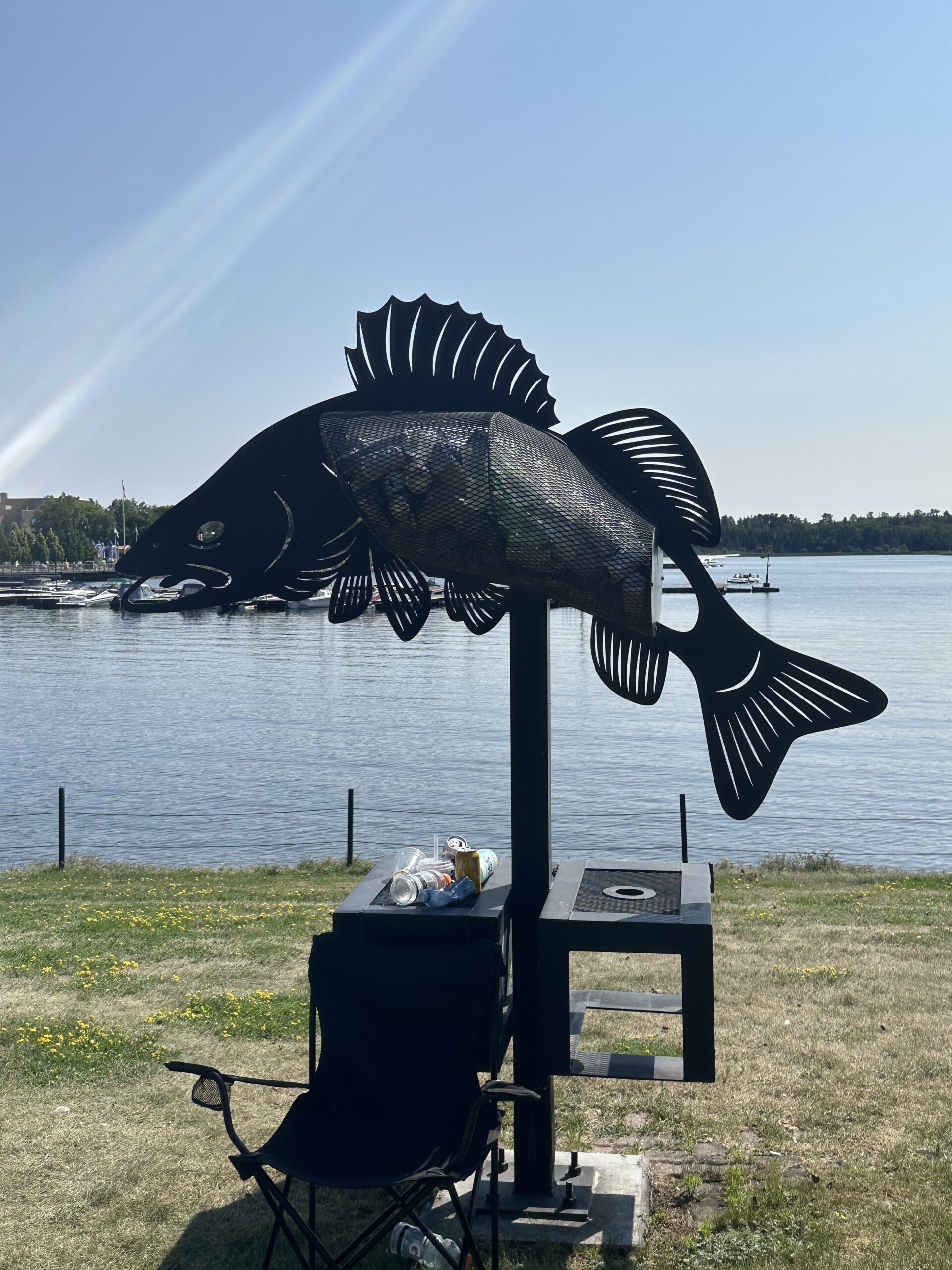
Fun trash bin at the last spike historical spot
I was feeling very fruit deprived while in the road, and then we came across Fruit World – I HAD to stop and bought tons of fruit ( it was our last day after all)
A delicious Okanagan peach!
The rest of the trip was pretty smoky even with our detour.
Believe it or not, there is a giant mountain that emerged a few minutes later that we couldn’t see because of the smoke.
We then stopped for a short hike to see Bridal Veil falls. I was pretty excited about the forest at the trail head. The picnic area was gorgeous with the most incredible trees.
Unfortunately the trail was closed due to risk of falling rocks around the falls area 🙁
Another great bridge we passed over…Our final Km count when I exited the car – 4606.5km! (It was approx. another 11 km to Erez’s house)Our final destination! Chad and Cat’s condo in Yaletown.
Overall, the trip was great. It was like a sampler platter of what there is to see. I would love to do this trip again with Aubrey when we can meander our way at a much slower pace and really explore some of these places without being on such a tight schedule.
As for Erez and I – we never ran out of things to talk about and I really enjoyed hearing his perspective on all sorts of topics. I feel incredibly grateful to have had this time with him.
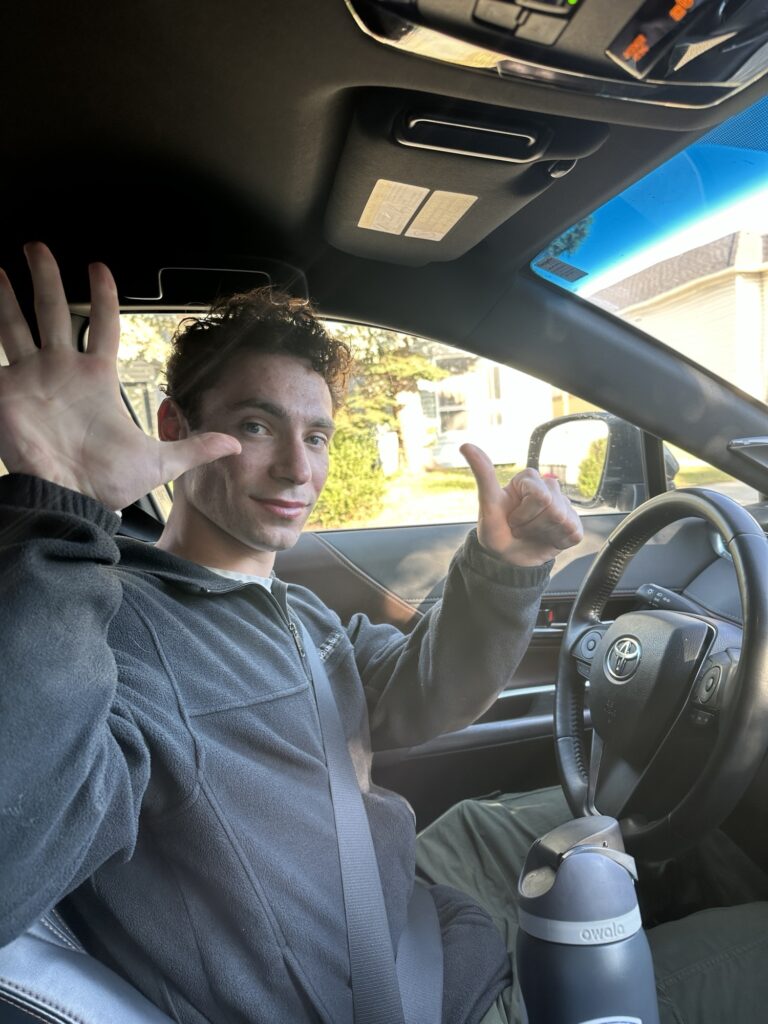
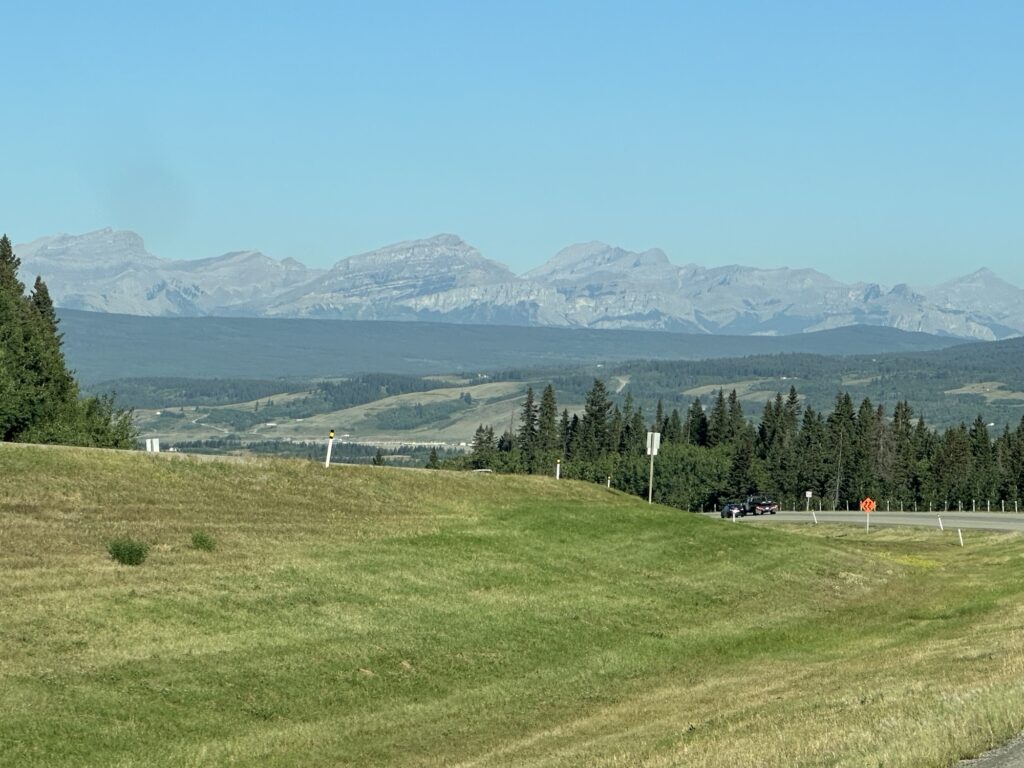
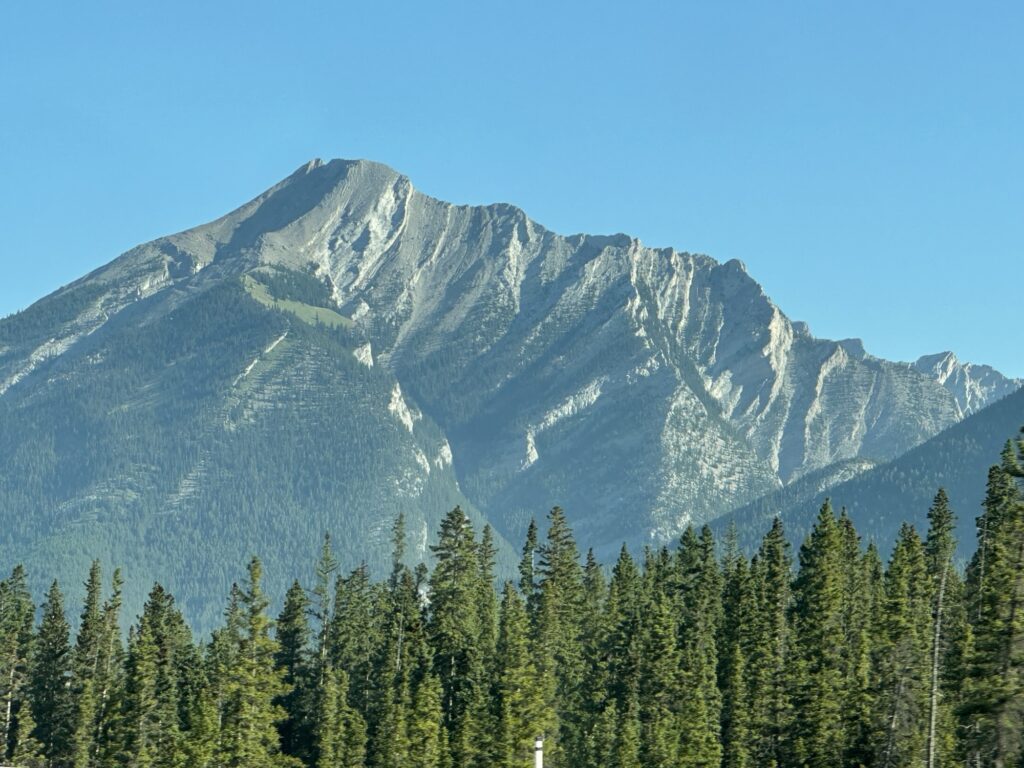
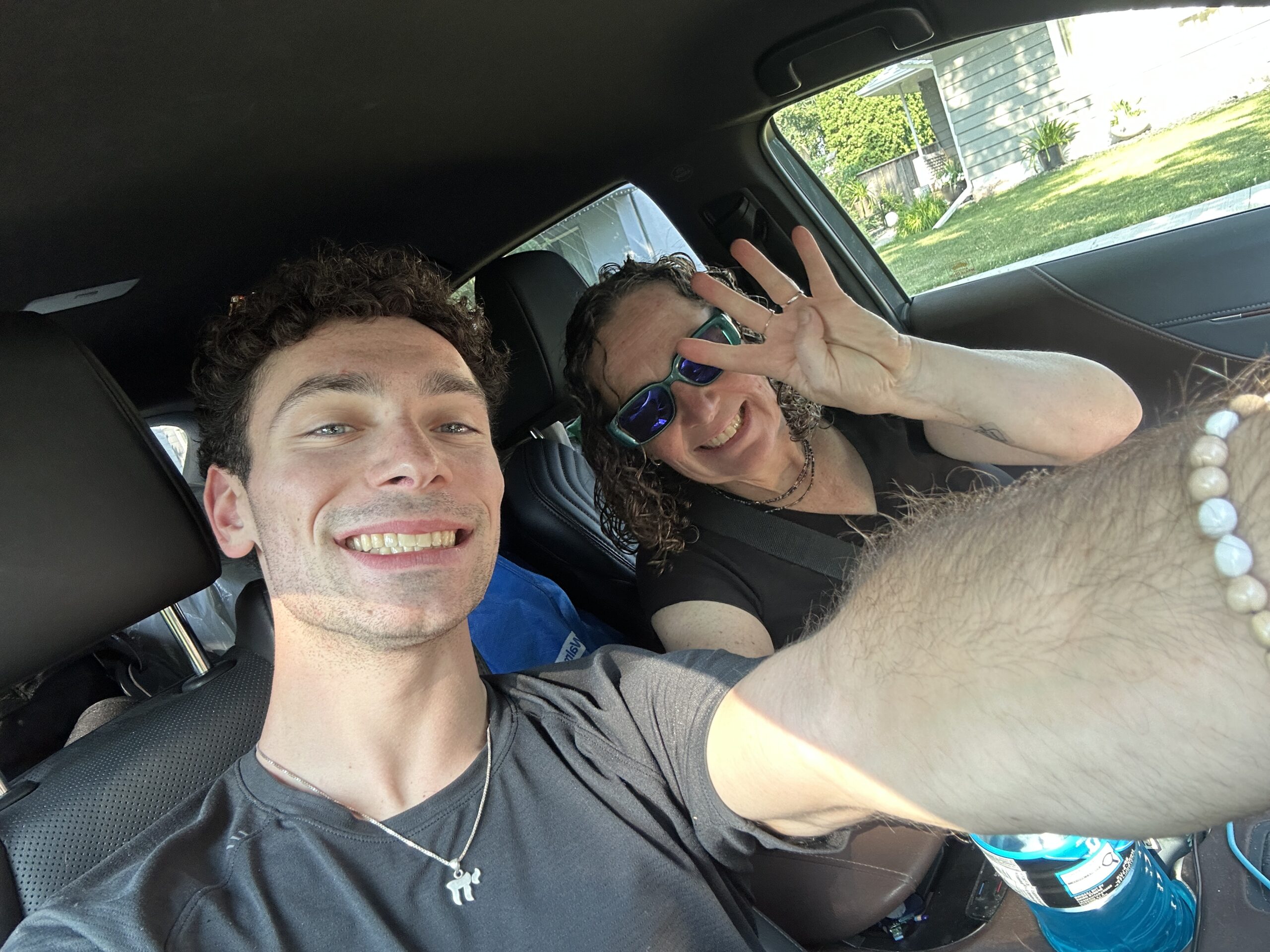
Obligatory car photo for the start of the dayOur first view of the mountains…We finally arrived! So excited!
Our first stop was to meet up with Erez’s friend Austin at the Rimrock hotel to have coffee with him before he started work. It was great to see him, even for a short visit.
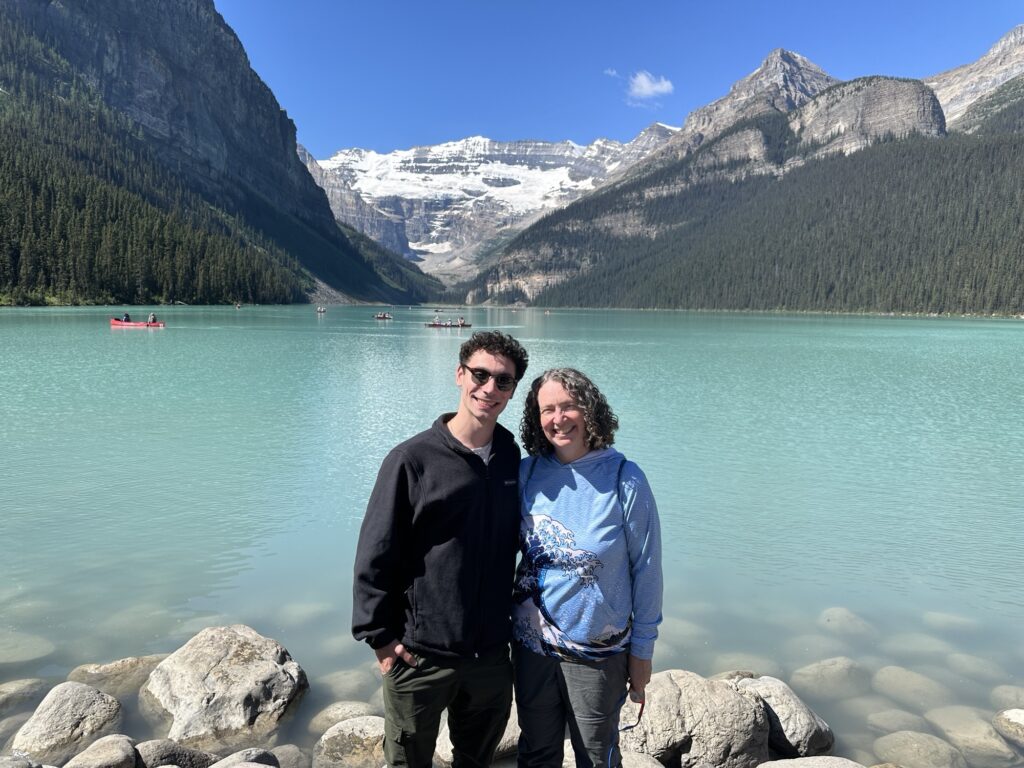
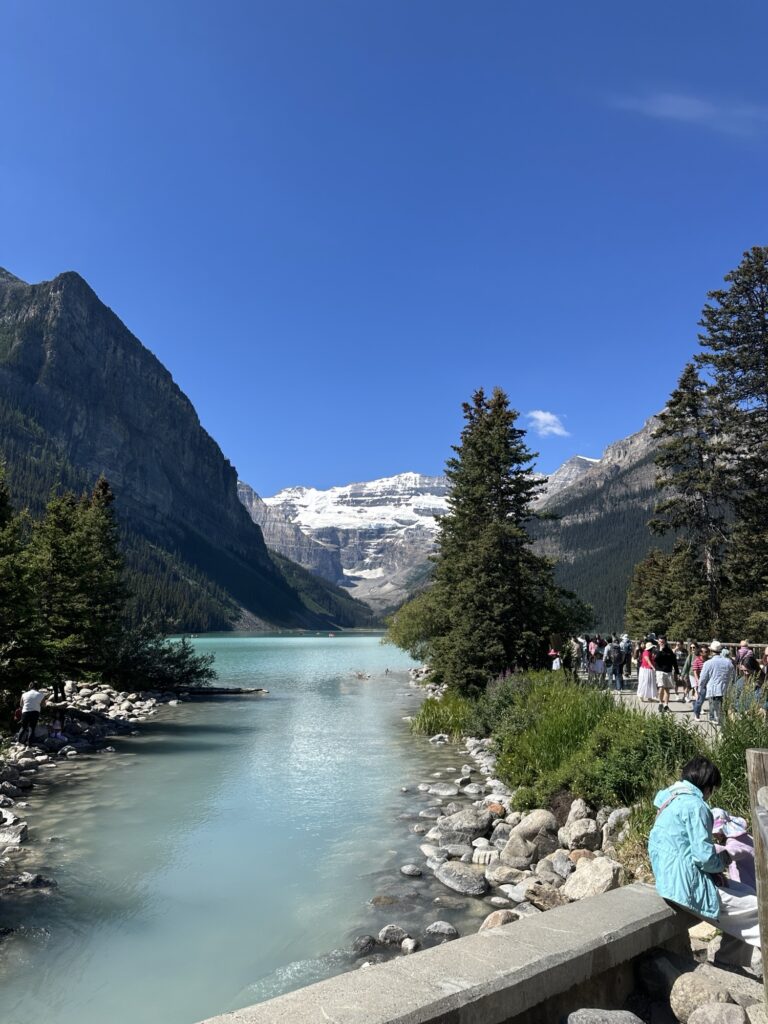
We booked a shuttle to go to Lake Louise and Moraine Lake. We had approximately an hour in each place. Lake Louise did not disappoint- it was truly beautiful. It was quite crowded, but we walked along the trail a little bit and were able to get away from the bulk of the crowds.
Lake Louise was gorgeous as expected.
We spend a few minutes just soaking in the beauty and meditating on the landscape while listening to the sound of mini waterfalls bubbling around us. (turn sound on for this video)
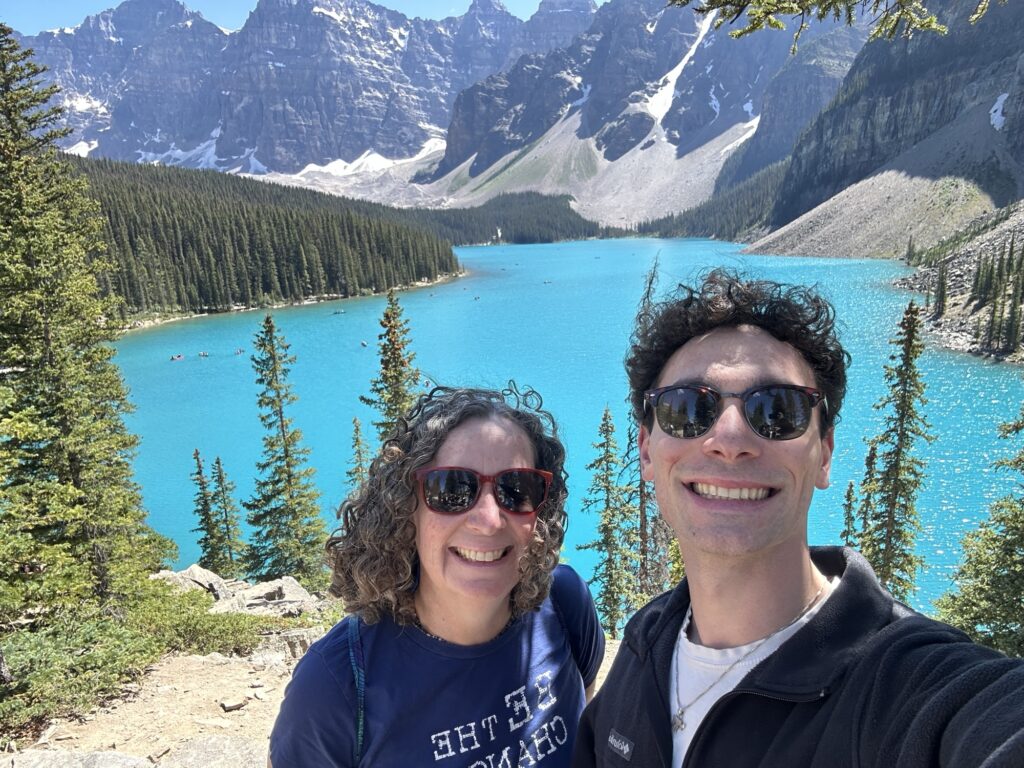
After an hour we got back on the bus and went to Moraine Lake. I hate to say it, but it almost made Lake Louise look ordinary- the colour was exquisite. Our first task was to climb up something called “The Rock Pile” for great views. Worth it.
No filter – that is really how the lake looked!
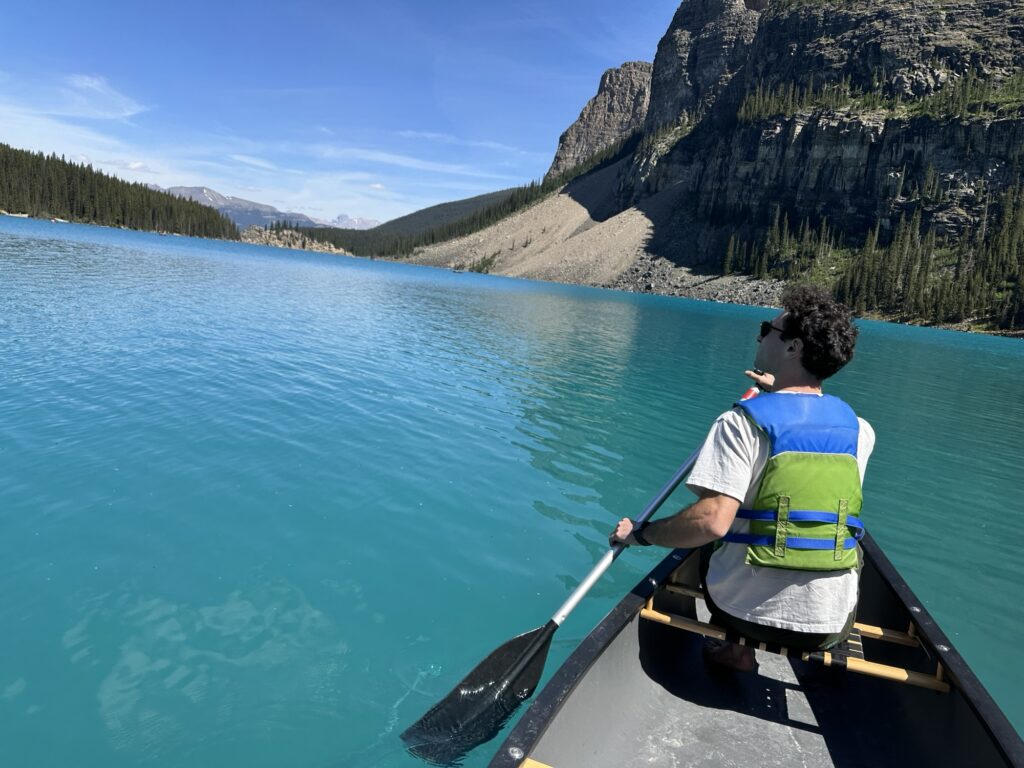
Lucky for us, we had an in for a free voucher for a canoe ride. Normally it costs about $180 for an hour rental. It was a huge highlight for me. We are so grateful to our friend Eliza for providing it for us. Paddling on that water was really a dream come true. Every meditation session where I need to picture a beautiful place where I feel at peace, will now and forevermore be the view of Moraine Lake from a canoe 🙂
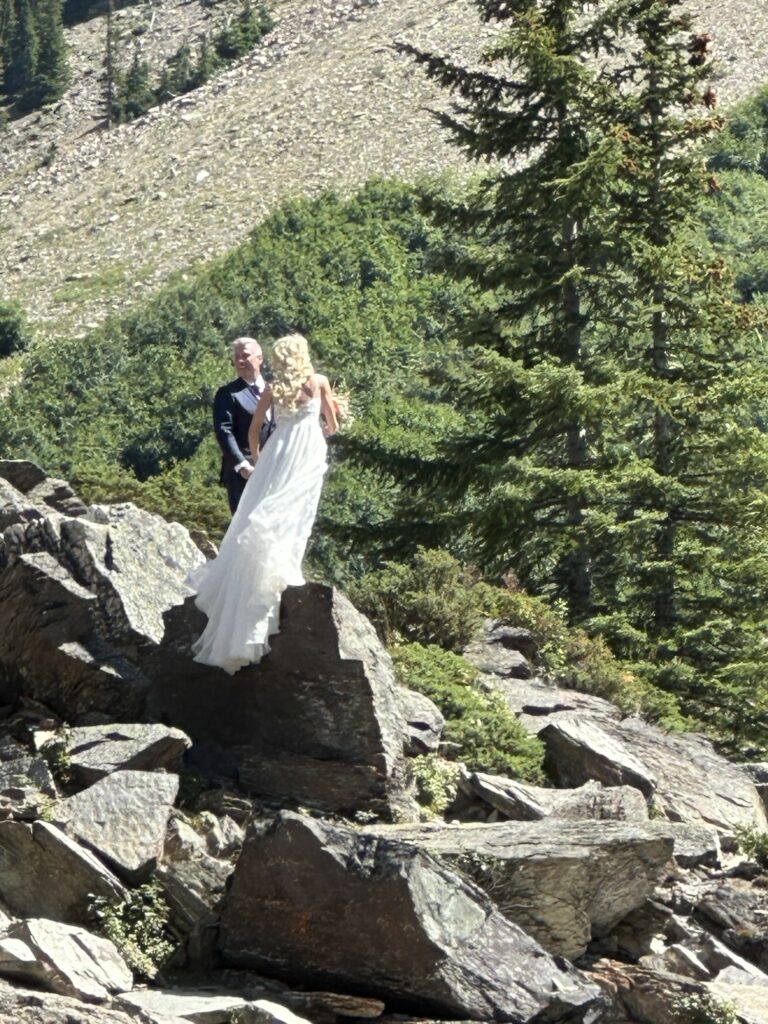
On our way out we saw two different couples taking wedding pictures – one was on a ledge on the “Rock Pile”.
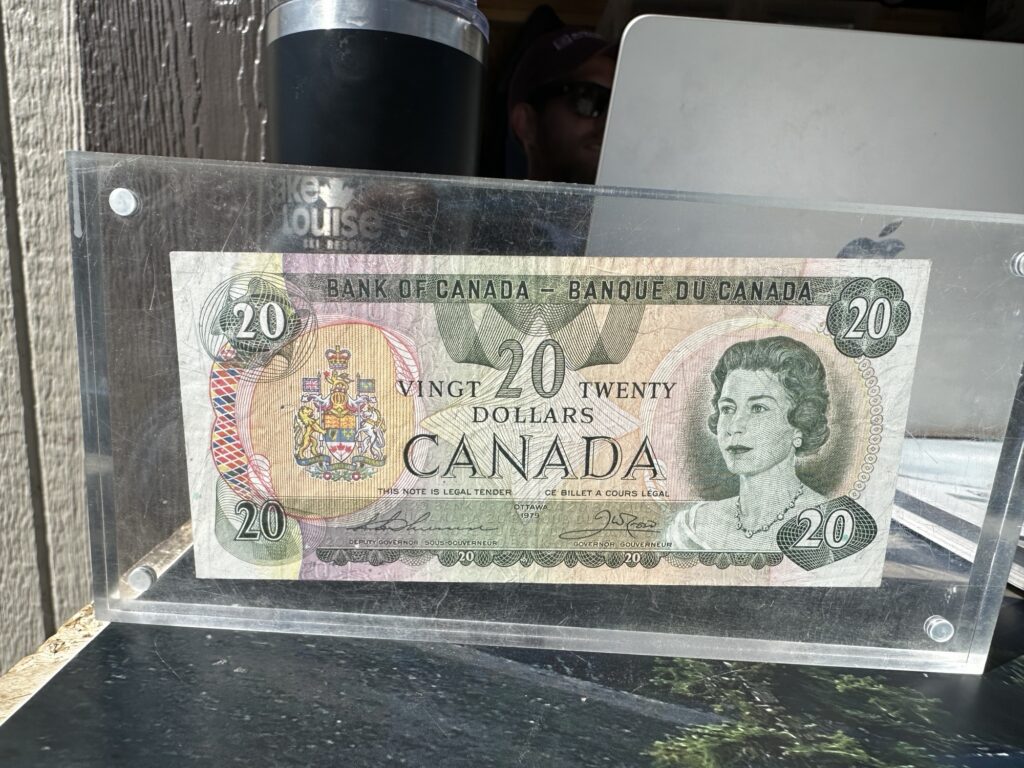
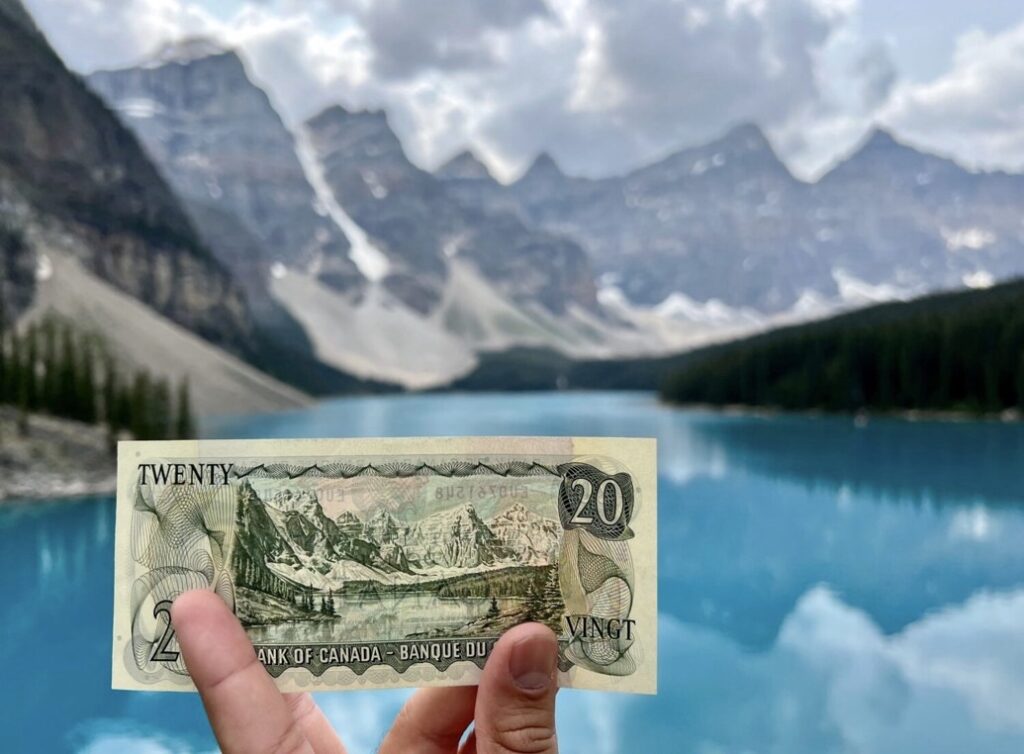
Nerd Alert: just a bit of trivia: Moraine Lake used to be on the back of the $20 bill. Our bus company had two encased in plastic for us to see.
Here is an internet photo with the bill and the view.
We were extremely lucky to be there in a day with perfect weather. It wasn’t smoky, the sun was shining and it wasn’t too hot.
Another wildlife overpass bridge
We didn’t realize how close Lake Louise was to the BC border, and didn’t see any sign, so we slipped into BC without realizing it and without our photo with the Welcome to British Columbia sign.
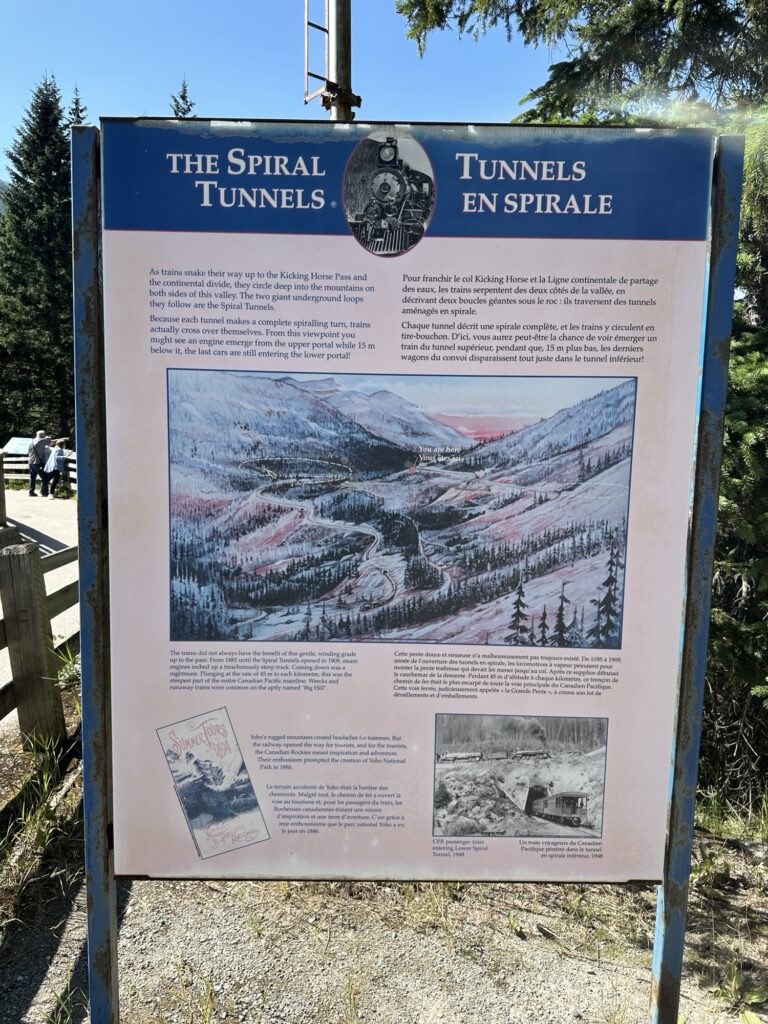
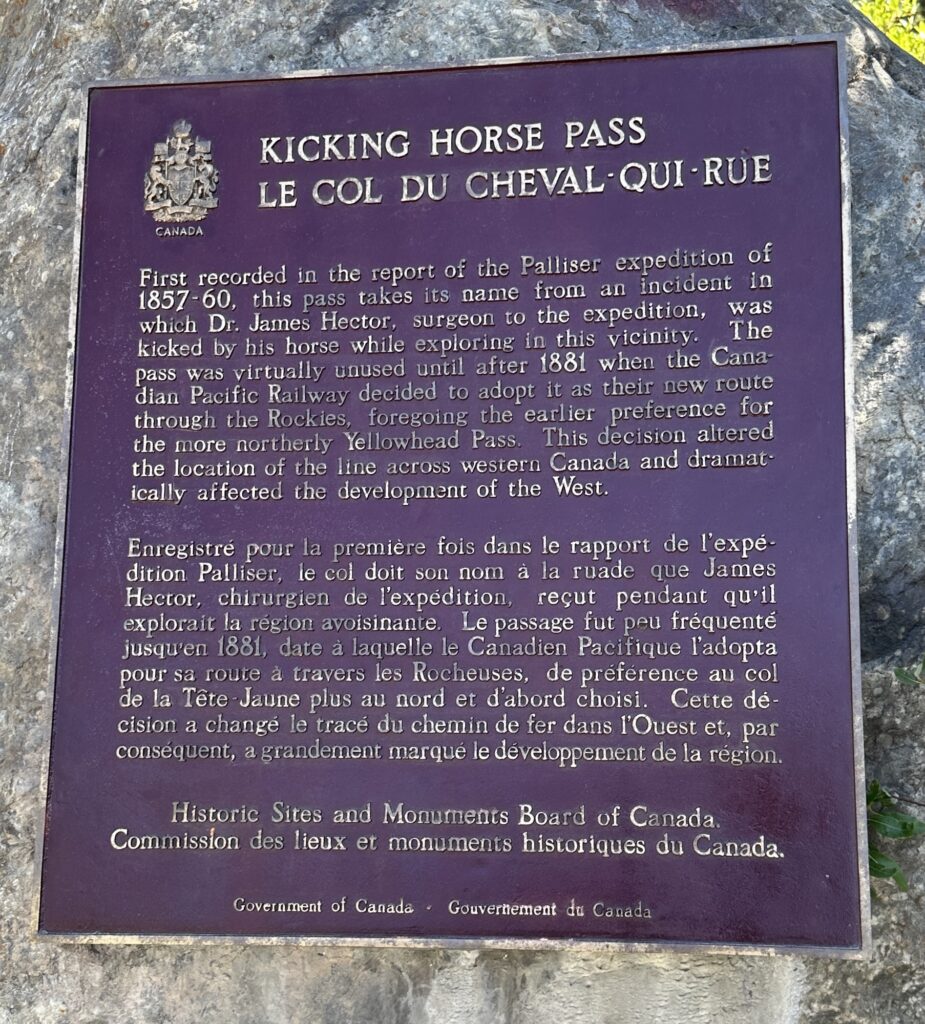
Our next stop was Kicking Horse Pass. This was a fascinating stop as we learned about the development of the rail tunnels in this area.
The Spiral Tunnels in Kicking Horse Pass, British Columbia, are famous Canadian Pacific Railway engineering marvels. Opened in 1909 inside Yoho National Park, these underground loops replaced the terrifyingly steep 4.5% “Big Hill” grade—reducing it to a safer 2.2% and allowing long freight trains to cross over themselves inside the mountains.
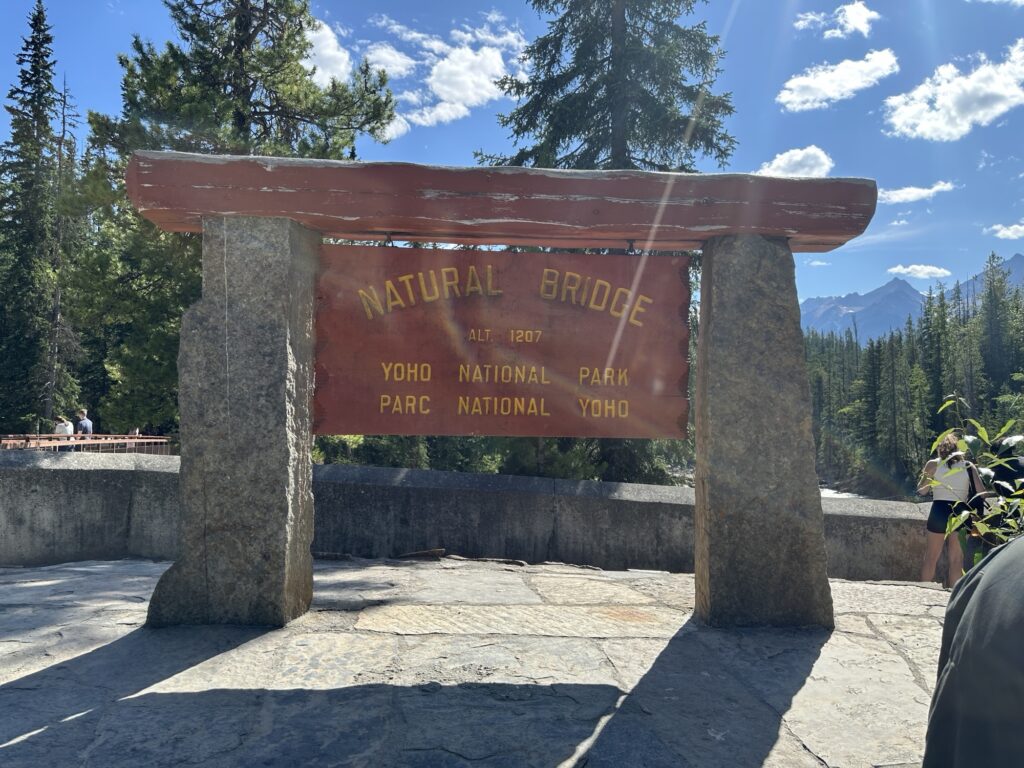
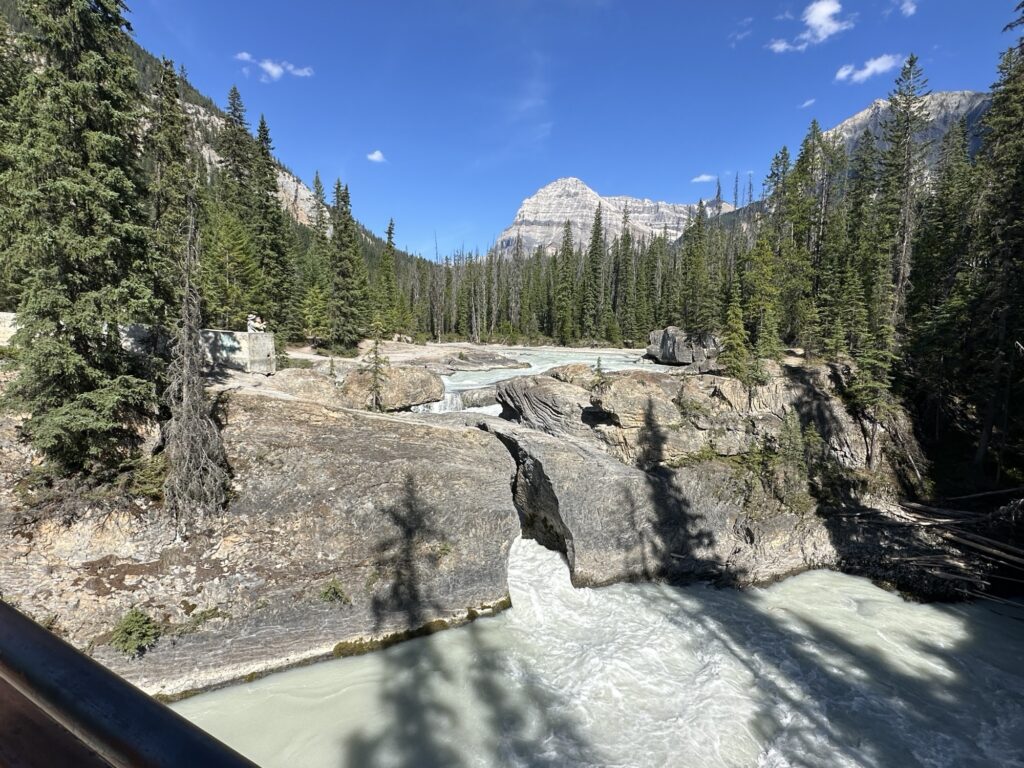
Next stop was the “Natural Bridge” in Yoho National Park- a cool rock formation spanning a canyon that provides a natural bridge over some extremely intense rushing water.
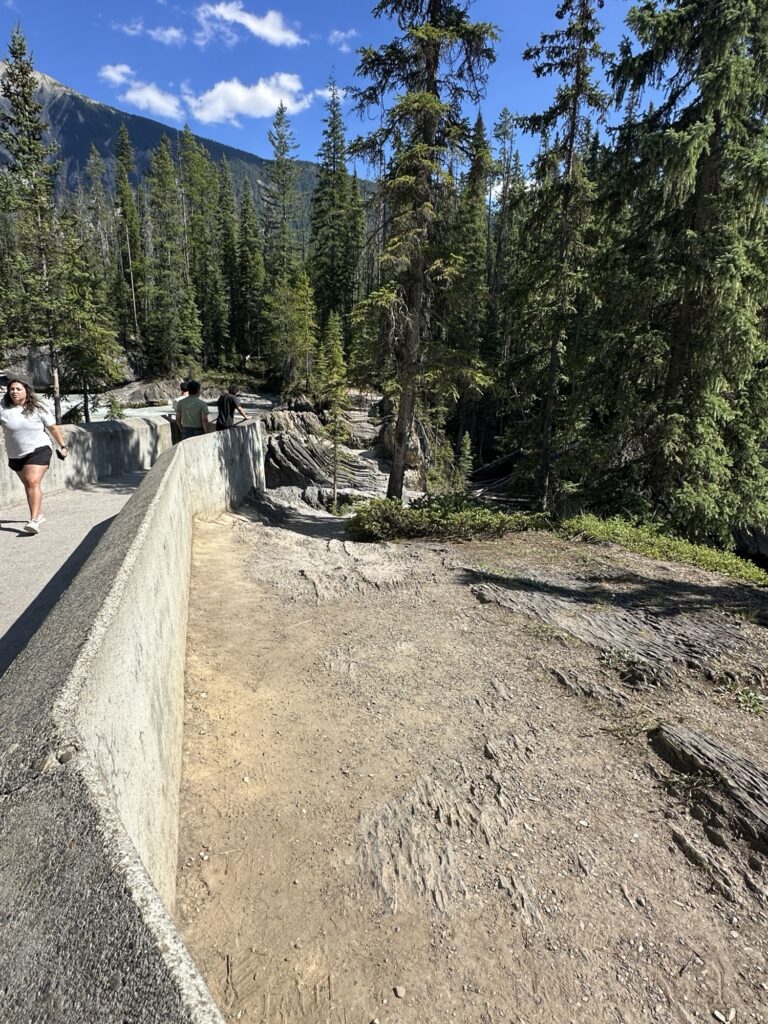
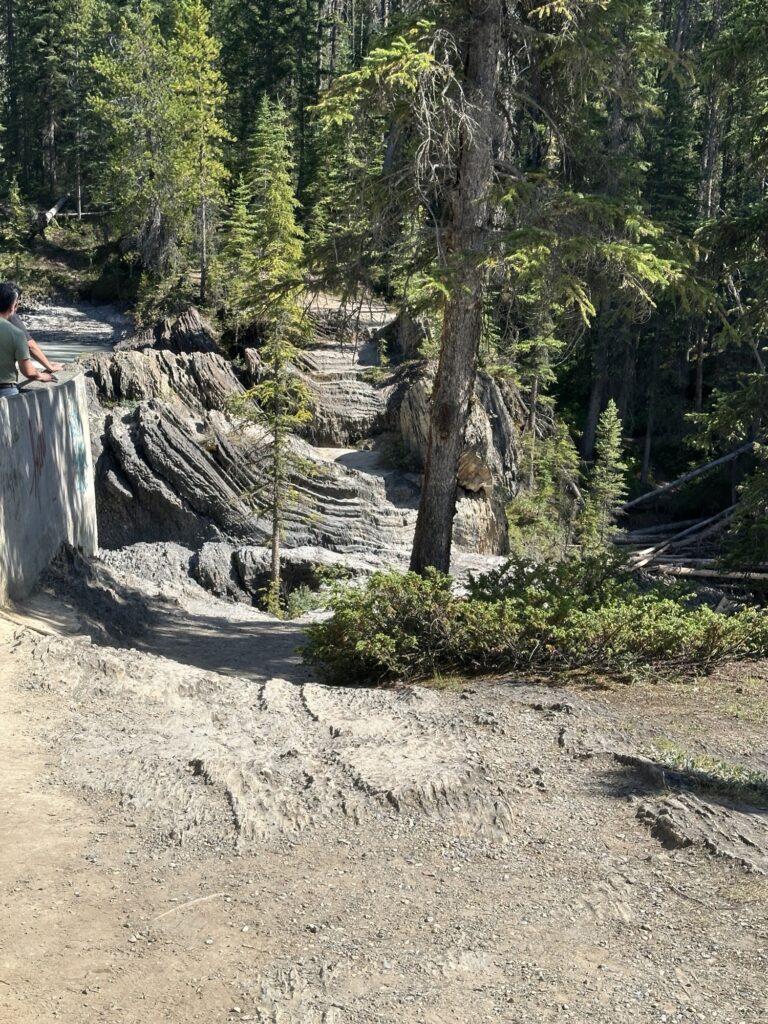
We weren’t allowed to go across, but their way a viewing platform to see it.The view of the path of the natural bridge
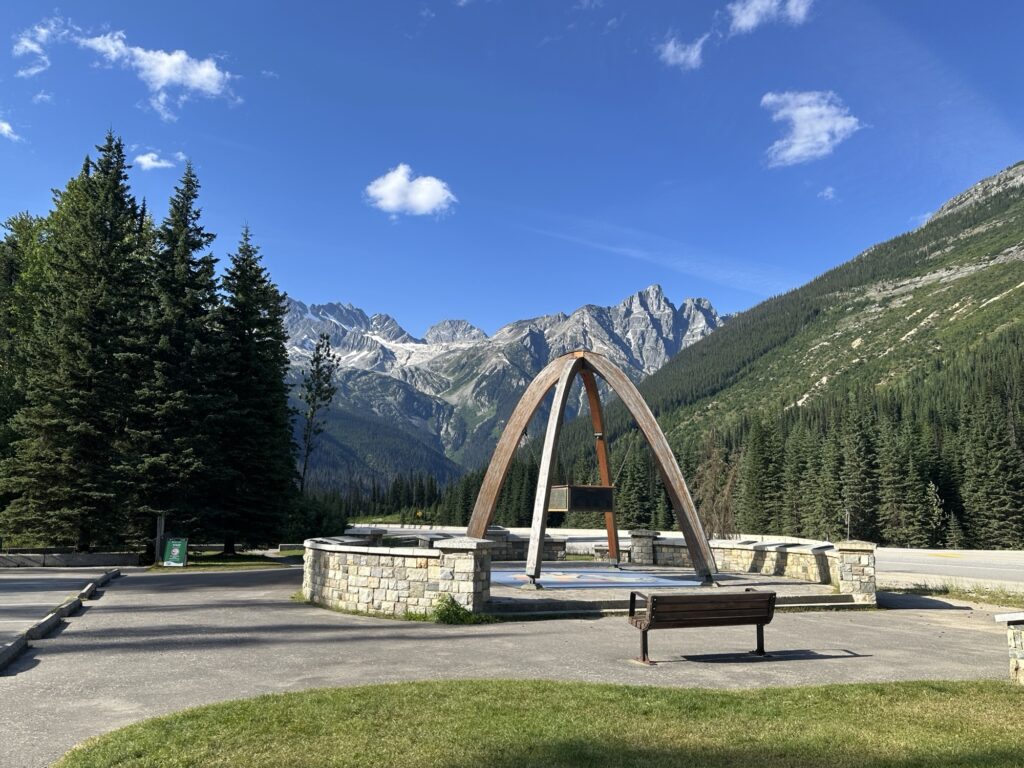
Next was quick stop at Roger’s Pass Summit.
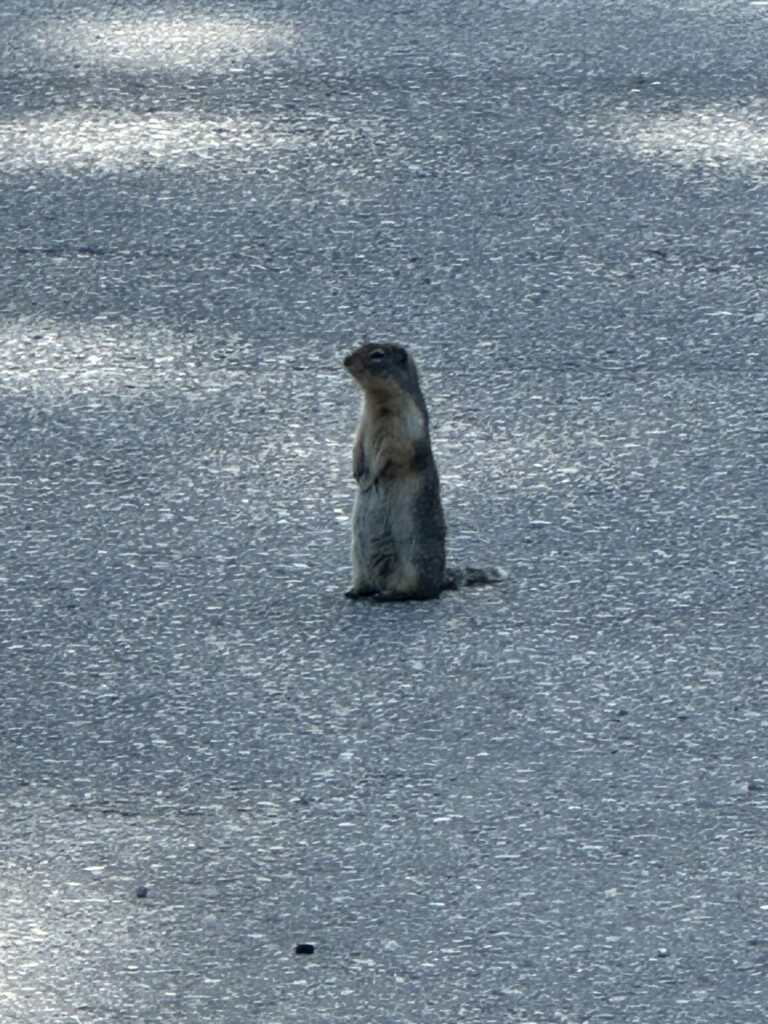
There were several adorable animals that were hanging around – I couldn’t stop laughing at them.
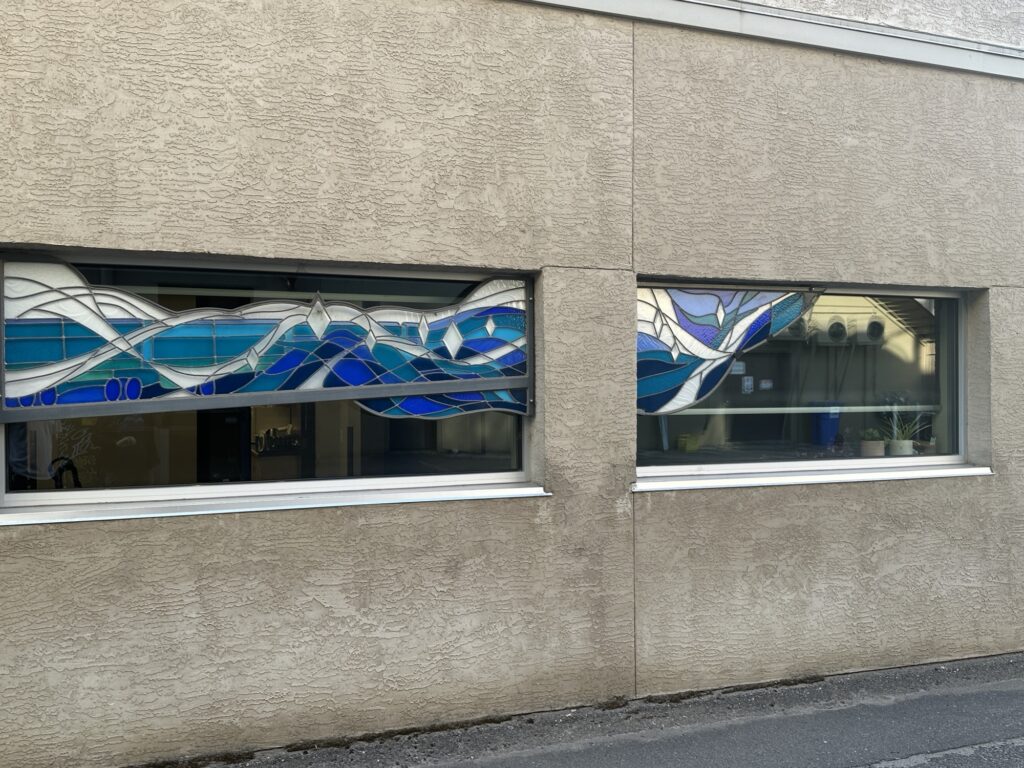
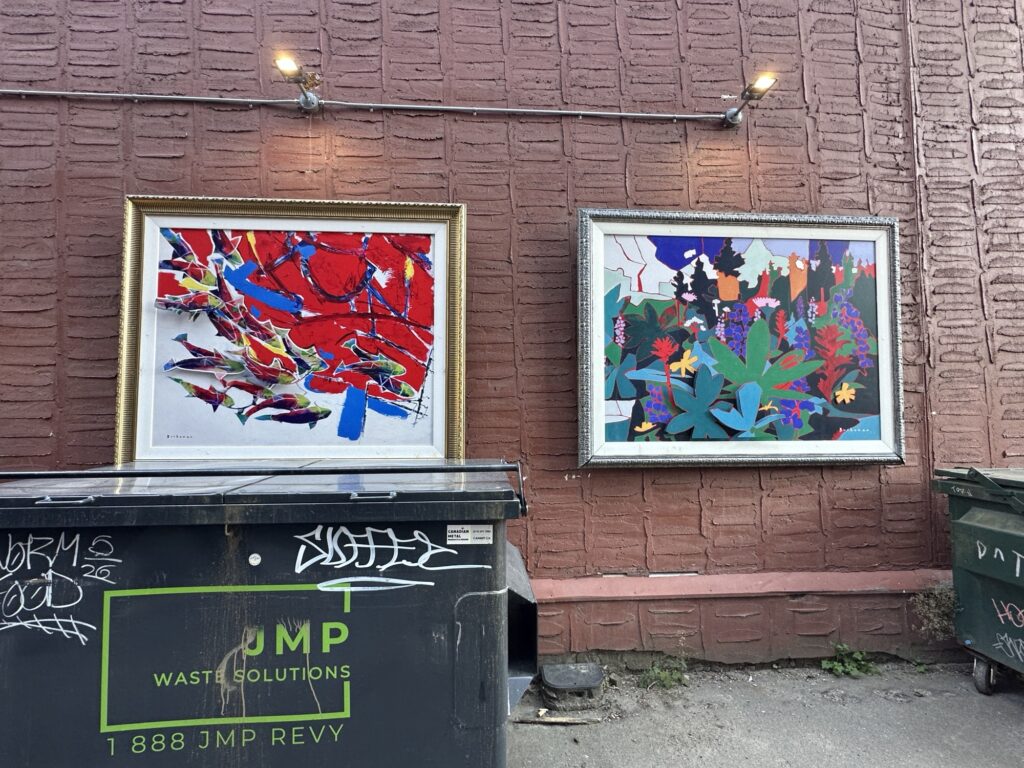
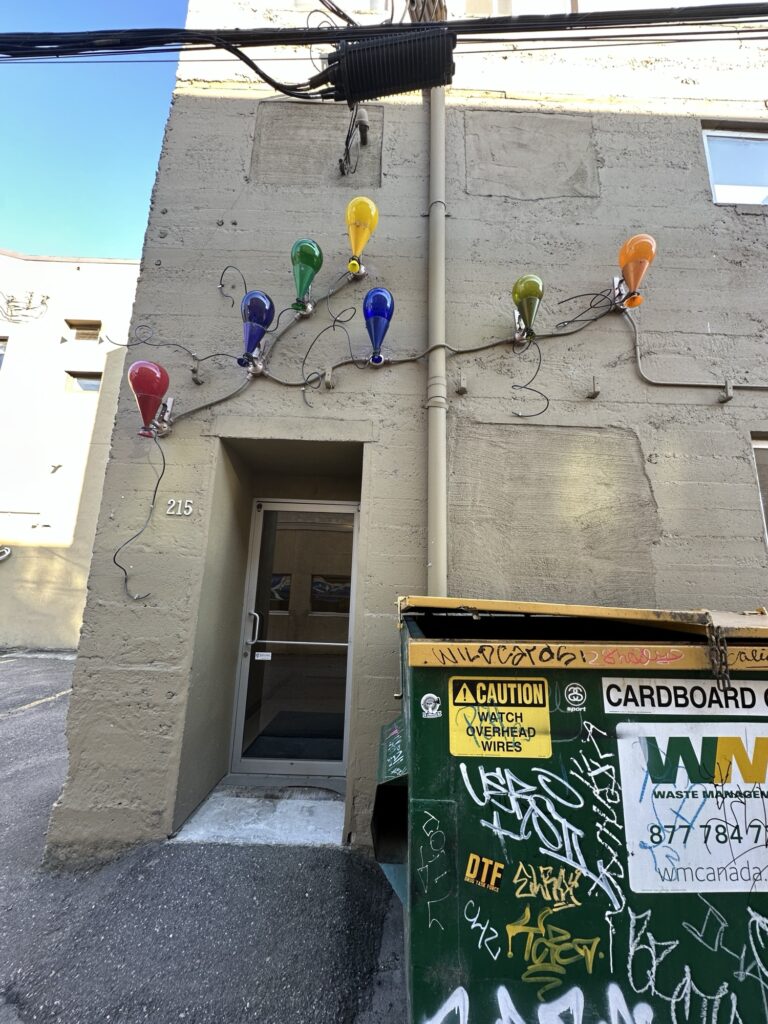
As we approached Revelstoke it was a little bit smoky, but not too terrible. We checked into our Hotel – it was called The Grizz. Revelstoke, or “Revy” as it is called by the locals, is a charming place. We loved the vibe. There was a spot called an “allery “ which is an alley turned into an art gallery. Here are a couple of the pieces in the alley on the sides of buildings.
For dinner we went to a restaurant called the Taco Club with our friend Eliza and her partner Wade. It was so great to see them and hear about the life they are building in Revy. We did a bit of research with Eliza and Wade’s help to plan our route through BC for our final day. The wildfires were quite intense in places and we had to adjust our routes as the main highway route was closed.
In the morning, Lawrence’s Mom offered me some coffee and when I responded that I preferred tea, she was quite excited as she LOVES tea. She even has a gorgeous Chinese tea table! We had a lovely chat. I also met her husband and got a tour of their garden. They were both very warm and welcoming and fun to talk to. His Mom actually sent me home with some delicious green tea, which I was dismayed to realize that I forgot when I reached Calgary.
I didn’t actually get to see Mog in the morning.
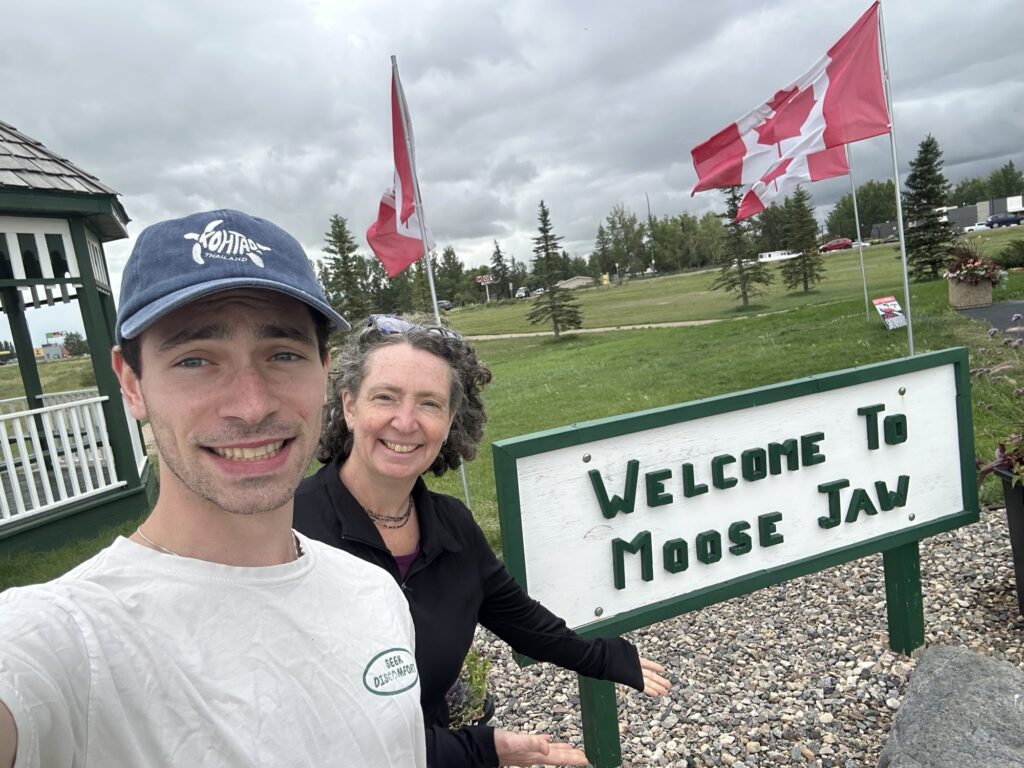
Our first stop was in Moose Jaw. I loved it!
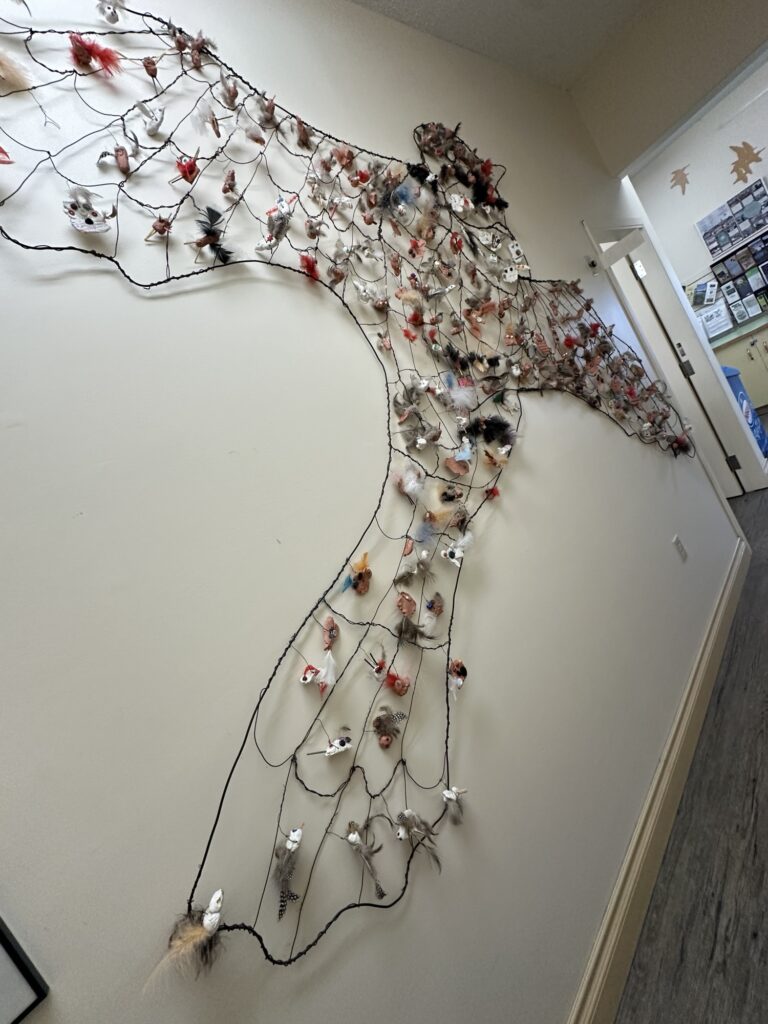
Art in the Visitor’s CentreMac the Moose
Mac the Moose was apparently the world’s tallest Moose sculpture for three decades until it was discovered that a new moose sculpture in Stor- Elvdal in Norway was taller. They had a friendly moose summit and the two municipalities signed a tongue-in-cheek “Mooserandum of Understanding.” Norway gracefully conceded the height title back to Canada once Mac was retrofitted with bigger antlers, while Canada agreed to call Storelgen the “shiniest and most attractive moose in the world”.
Moose Jaw had a great Visitor’s centre and also a snowbirds plane.
We also bought some beef jerky and one of the pieces looked like a bear
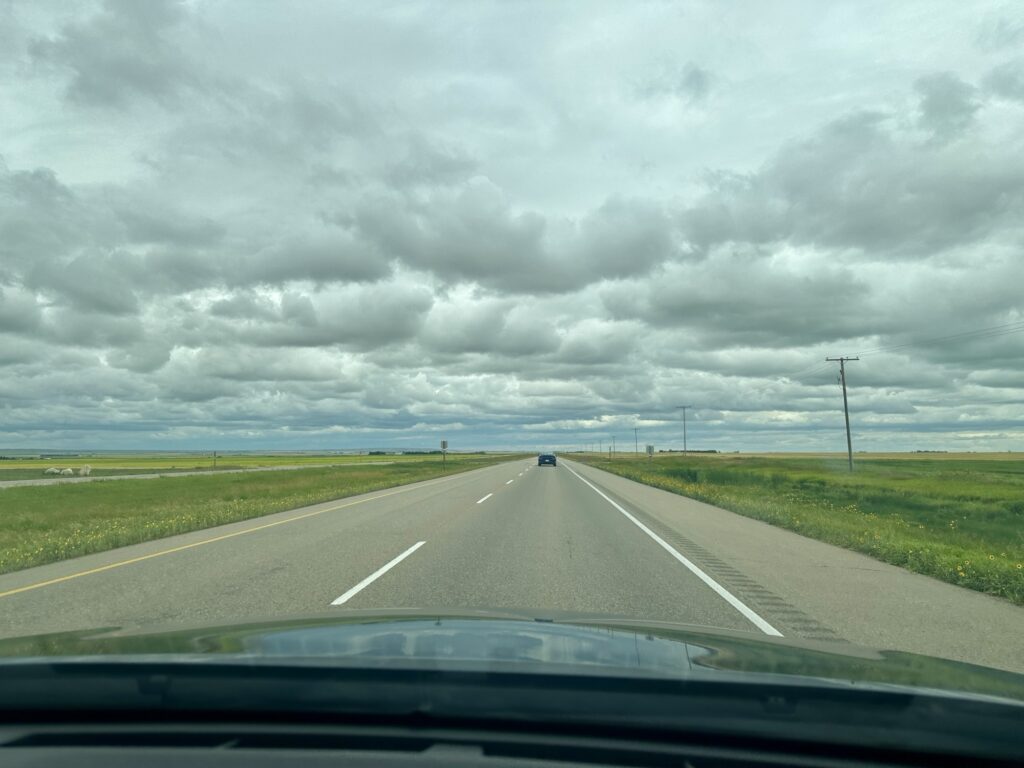
I was quite enthralled by the Praires. Looking around and seeing sky for as far as I could see was quite amazing and beautiful.
Our next stop was the Chaplin Nature Centre where there was a museum explaining the importance of Saskatchewan’s three salt lakes on the populations of North American migratory birds. we both learned a lot!
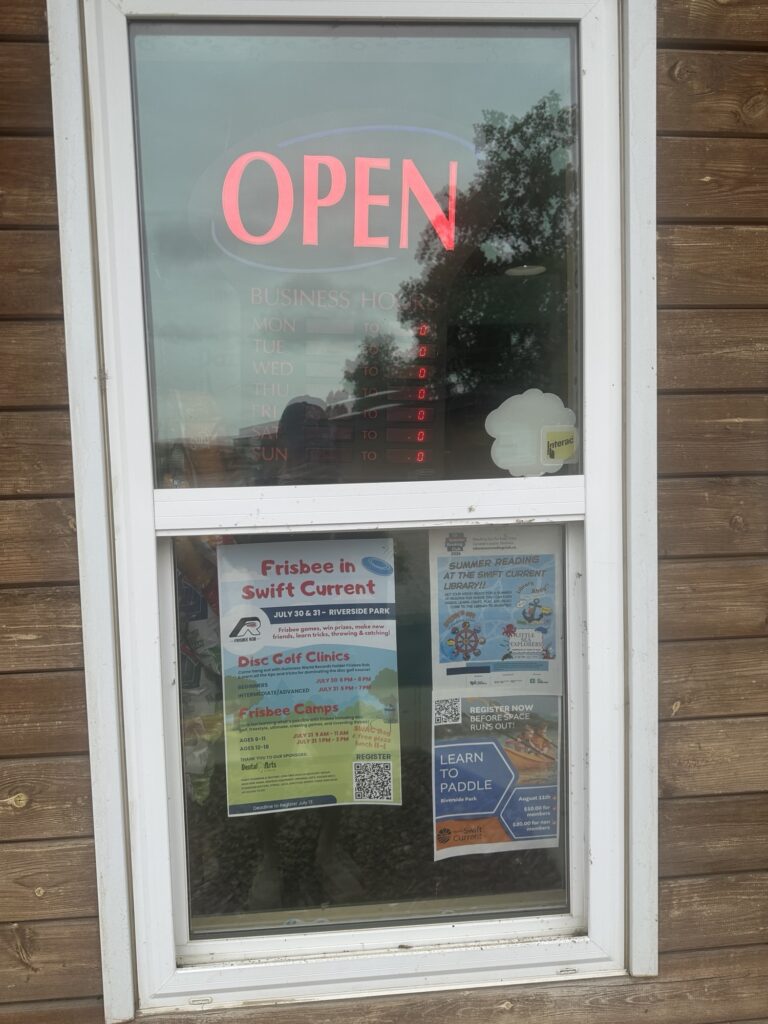
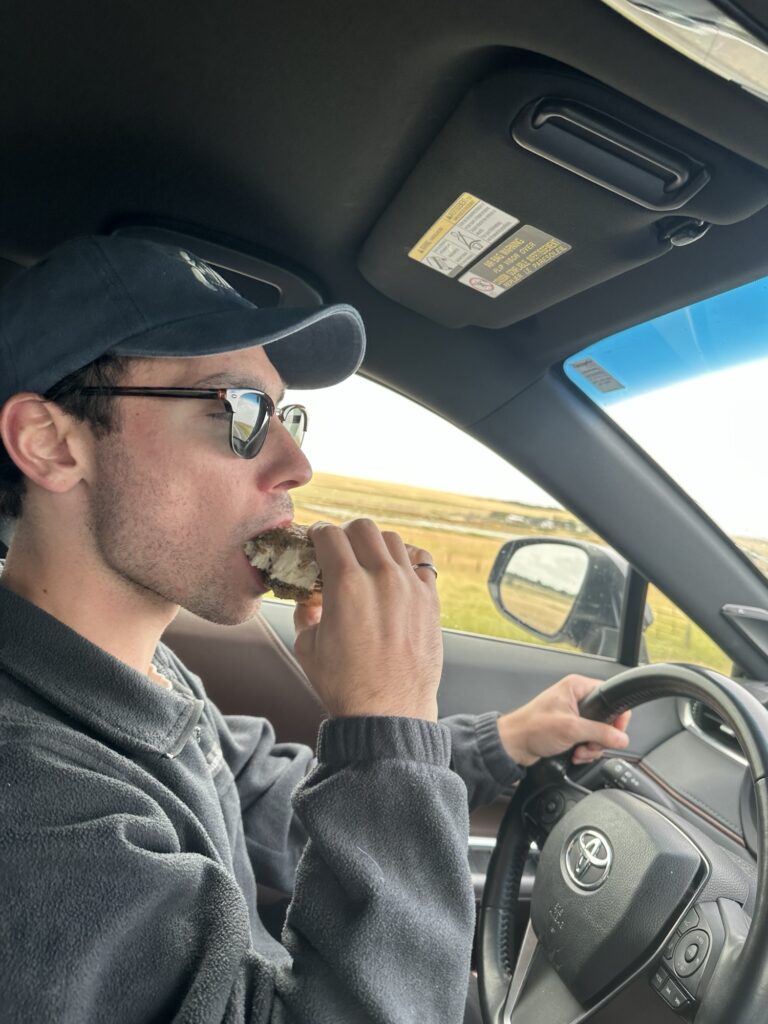
Lake Chaplin sodium sulphate extraction siteA community art installation created with students who visited the museum.We stopped at a cute ice cream place and got a delicious handmade chocolate chip cookie ice cream sandwich and we were pleasantly surprised to see a flyer for Ultimate Frisbee in Swift Current!Yummy ice cream sandwich we shared…
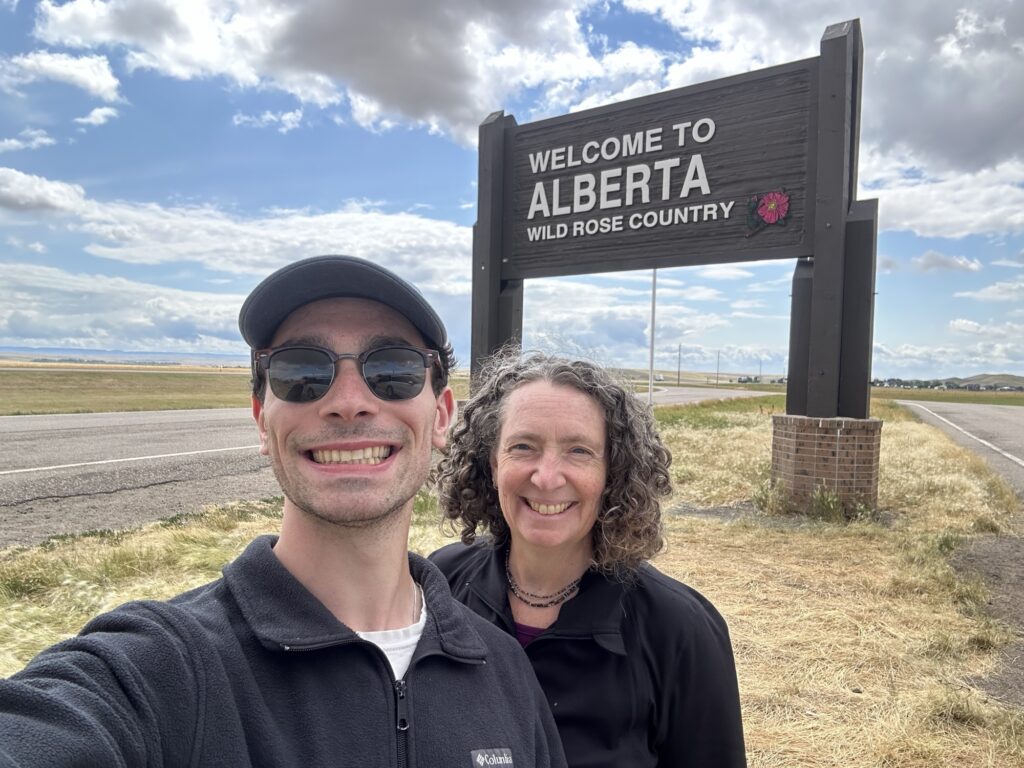
Our next stop was the Alberta border.
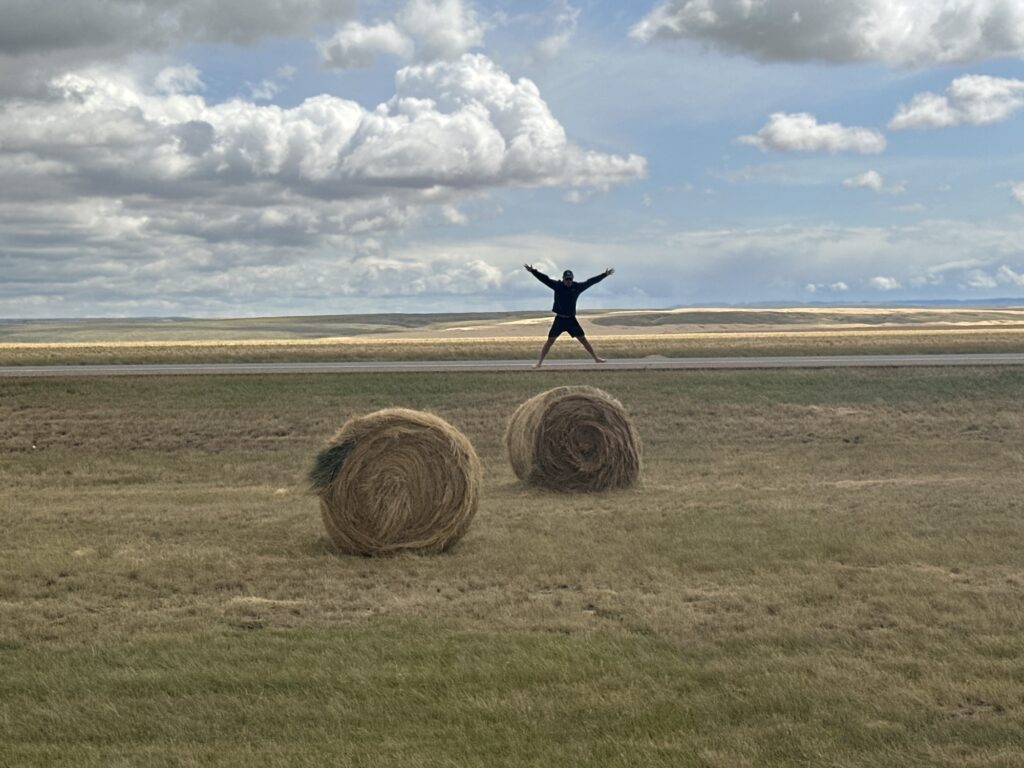
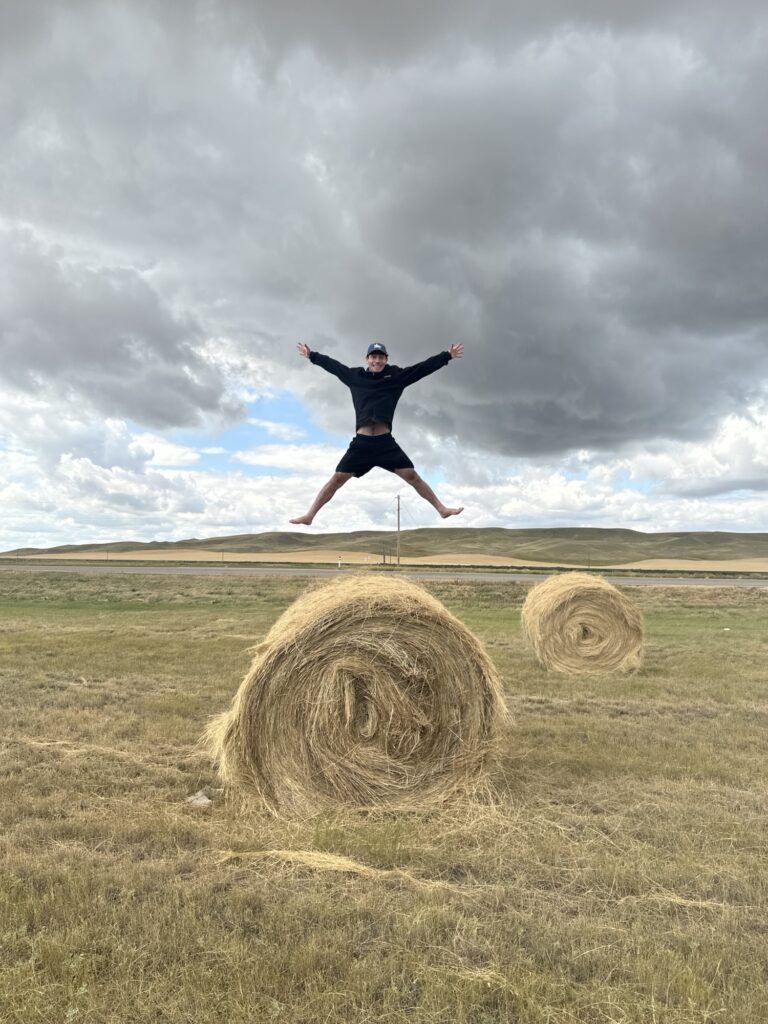
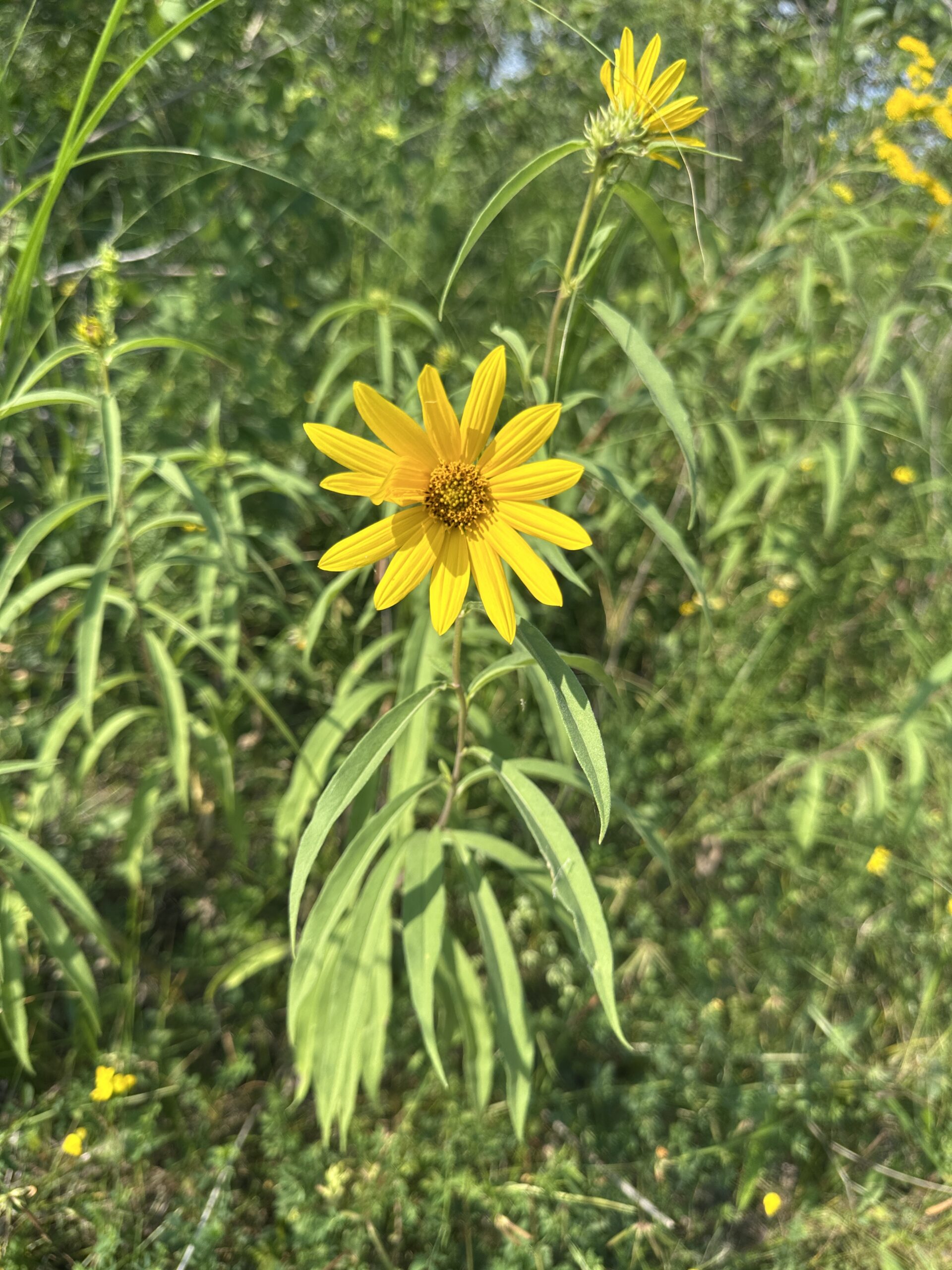
Erez playing with the hay balesThere were so many beautiful wildflowers at the side of the road. I finally pulled over to take a photo.
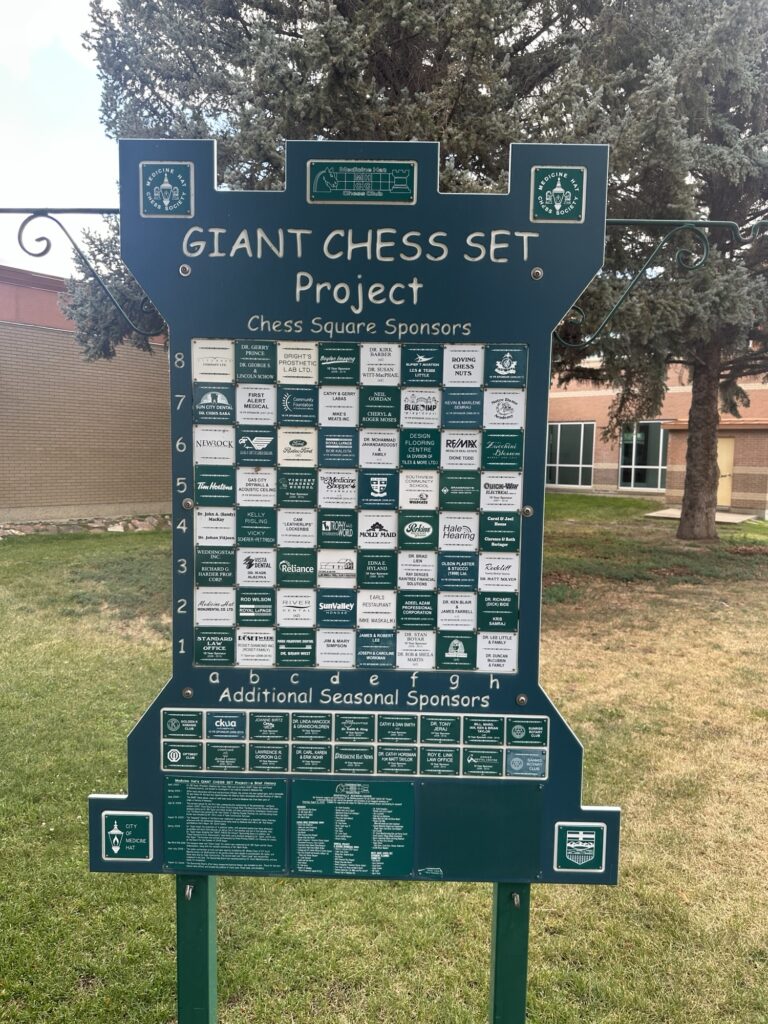
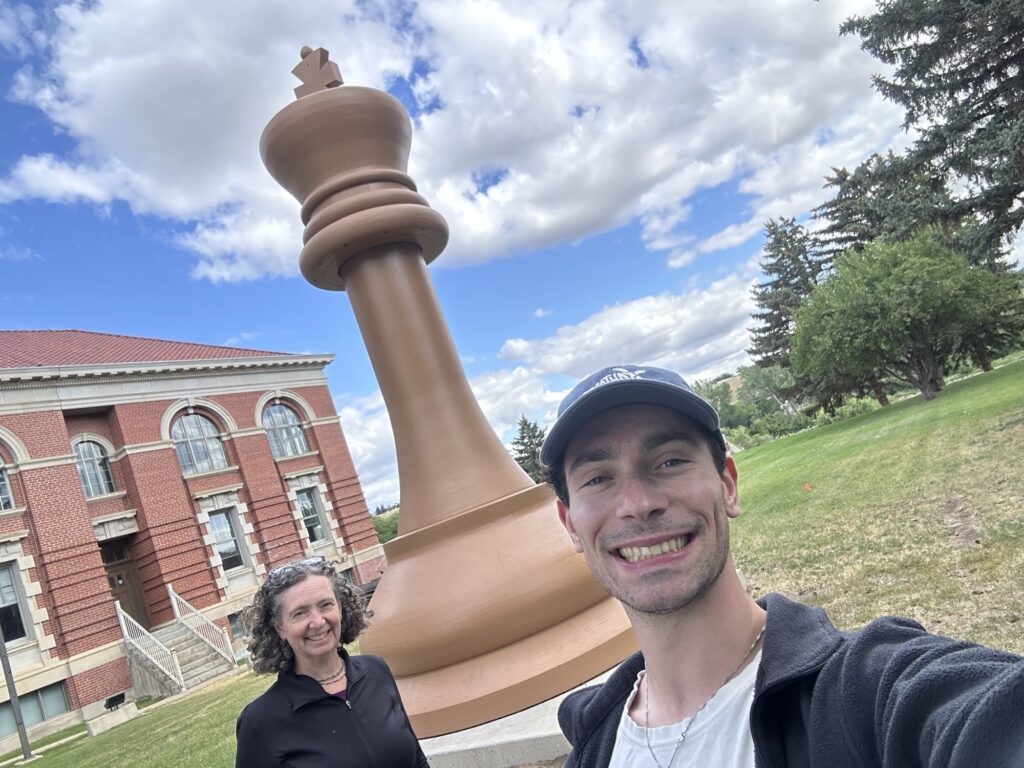
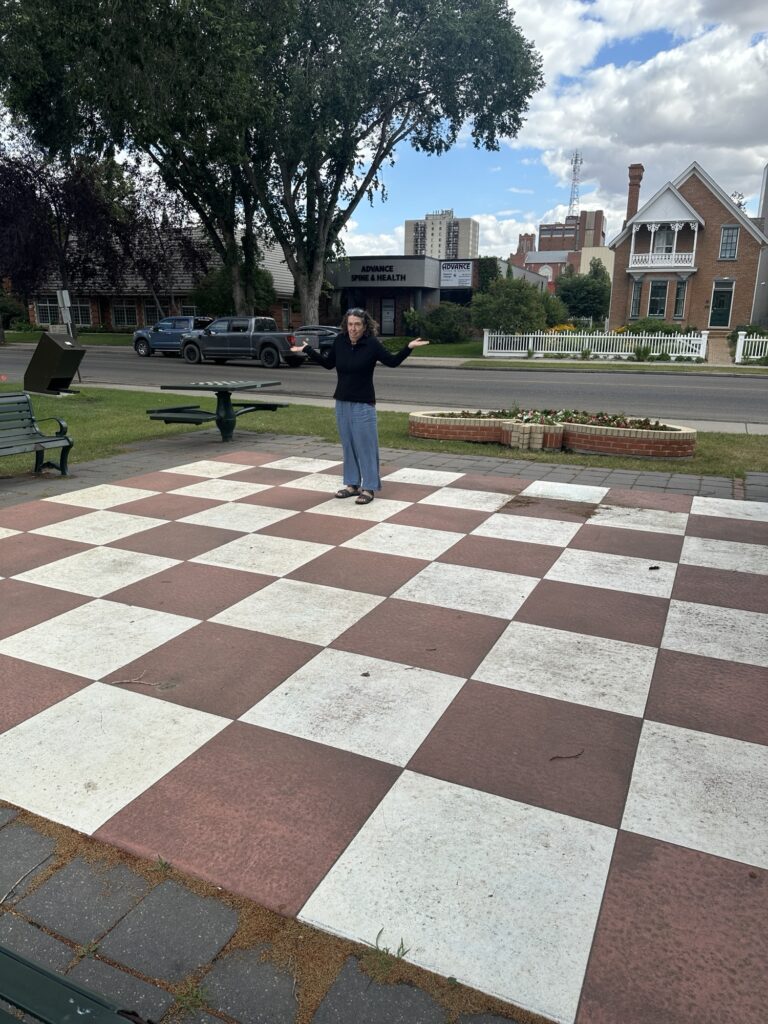
Our next stop was Medicine Hat, to play with a giant chess set and see the World’s largest chess piece. However, the pieces were nowhere to be found- only the board and the giant King piece.
Beautiful Medicine HatMore roadside photos
We finally reached Calgary and checked into our airbnb, and made plans to catch a show at the Calgary Fringe Festival called “Duck”. We got there a bit early, so we found a place close by to grab a bit to eat, coincidentally called “ The Dirty Duck”
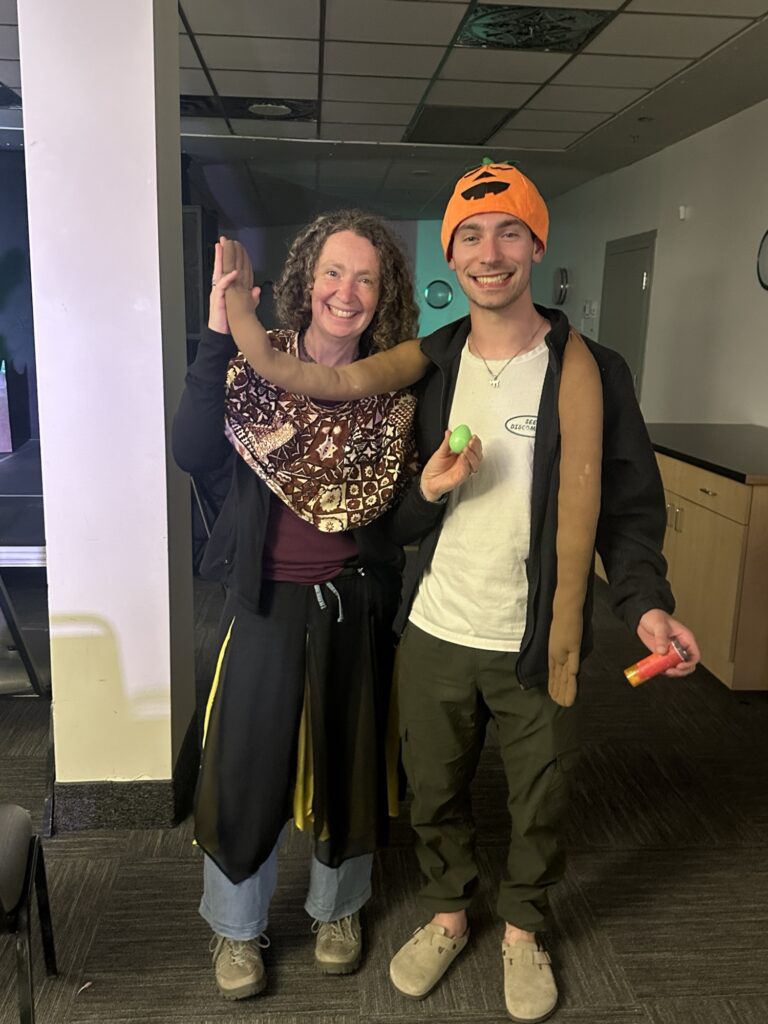
There were only 6 people in the audience, and we were invited to choose a costume and an instrument so we could participate. It was a shirt show – only 50 min and had a decent amount of interaction with the audience. We enjoyed it.
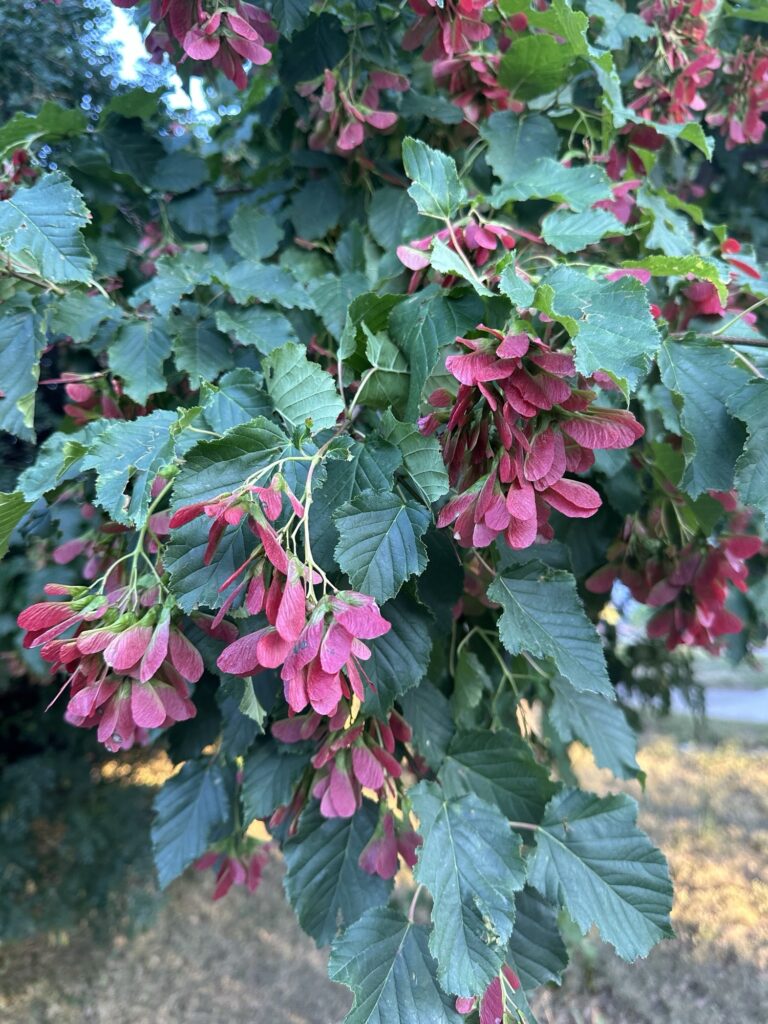
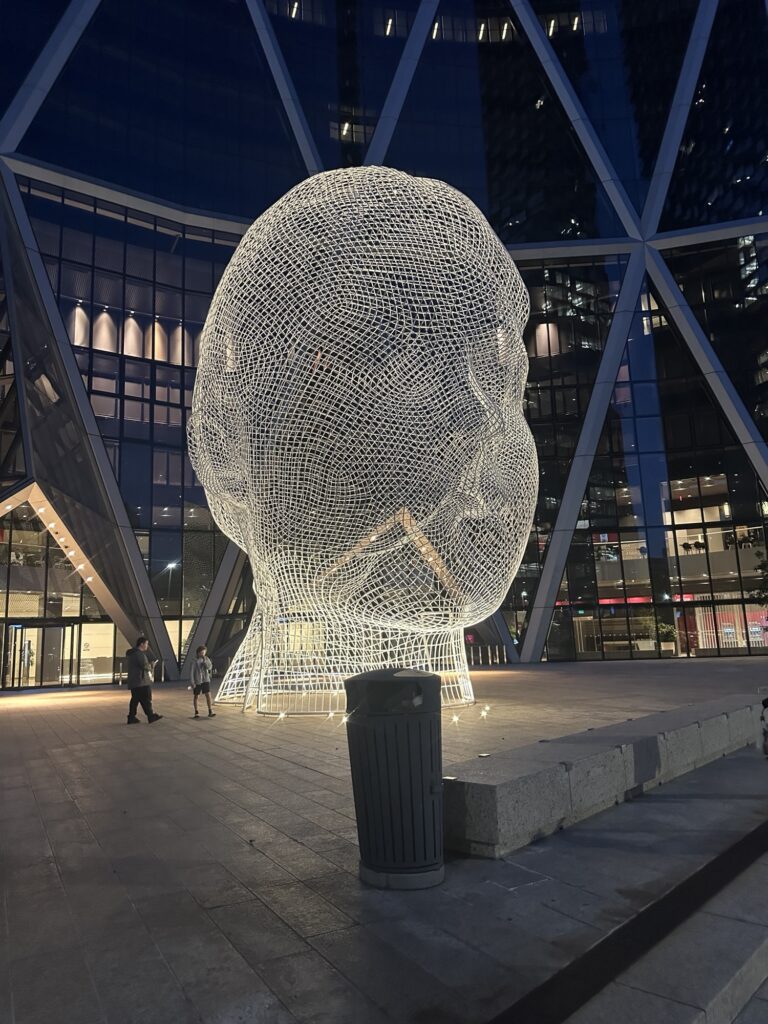
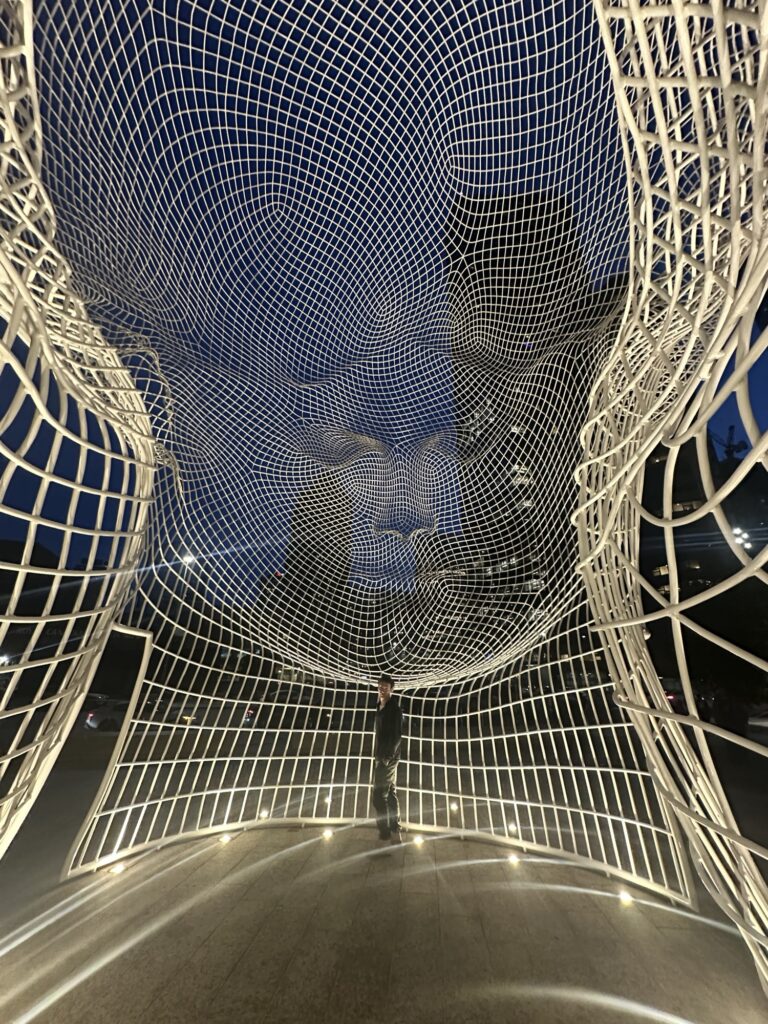
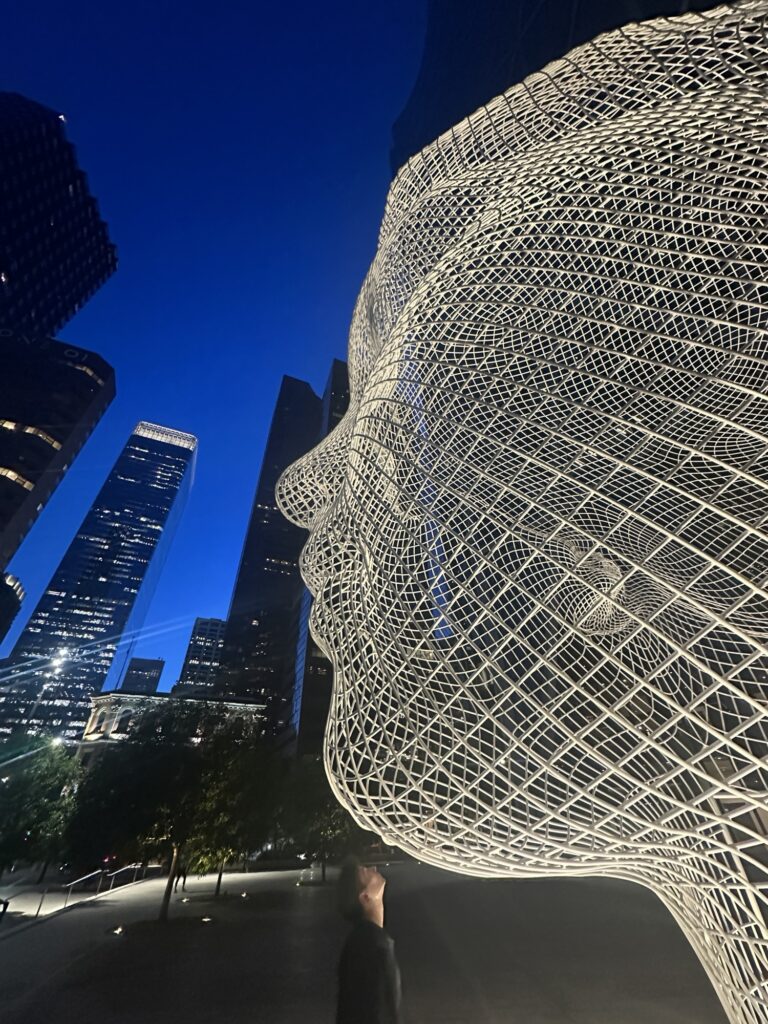
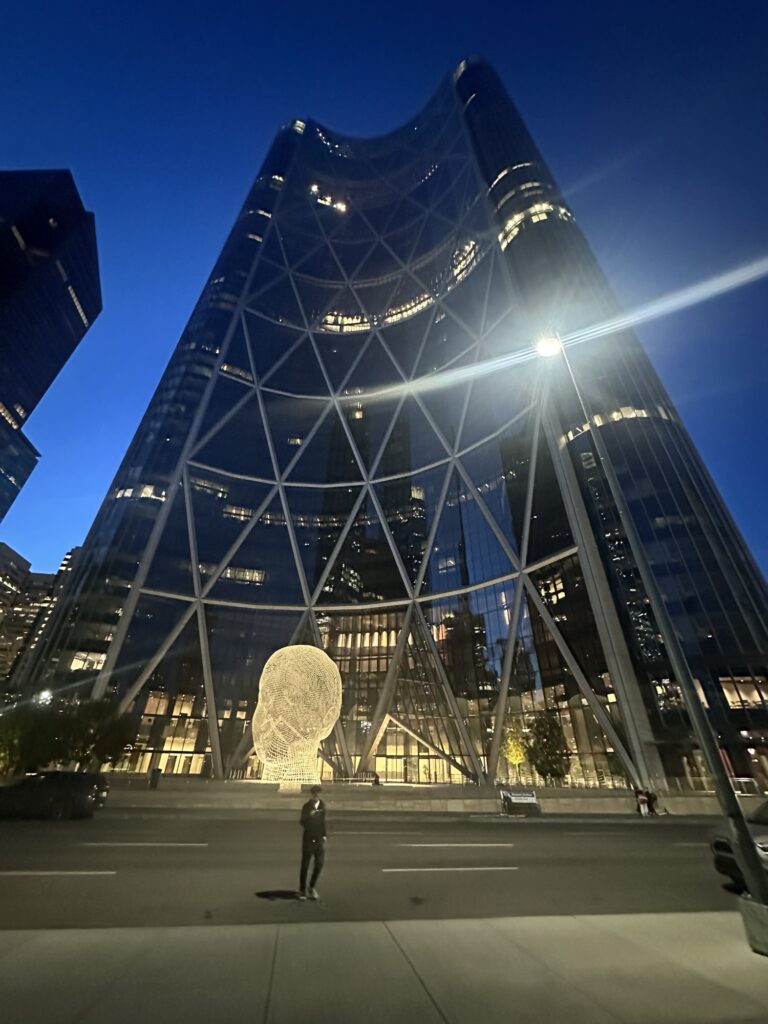
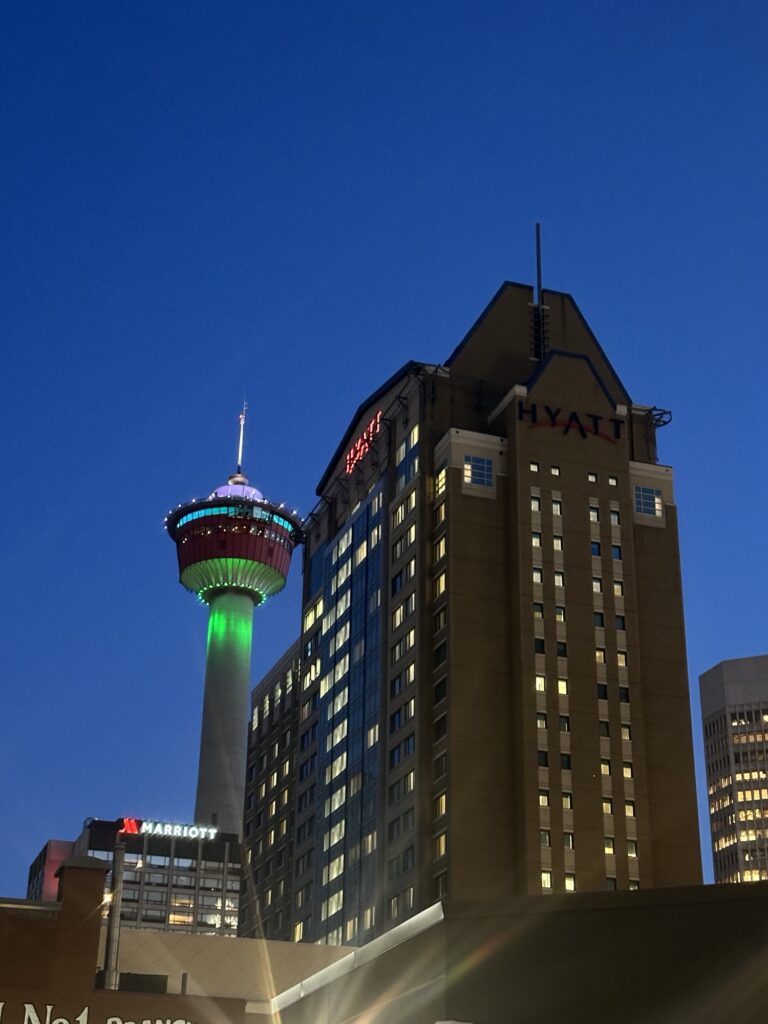
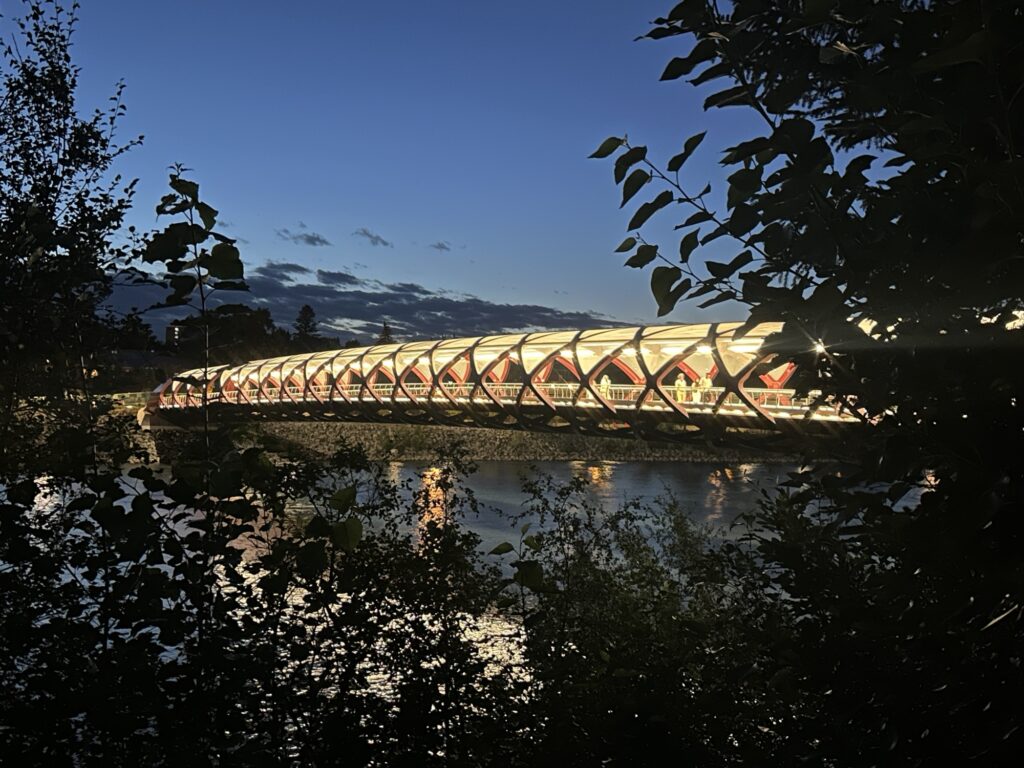
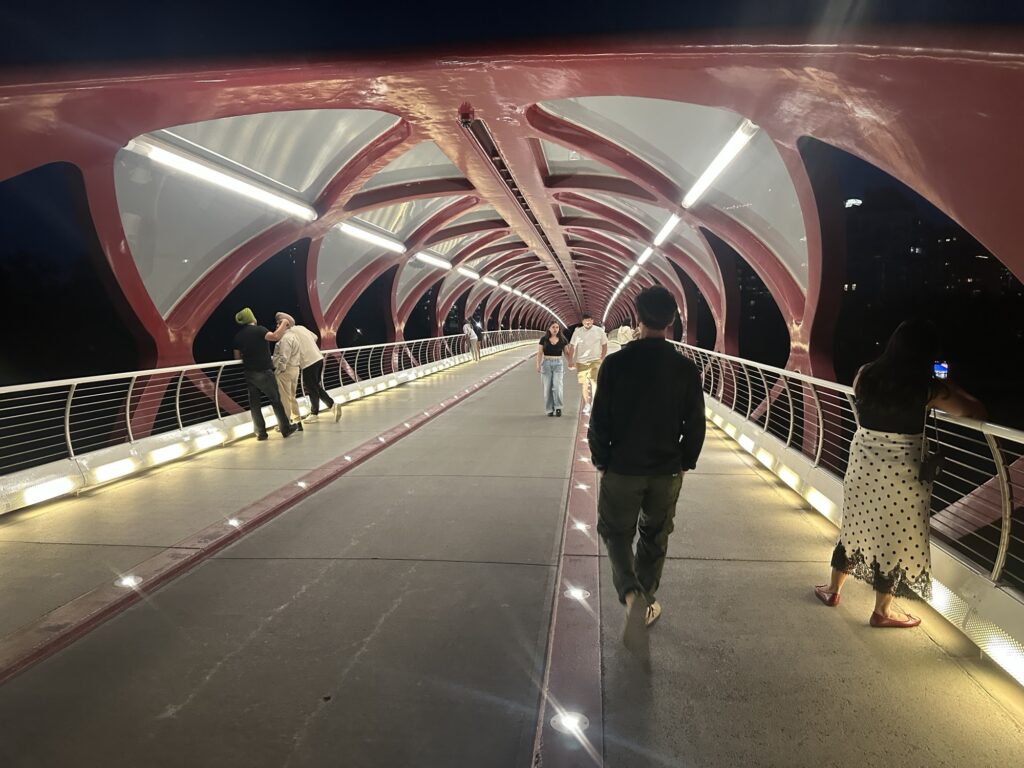
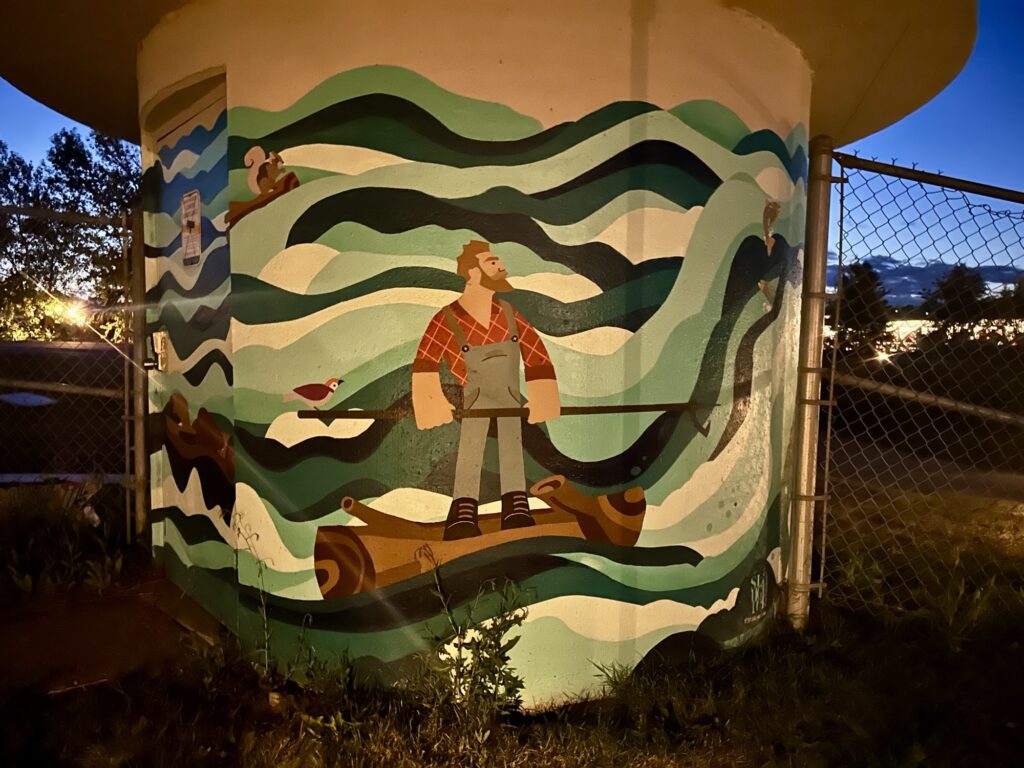
Me with my skirt and ruffle- Erez with his pumpkin hat and extra set of arms I love interesting utility hole covers Cool tribute to Calgary native Paul Sun Hyung-Lee from Kim’s Convenience ( among other things)Cool maple red maple keysA sculpture downtown called “Wonderland” by Jaume PlensaFrom the inside Calgary towerPeace BridgeFun mural
All in all it was another pretty amazing day full of great activities.
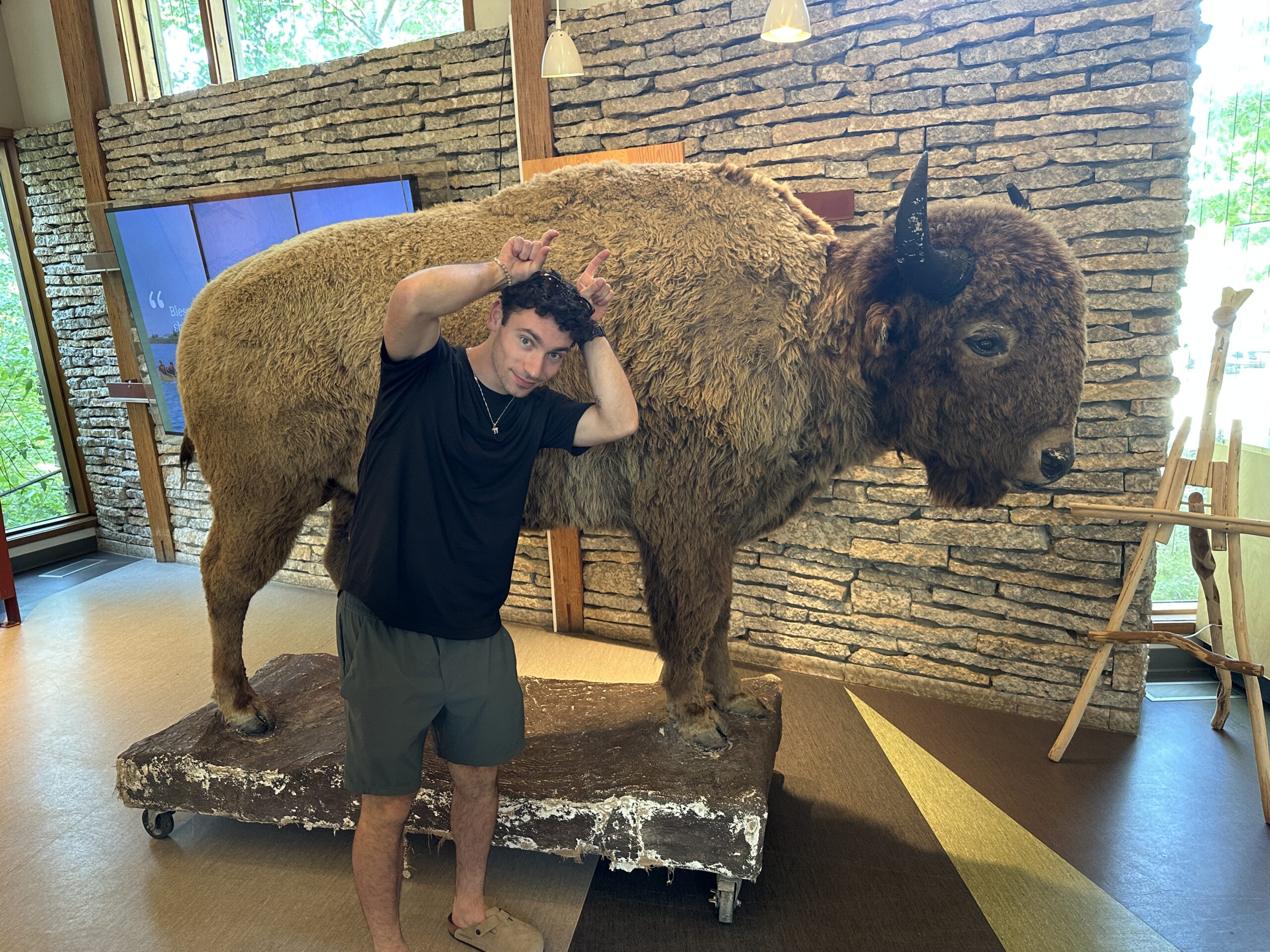
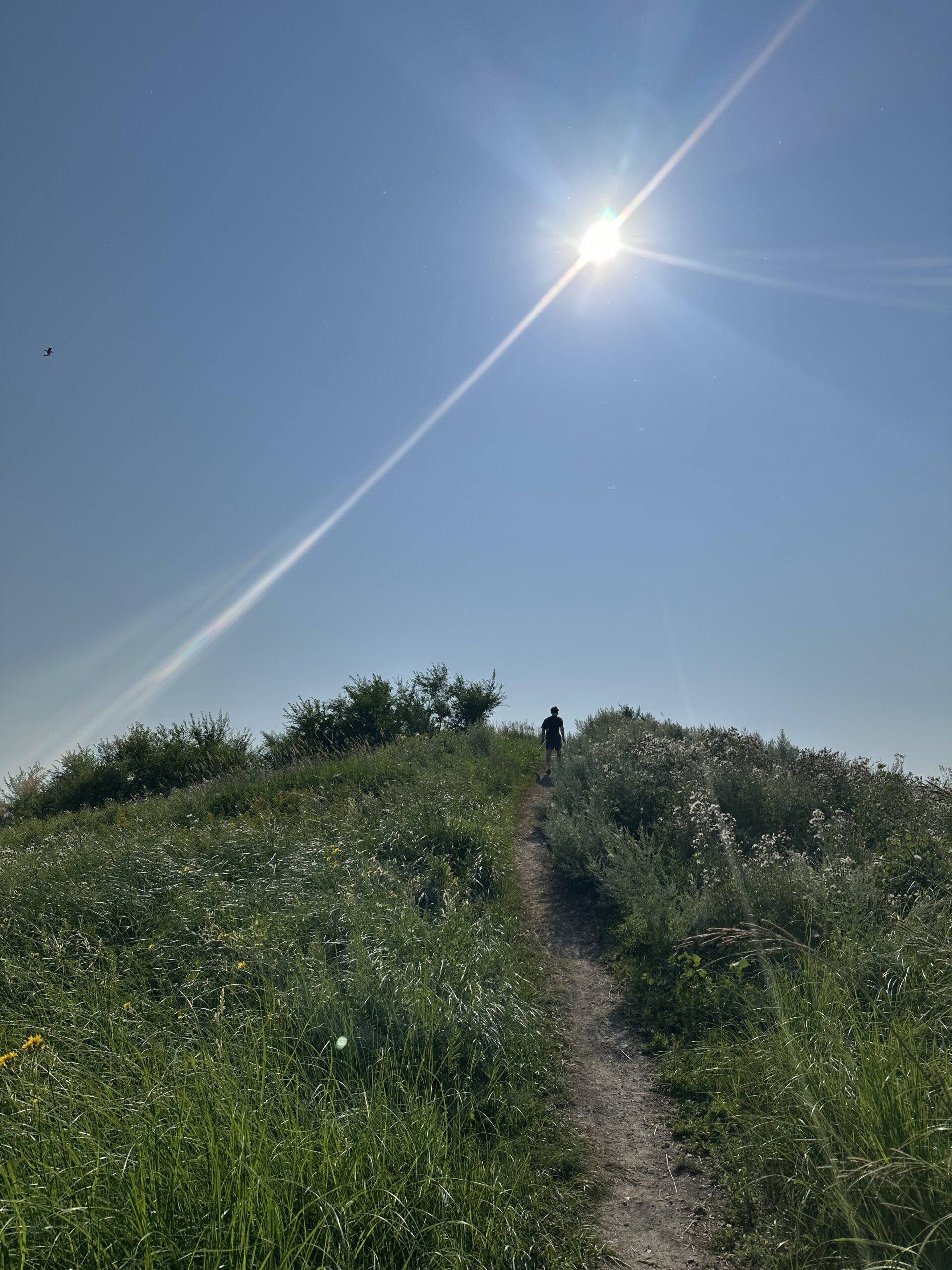
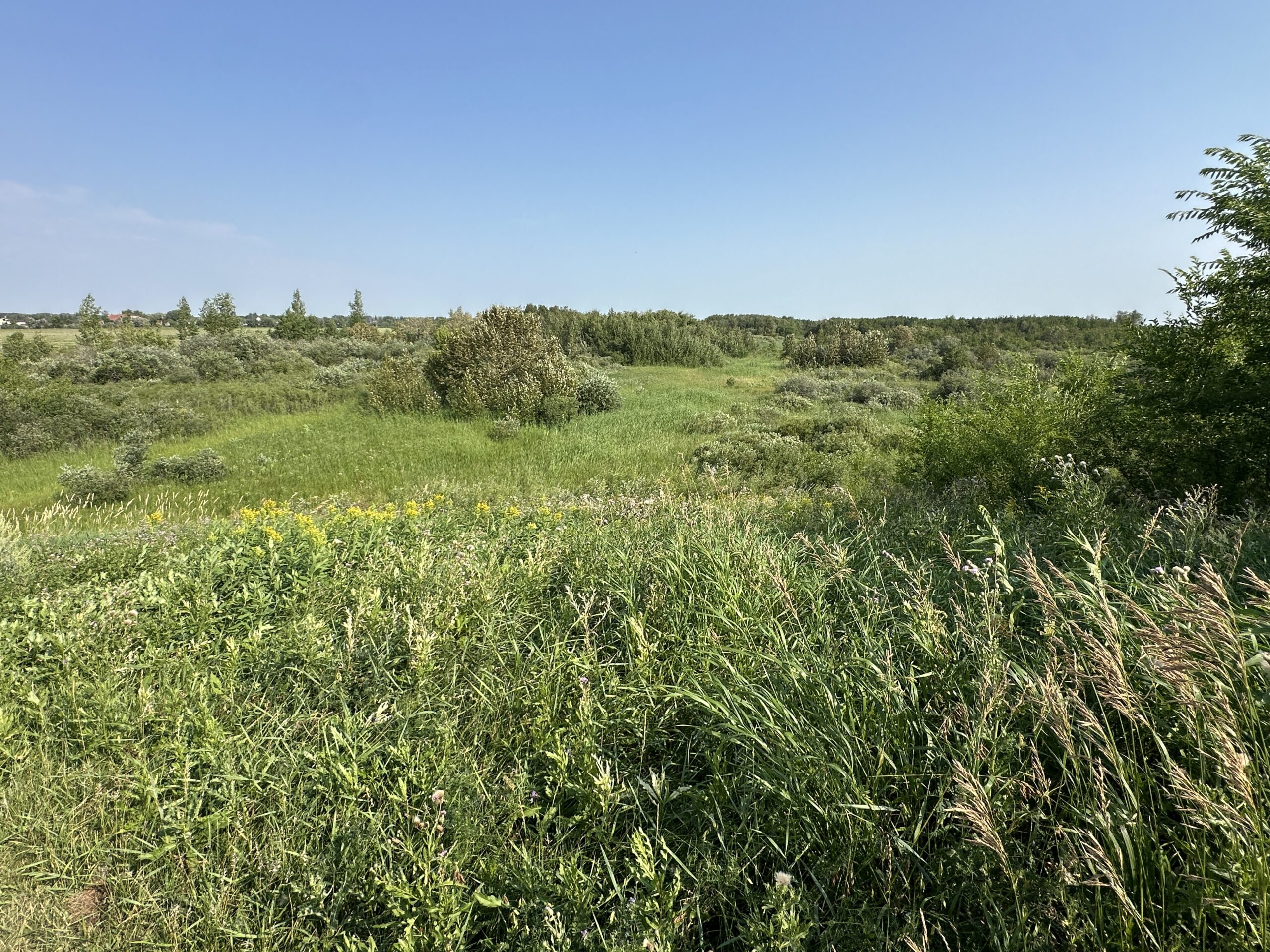
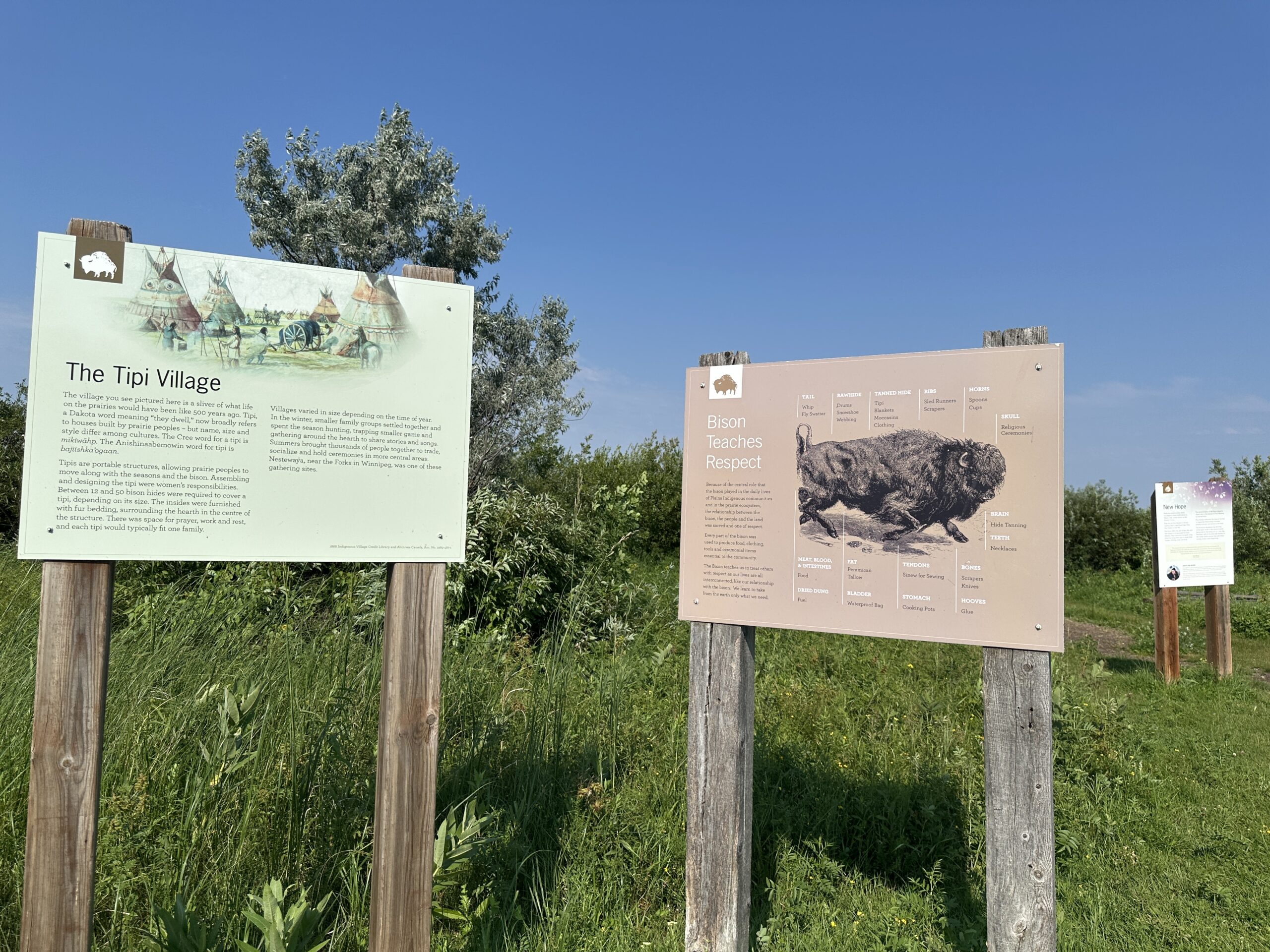
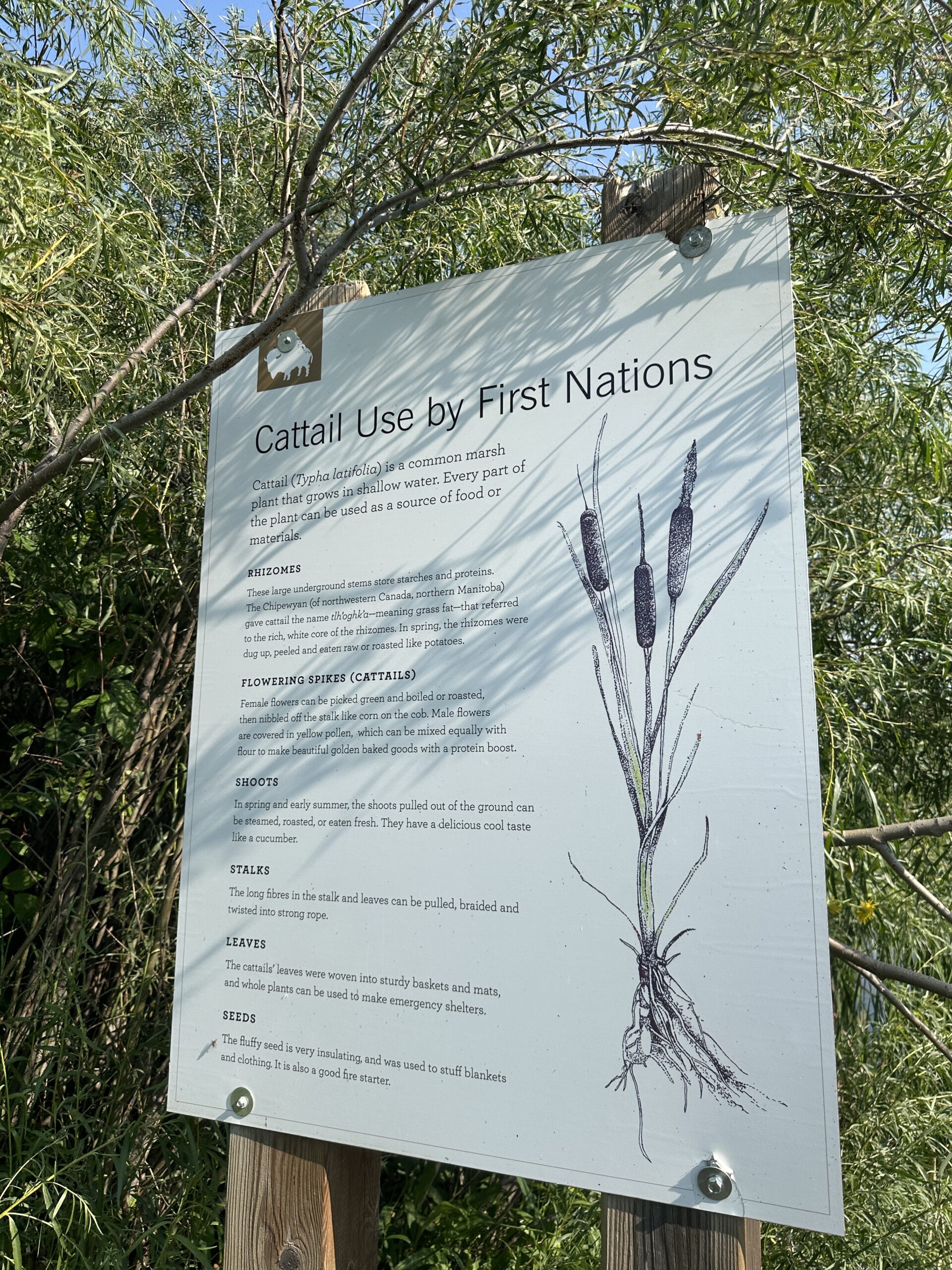
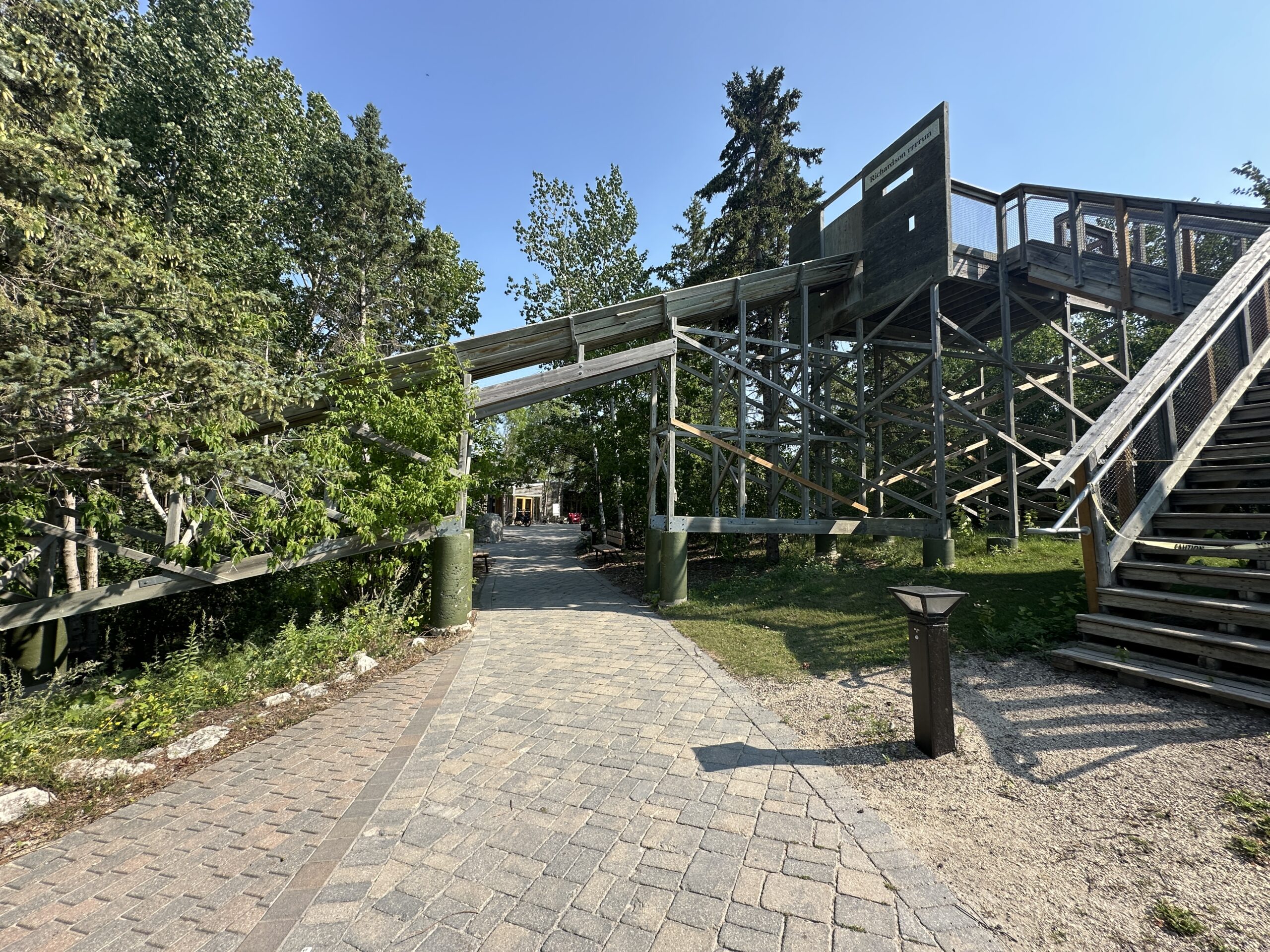
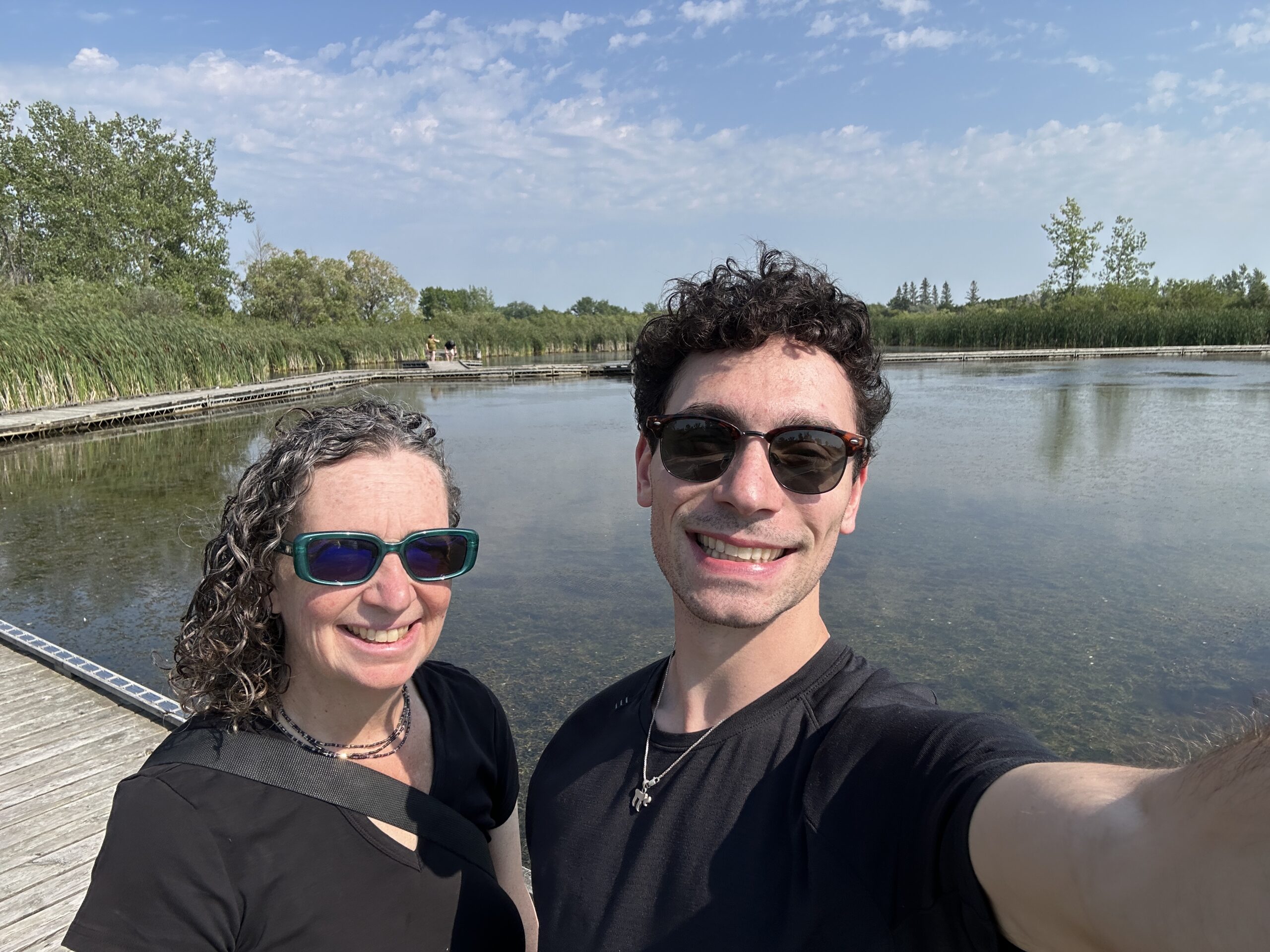
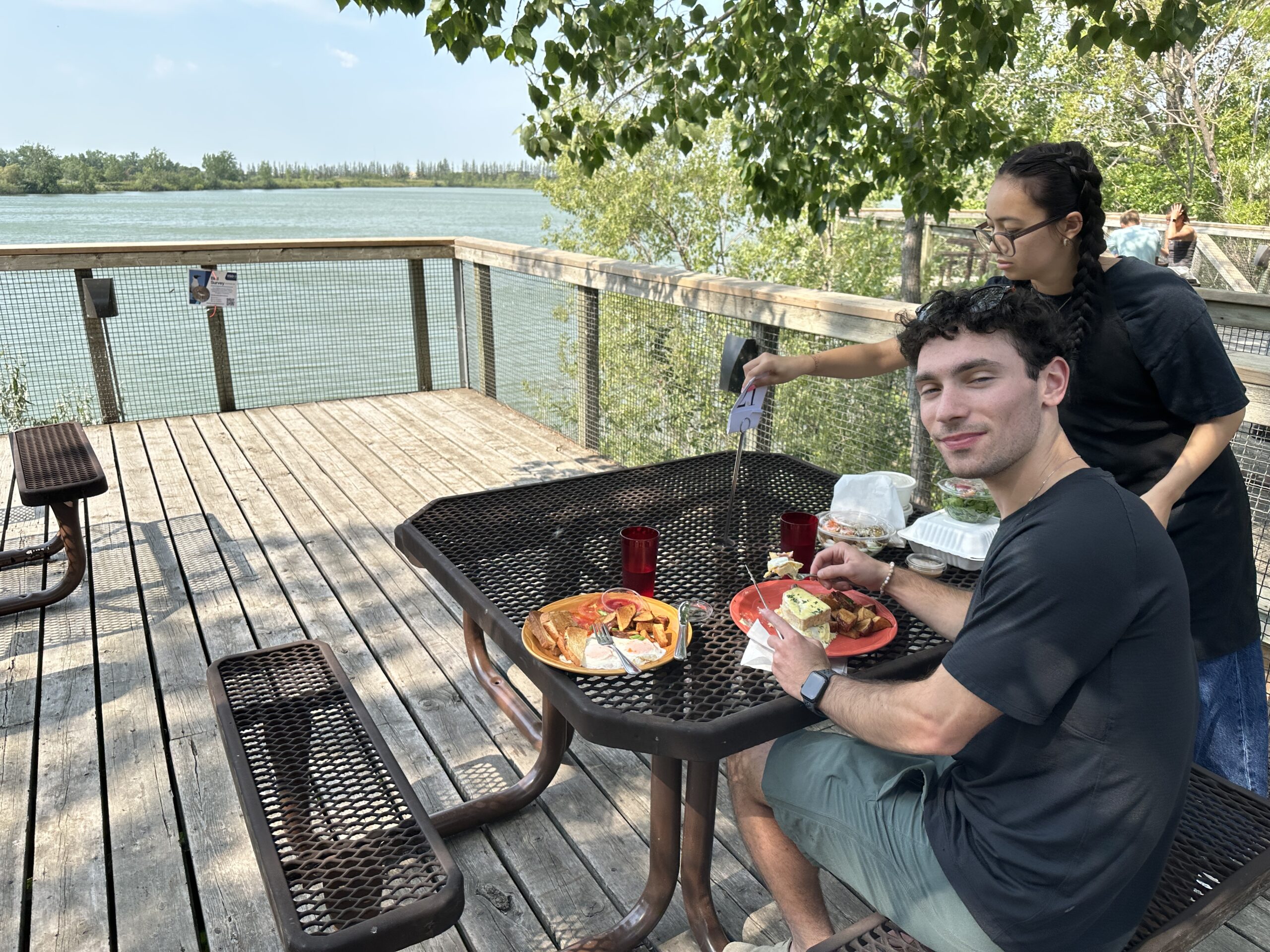
It is 660 acres of reclaimed green space that serves as a gathering place, with an education centre, trails, delicious cafe, a small Bison herd, many migrating birds, floating boardwalks – it was great – I could have spent all day there instead of the hour we had allowed for the stop. I would highly recommend for any nature lovers out there.
One of my favourite sounds – birch trees rustling in the wind.giant waterslideOne of the floating boardwalksapartment complex of birdhousesBreakfast viewPart of the Bison herd
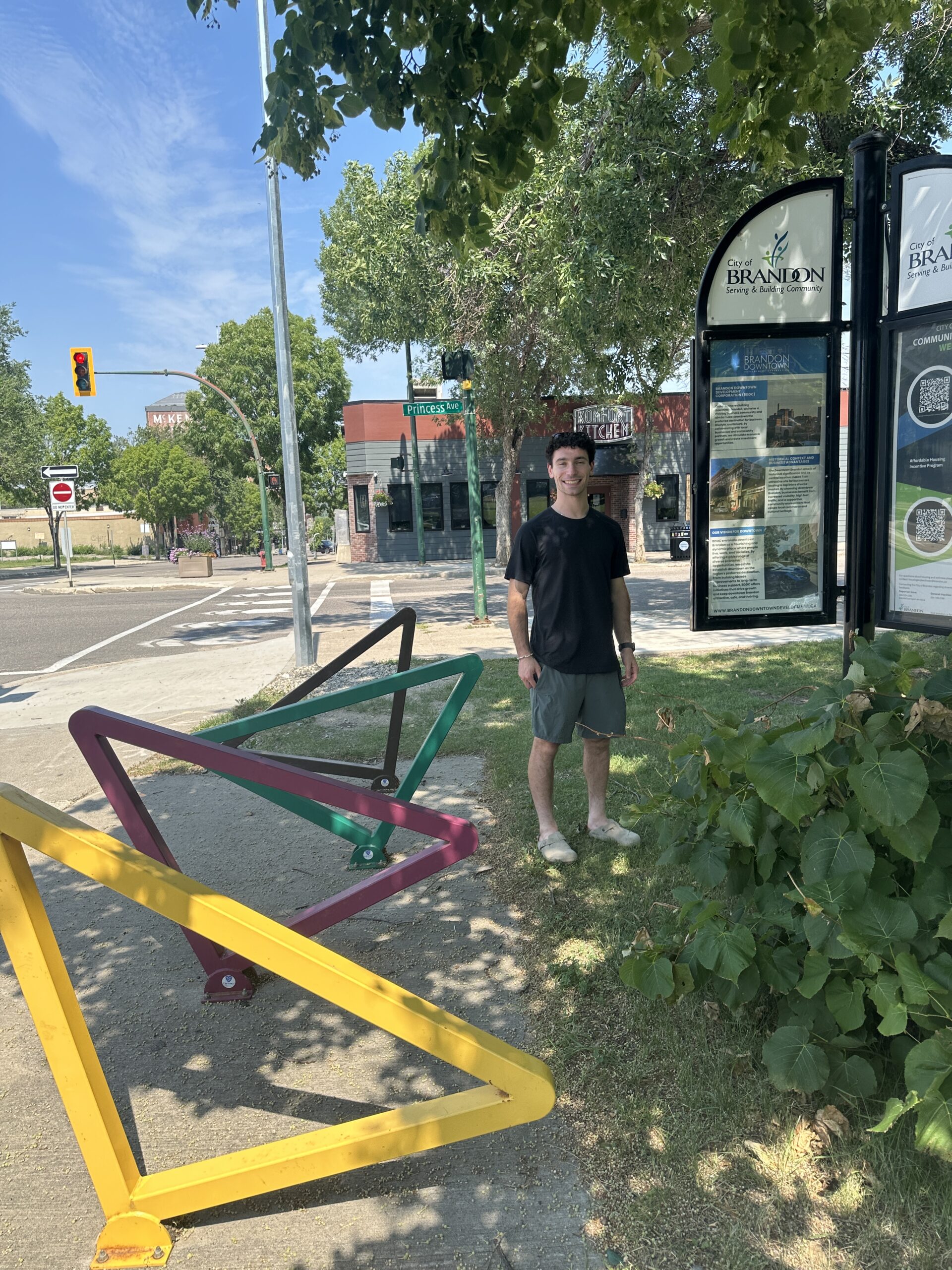
I would definitely love to come back. Our next stop was Brandon, Manitoba. We were recommended to take a stroll through Princess Park. It has some beautiful landscaping, but it was quite small, and we decided not to stick around for our planned lunch break as we were not that hungry yet. We picked up some lunch to go. Here is Erez next to a really cool looking set of bike racks.
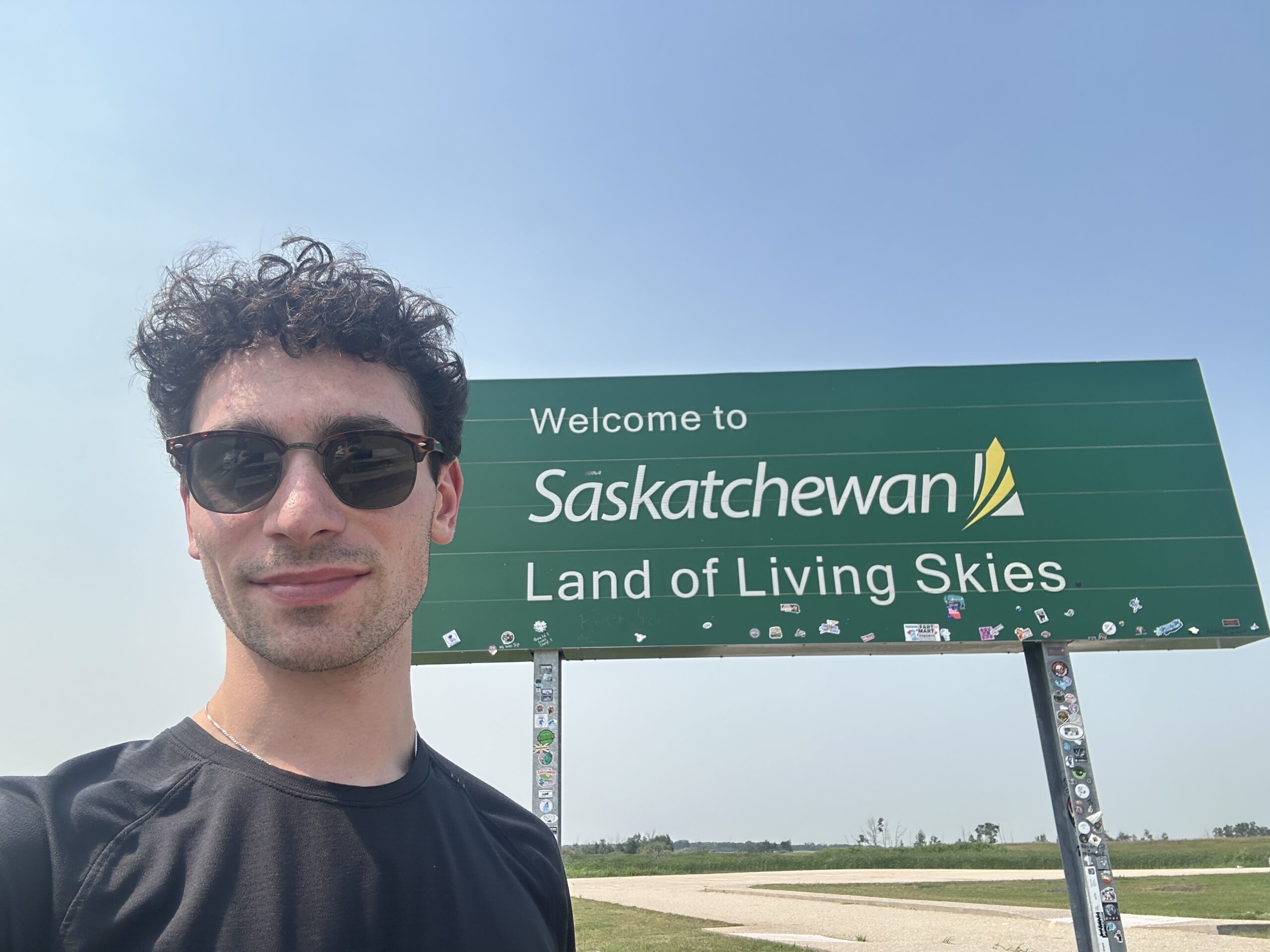
Next, we finally made it to Saskatchewan and they had a sign we could take a picture of! We decided to take our lunch break there on the rickety picnic table in front of the sign. We met an interesting fellow from Sault Ste Marie who told us this crazy story about hitchhiking to Bowmanville when he was 12 to visit his brother who was at the correctional school there a long time ago.
We went for an early dinner at East Side Marios with Lawrence. After dinner we went back to the house and hung out with Mog for a couple of hours. I stayed at Lawrence’s Mom’s house and Erez stayed with Lawrence at his Dad’s house – another very busy day.
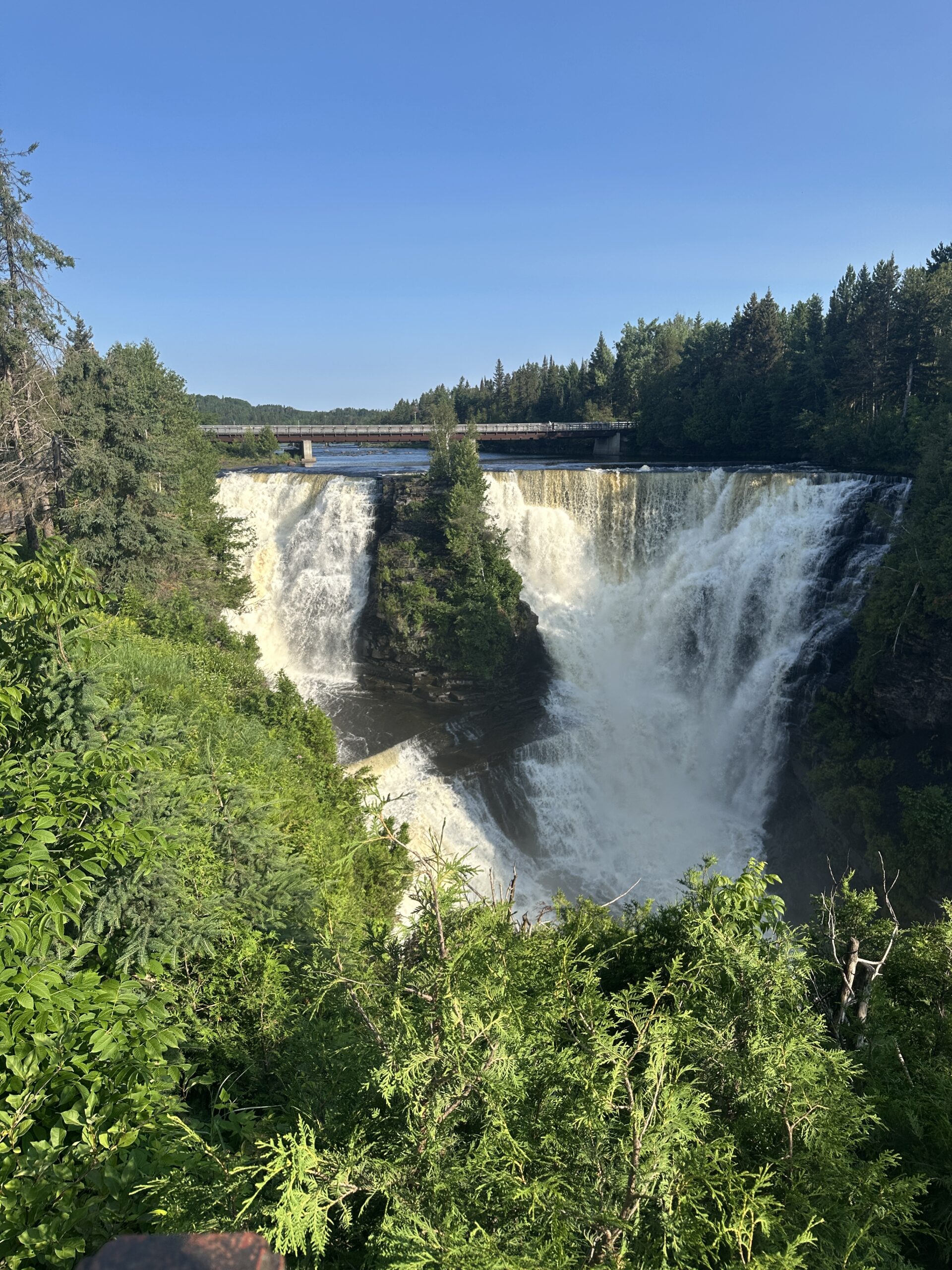
Our first stop was Kakabeka Falls. It is also sometimes known as “The Niagara of the North”. That is a bit of an overstatement, but it is a beautiful falls.
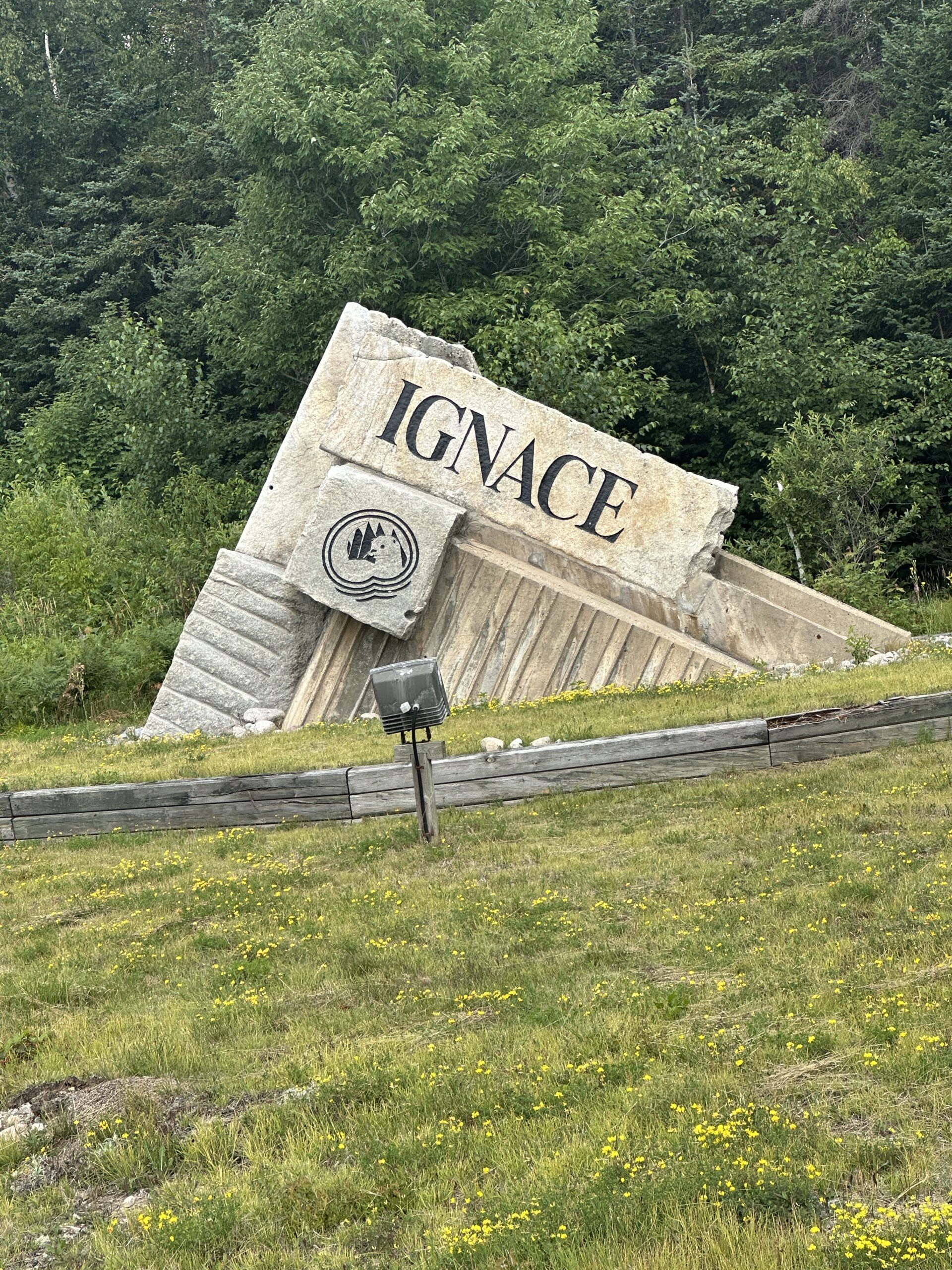
Next stop was Ignace and White Otter Creek to stretch our legs and fuel up.
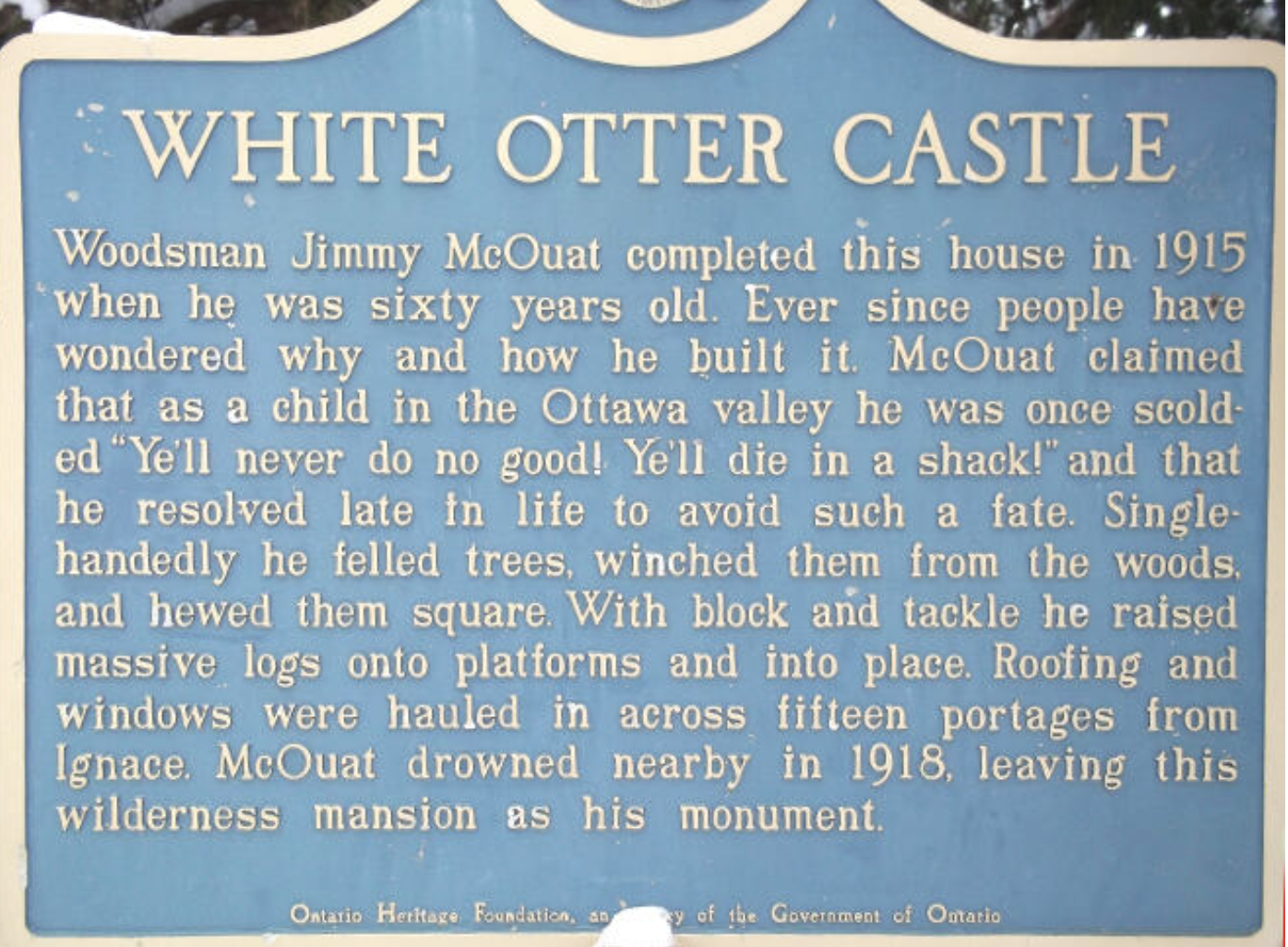
Although we did not paddle in to see it, we read here about White Otter Castle which I realized I had read about in the Canoe Museum in Peterborough. Jimmy McOuat built a 3 story log cabin mansion in the middle of the woods made entirely from trees he felled.
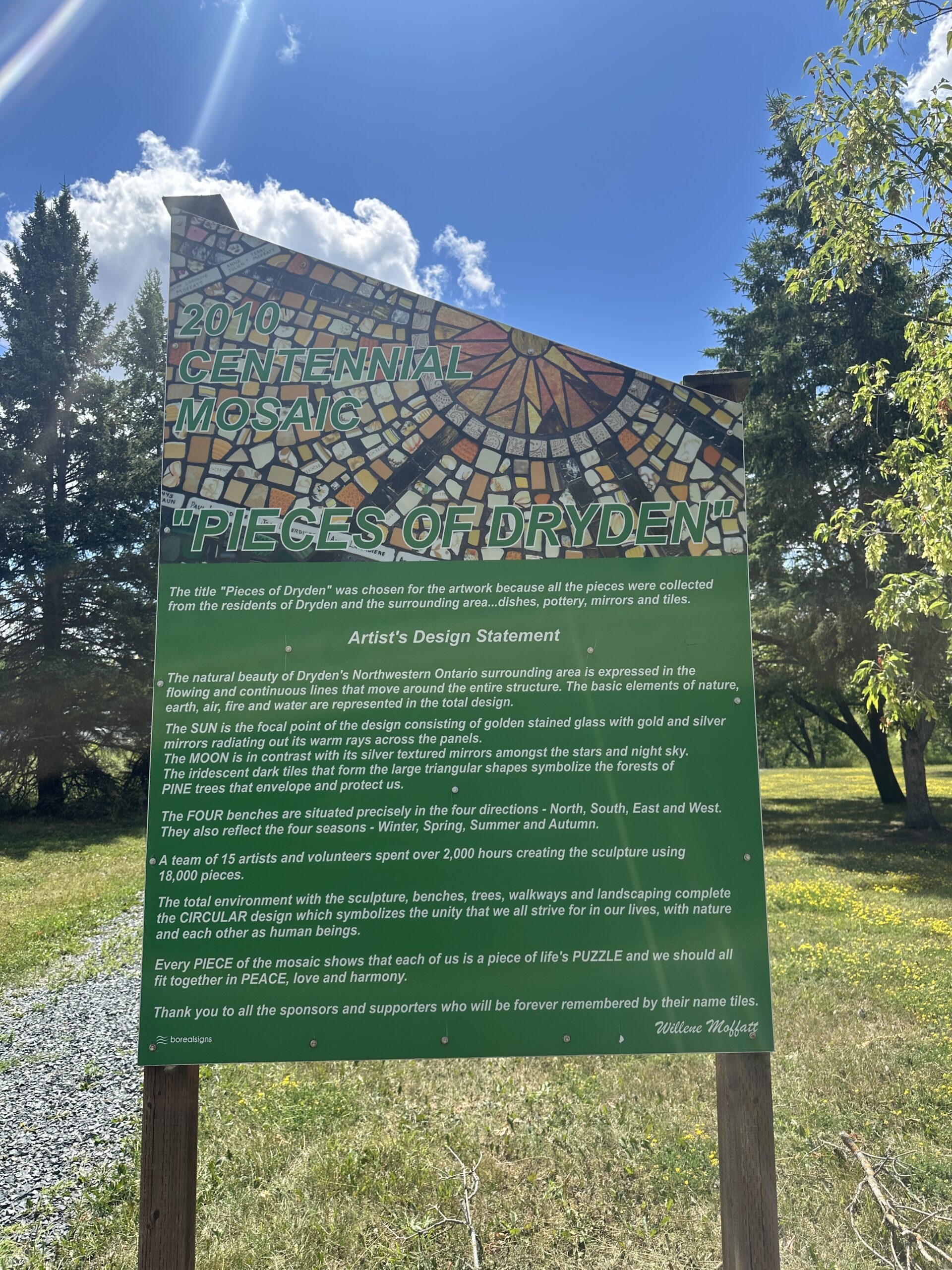
We then had a short stop in Dryden and pulled over to look at a community Mosaic project
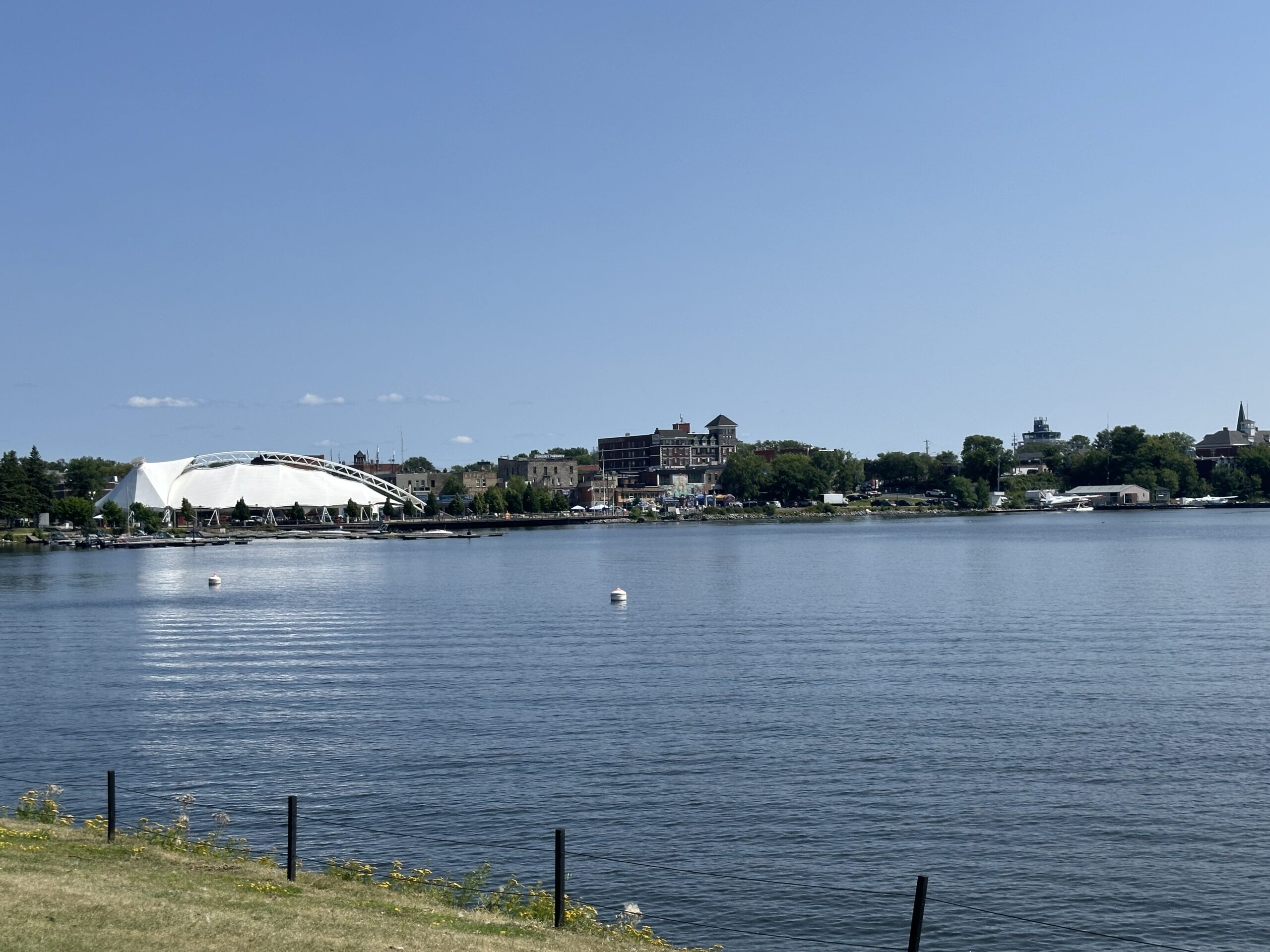
Next Stop was Kenora. As it was a long weekend, we caught the very tail end of a community Festival. We walked around the waterfront, admired the vintage cars that hadn’t left yet, and took the requisite photo with Husky the Muskie.
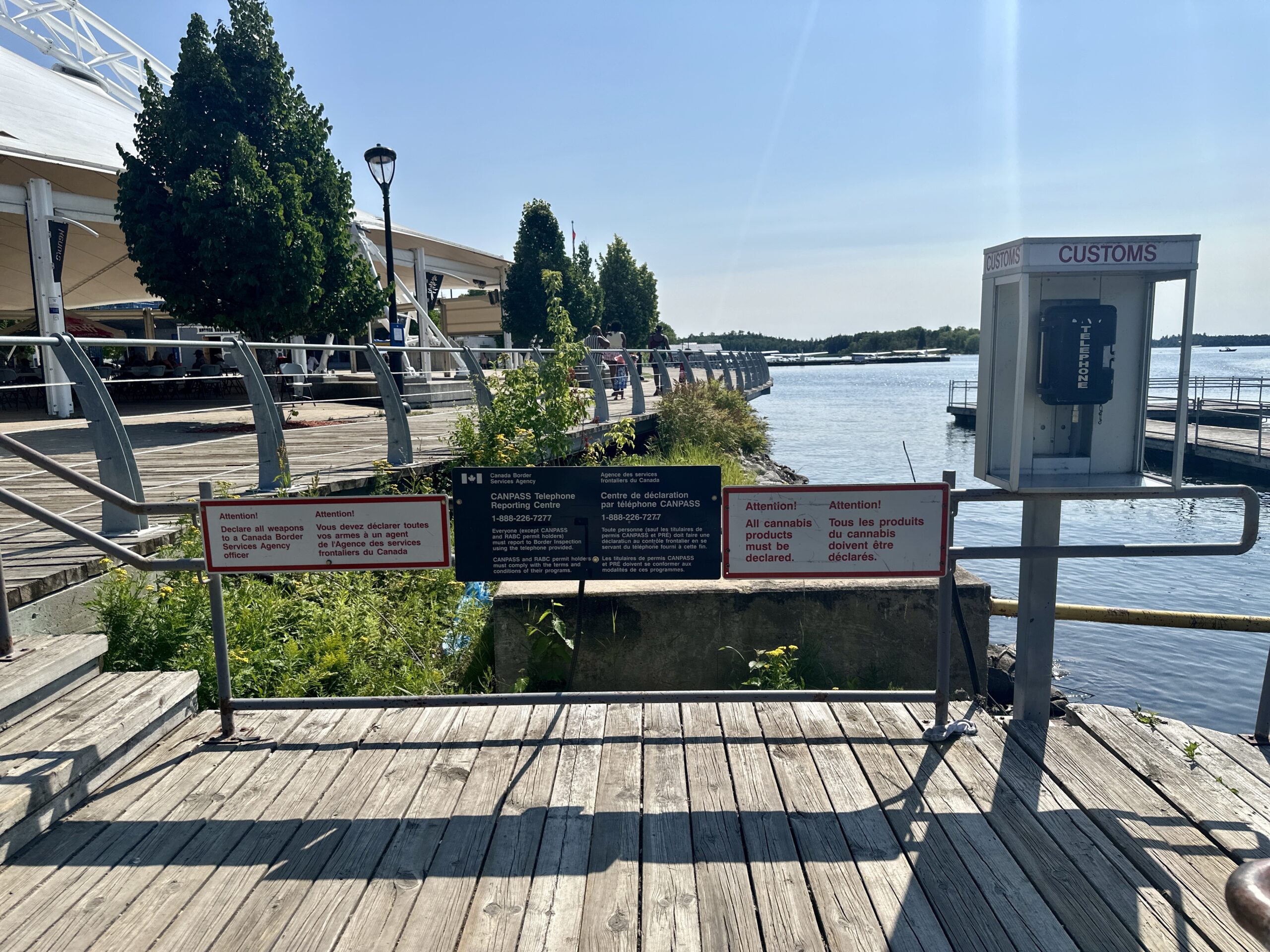
Customs on the dock with an old school phone box 🙂
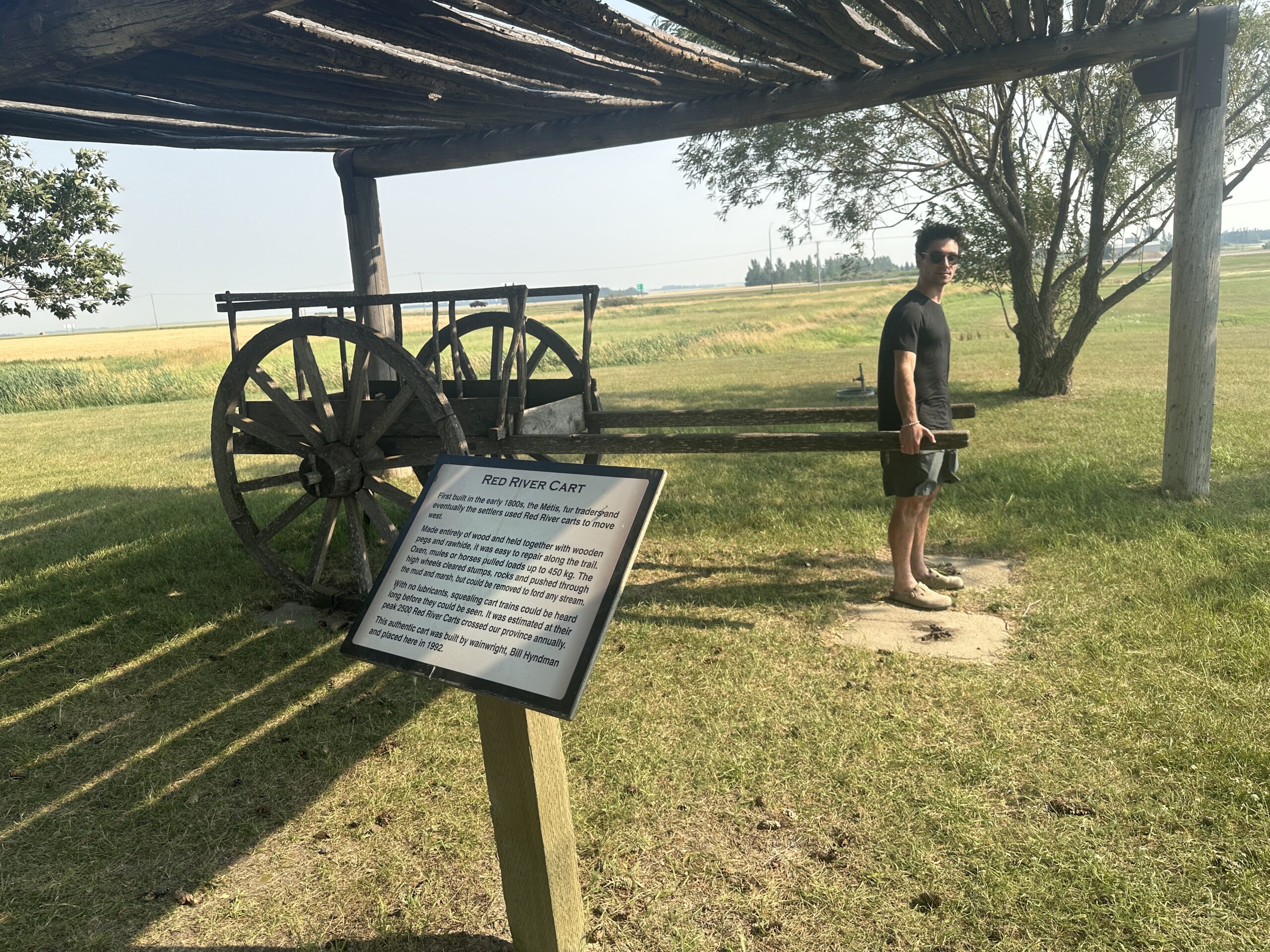
Our next scheduled stop was going to be the Welcome to Manitoba sign. the only problem is, we couldn’t find one!!!
We arrived in Winnipeg around 6pm, and met up with Erez’s friend. He generously came home from his family’s cottage to host us. We had dinner at The Forks, a place where the Red River meets the Assiniboine River. Originally a meeting place for indigenous groups to trade, it has also since been a railyard. Now the space has ben transformed into a market and green space area.
On the website, it states: The Forks shall be developed as a meeting place a special and distinct, all-season gathering and recreational place at the junction of the Red and Assiniboine Rivers, through a mixed-use approach including residential, historical and cultural, institutional and supportive commercial uses.Over 4 million visitors come to The Forks each year and more than 1,200 people work on this site. The Forks contributes over $235 million a year to the local economy, and is financially self-sufficient – we do not rely on government funding to operate.The Forks is governed by a board made up of representatives appointed by the civic, provincial and municipal governments.
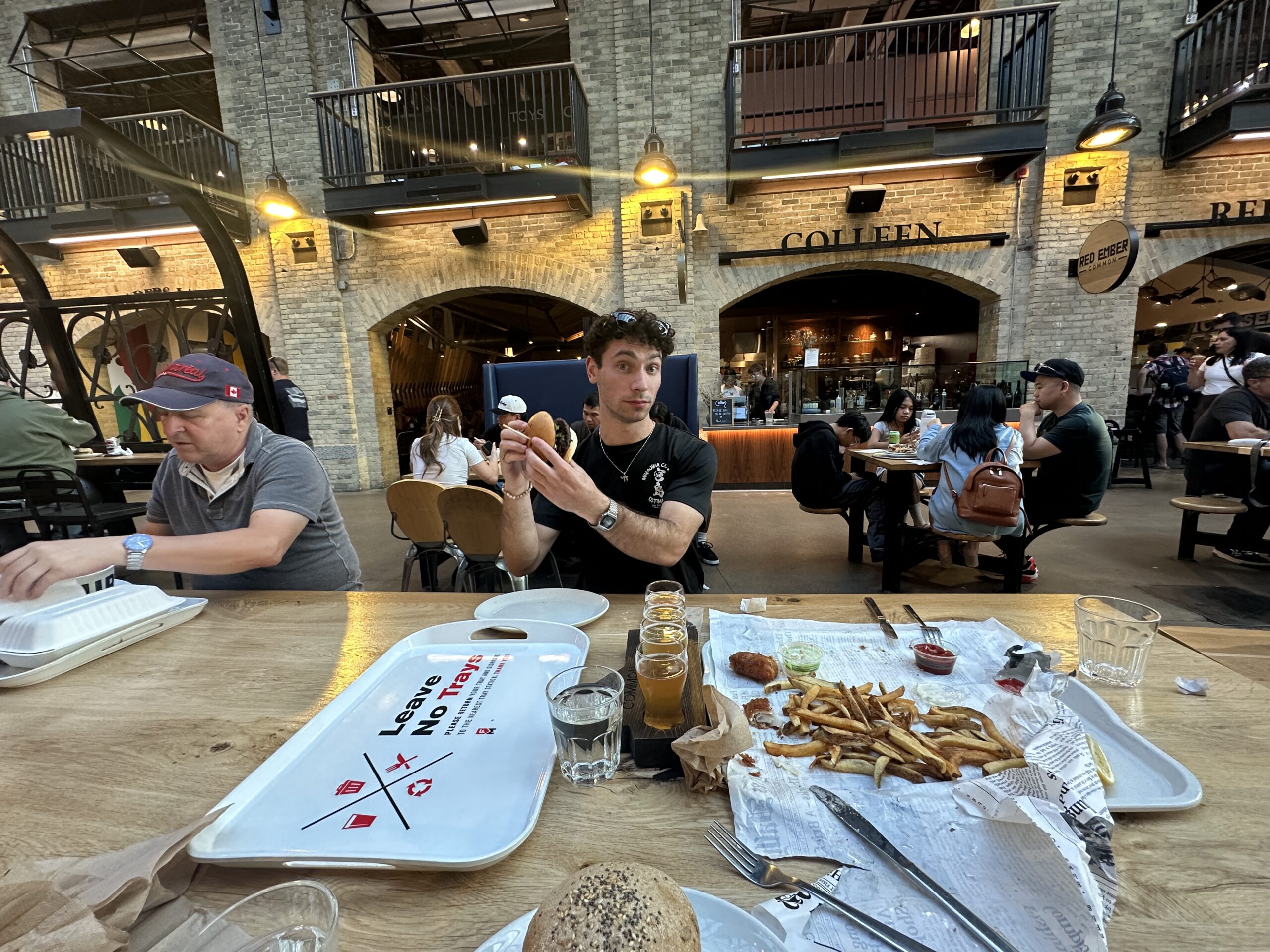
We ate in a market building which houses many different restaurants and restaurant stalls. We had incredible Pickerel Fish and chips, as well as some great burgers from a place called Nuburger. Erez had a beef burger and I had a chickpea burger with beets and goat cheese. Delicious! One feature that was really interesting is that there some long table where you can sit next to strangers. The man sitting next to Erez noticed his “iron ring”. Turns out he is also an engineer, so they were chatting for awhile.
After Dinner I met up with Olga, whom, along with her son Ruslan, lived with us a few years ago when they first arrived from Ukraine. It was great to reconnect with her.
Erez’s friend Boaz was a gracious host. His family had three hilarious cats wth totally different personalities. Hopefully we can meet the rest of his family when I come back to Winnipeg someday. I feel like there is so much to see in this city, and would be happy to return sometime in the future.
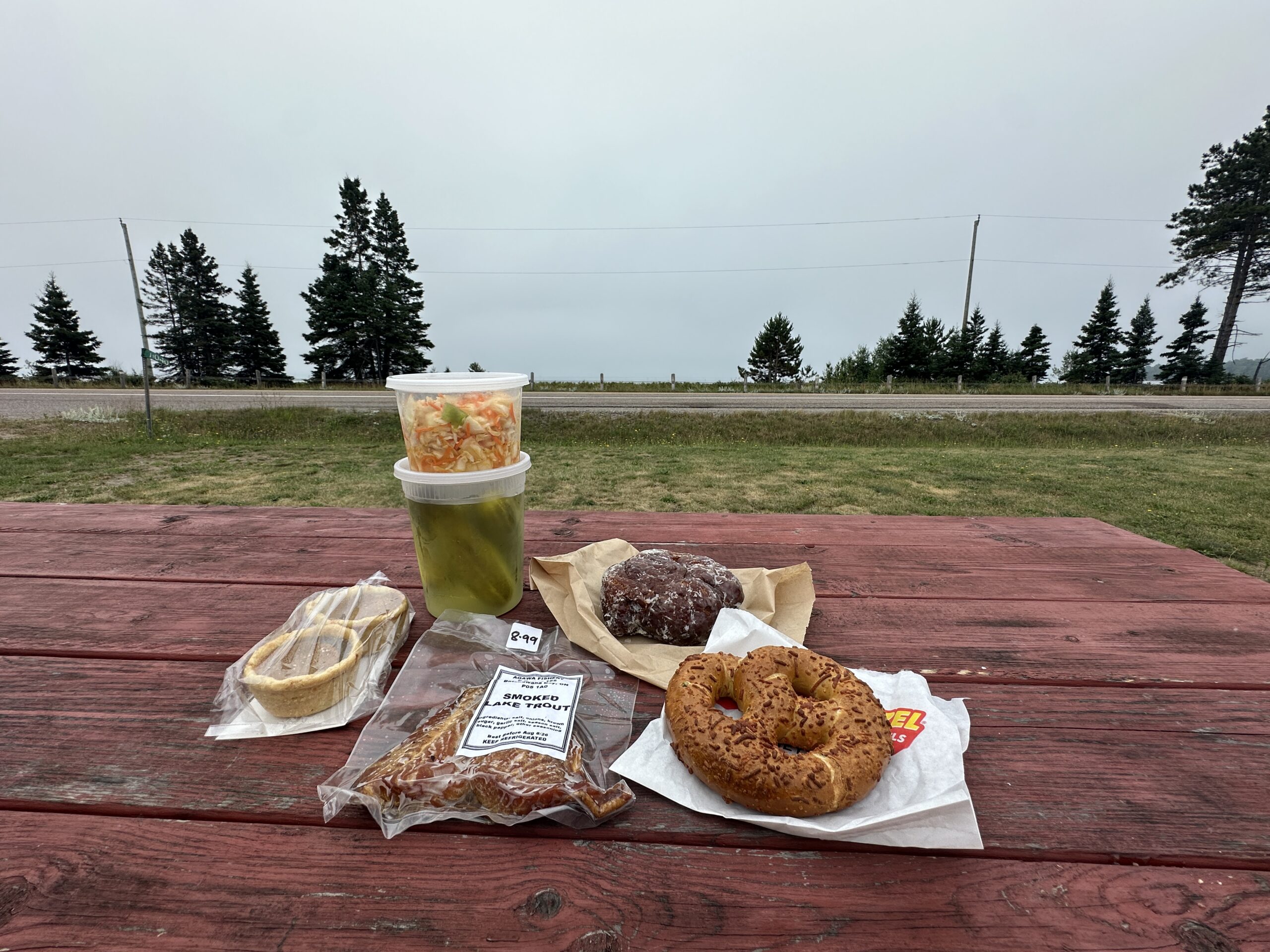
I had heard a lot about the Northern Shore of Lake Superior, from my friend Martha – Pancake Bay in particular. We started our day with an exquisite breakfast section that we picked up at the Voyageur’s Lodge in Batchawana Bay. They are famous for their humongous apple fritters. We also bought some fresh locally caught smoked lake trout, homemade coleslaw, a cheese stuffed soft pretzel, butter tarts, and some fantastic pickles. It really was the best apple fritter I had ever tasted. as you can see below, it was a big foggy/smoky that morning.
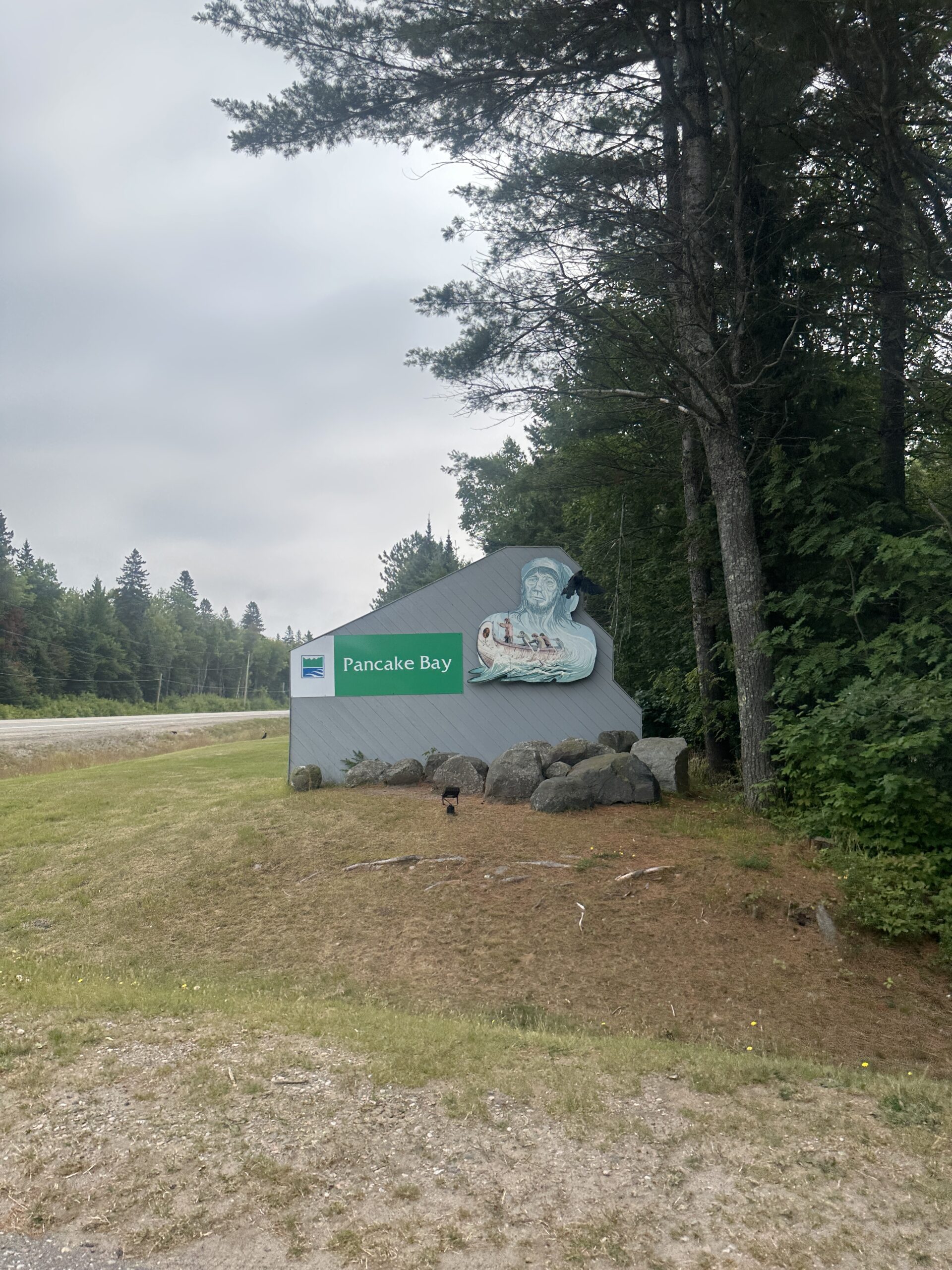
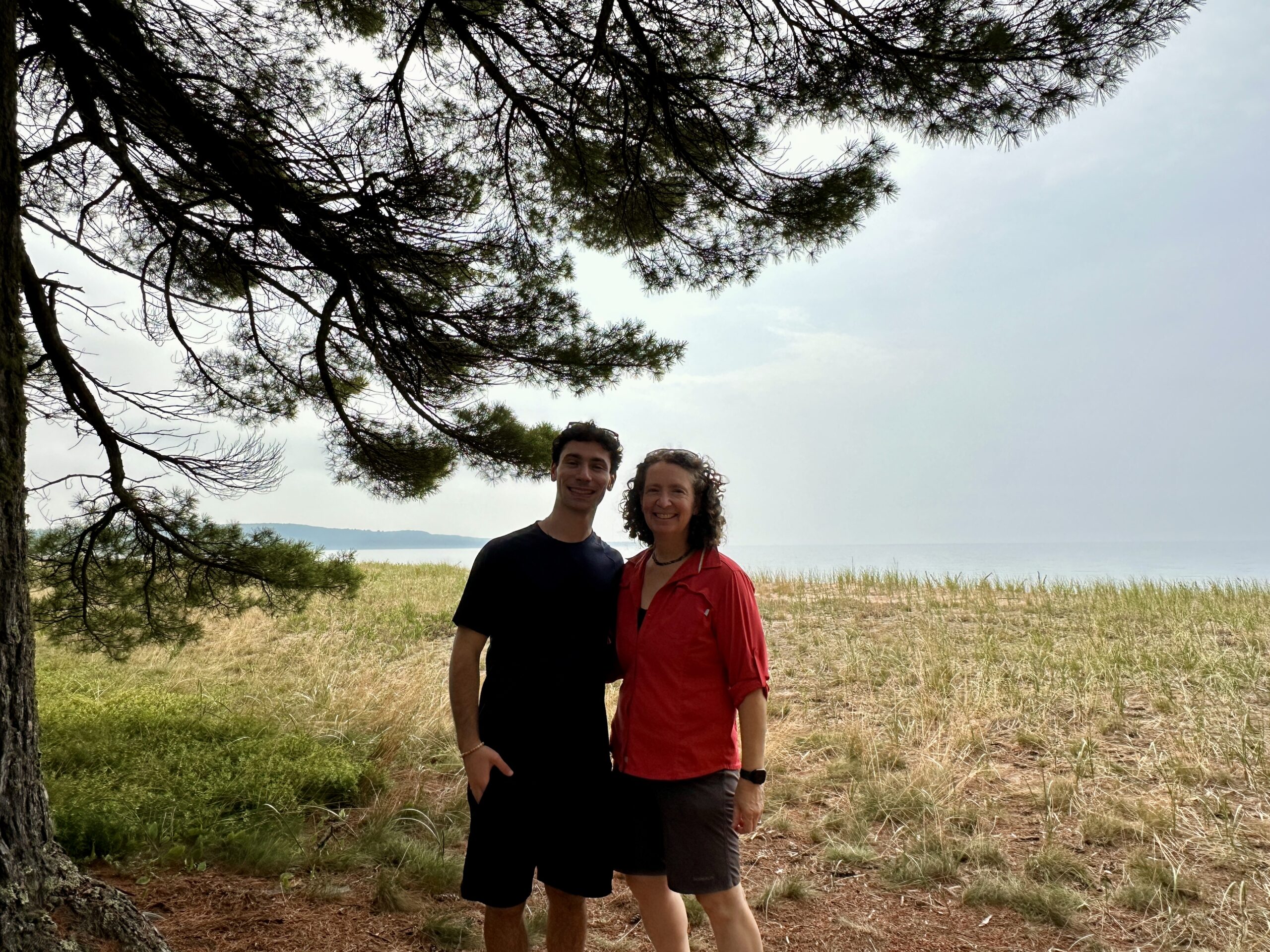
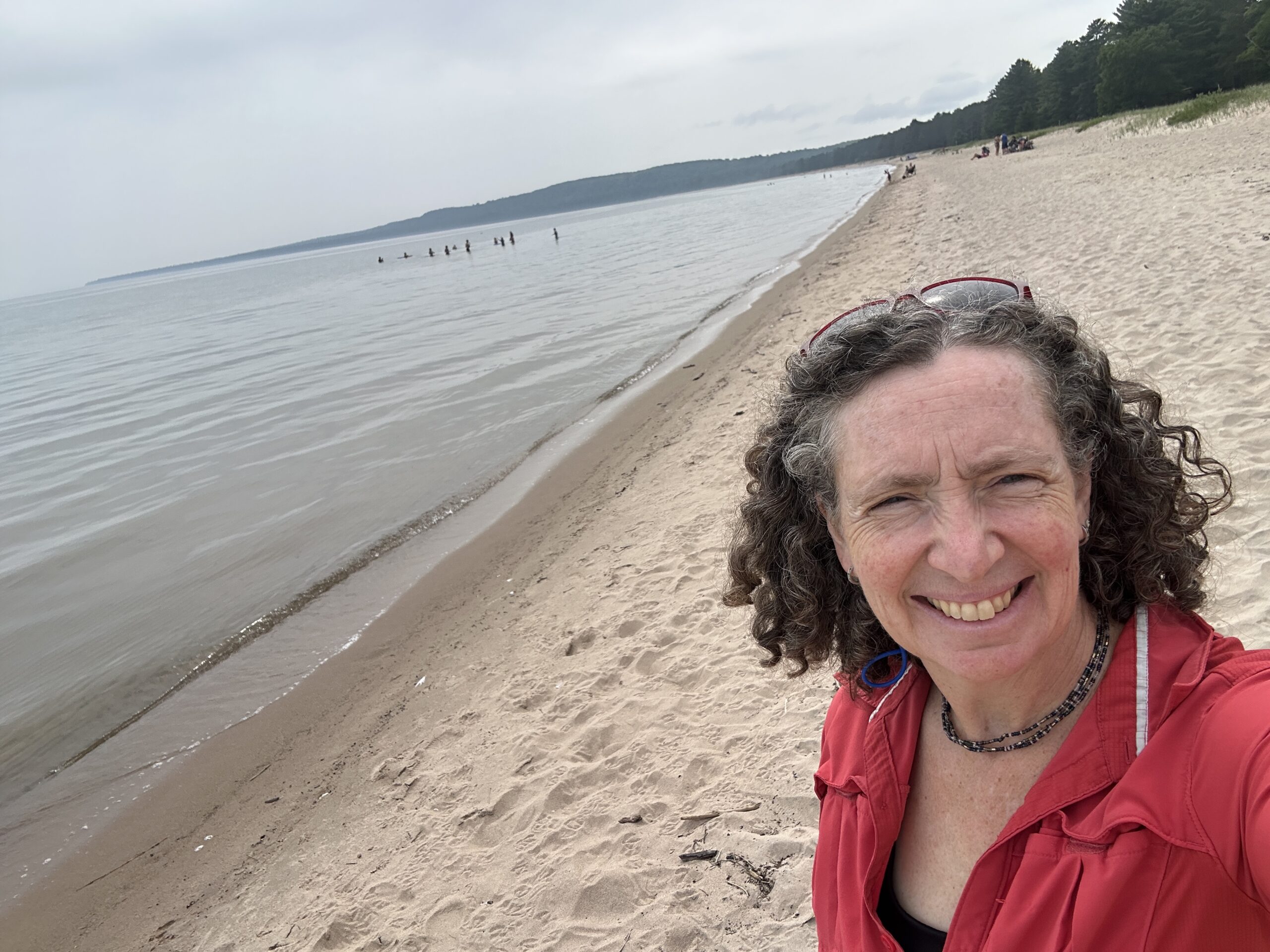
Our next stop was the famous Pancake Bay – it did not disappoint. Really, this whole trip was a bit of a sampler platter. I got just a taste of so many great places that I would like to return to one day when I have more time.
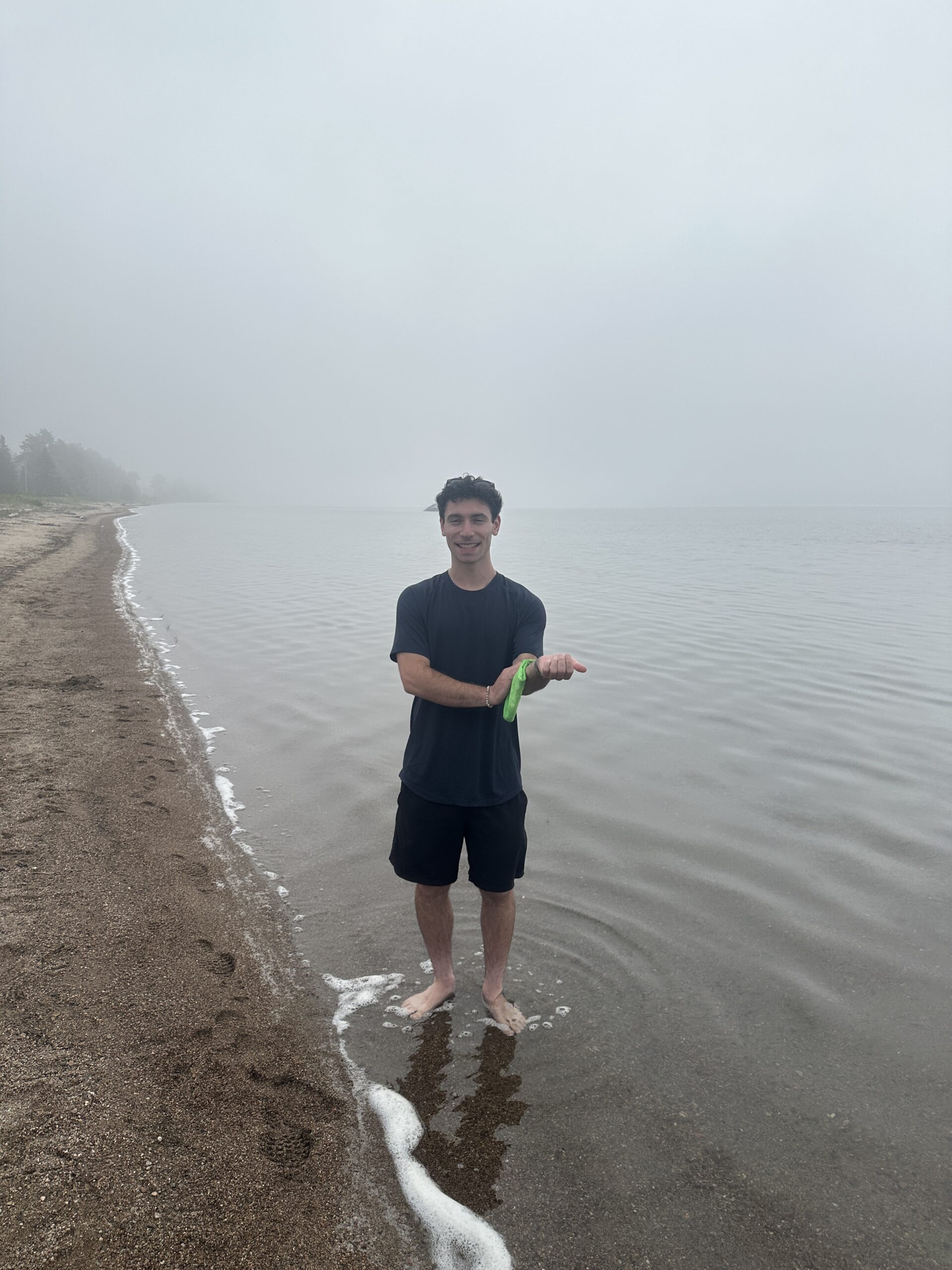
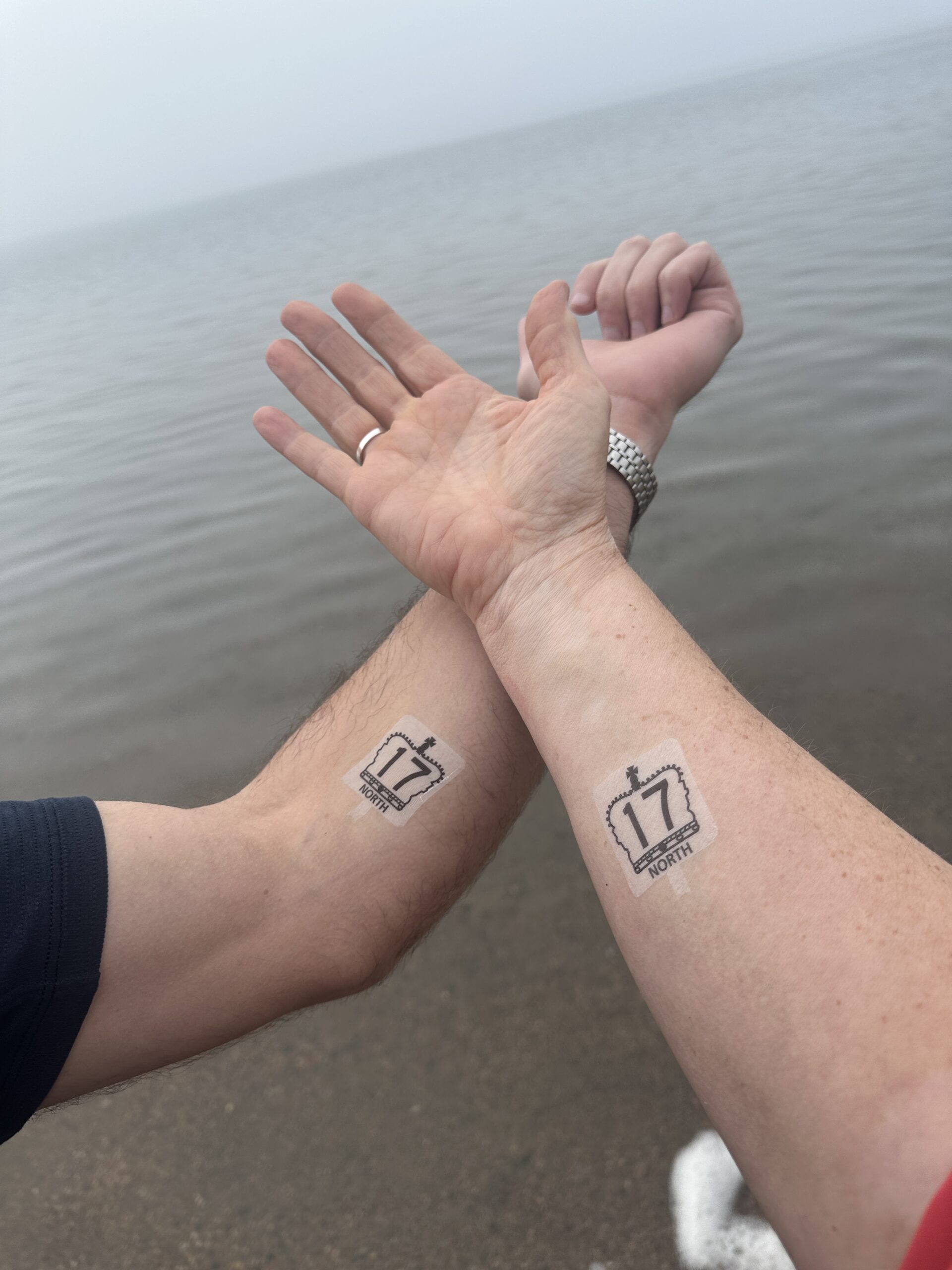
We bought matching temporary tattoos and out them on with fresh Lake Superior Water 🙂
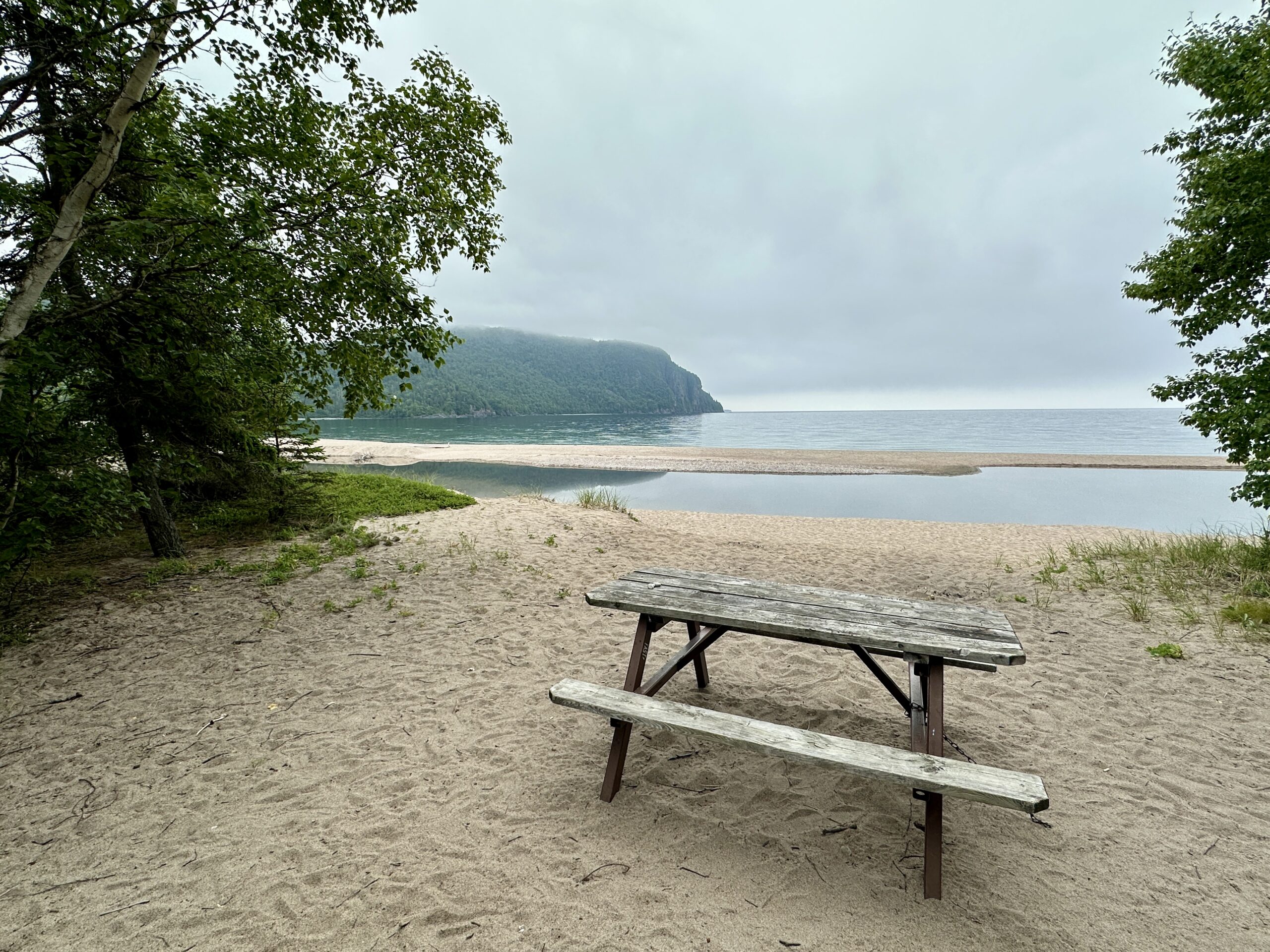
Next stop was Old Woman Bay
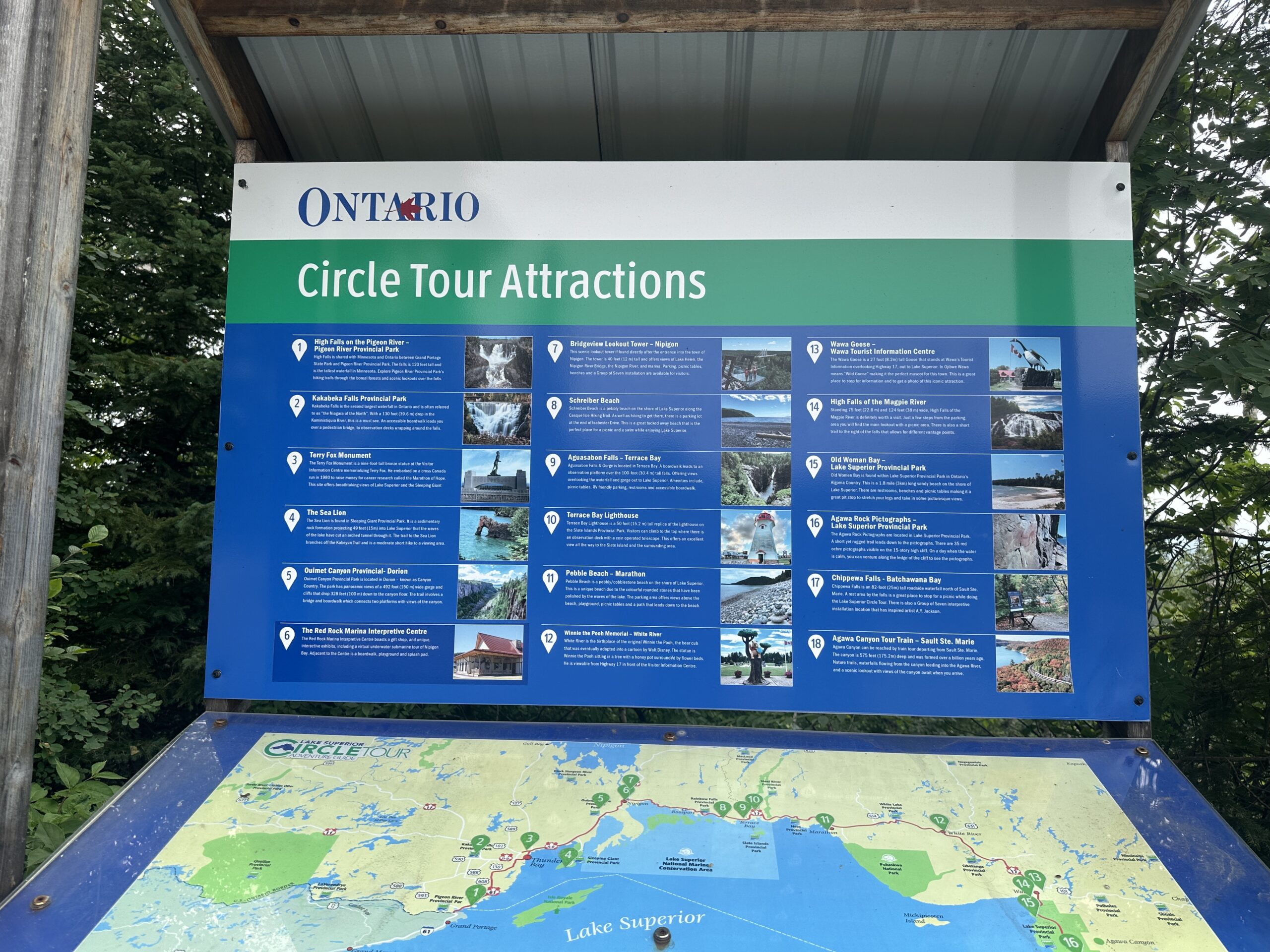
We were amazed to find out that there were 18 possible stops on the Lake Superior Circle tour. Clearly I have some things to put on my list as we fly got to a few of those stops.
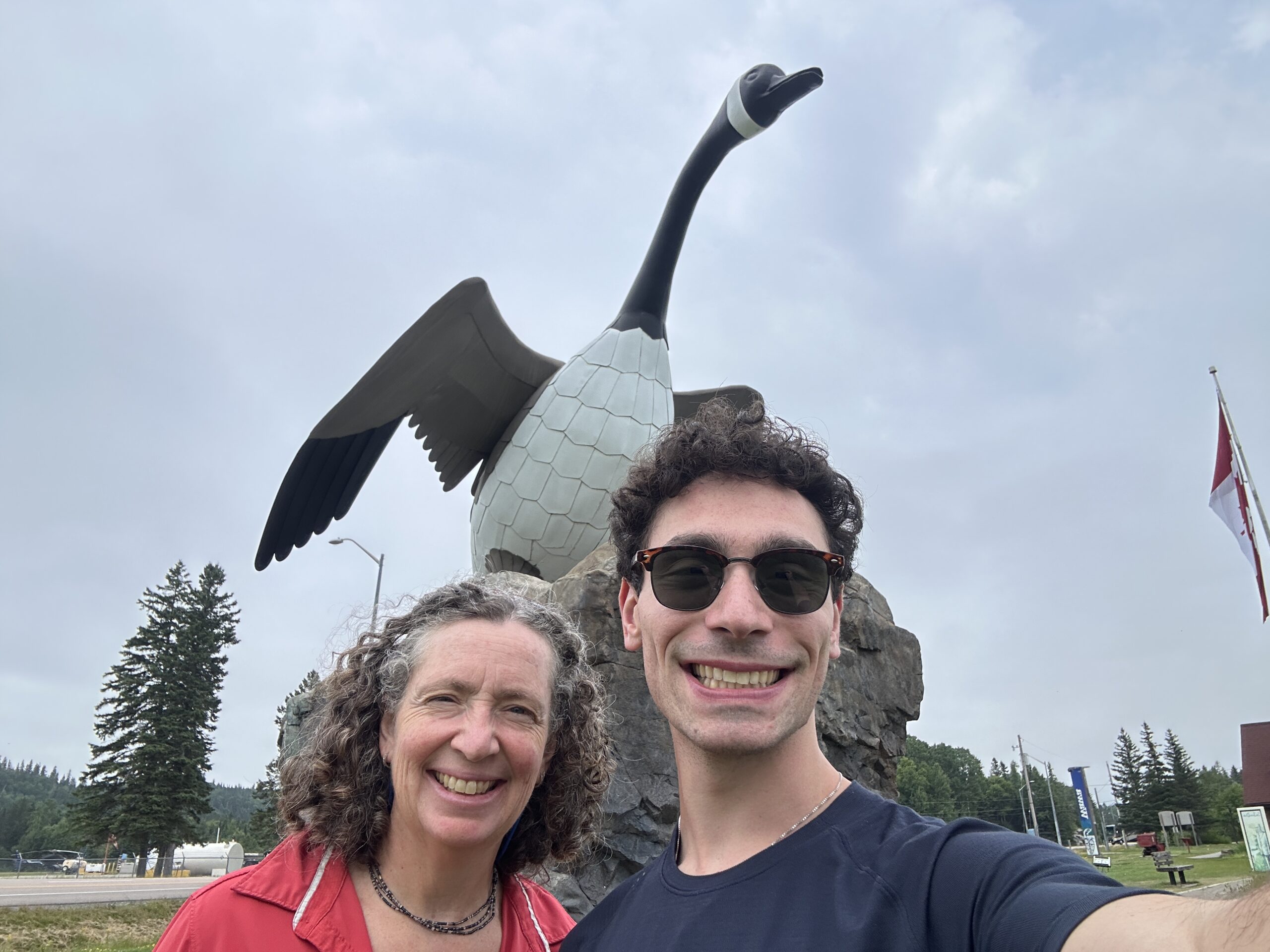
Next stop was Wawa to visit the Wawa Goose:
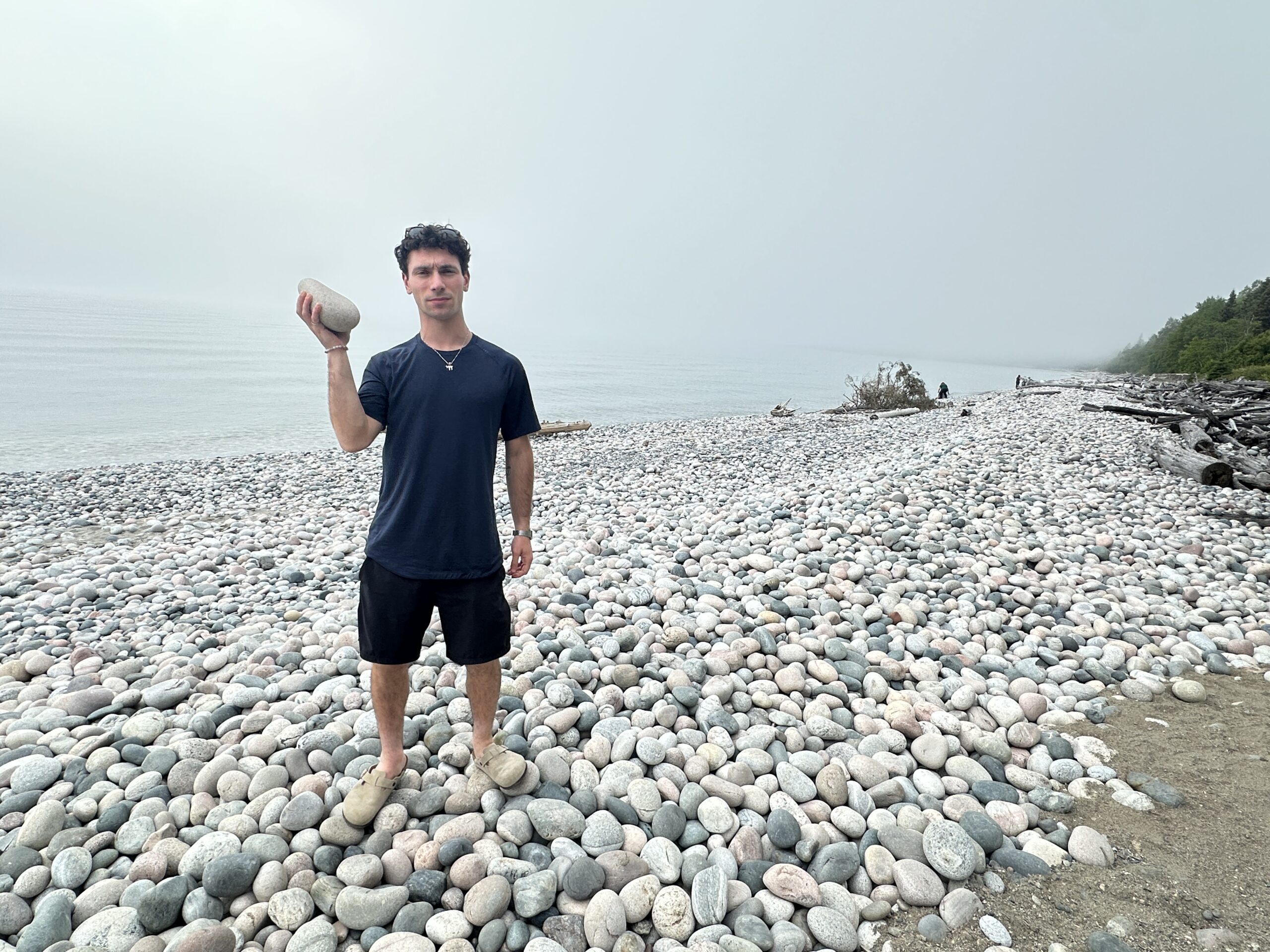
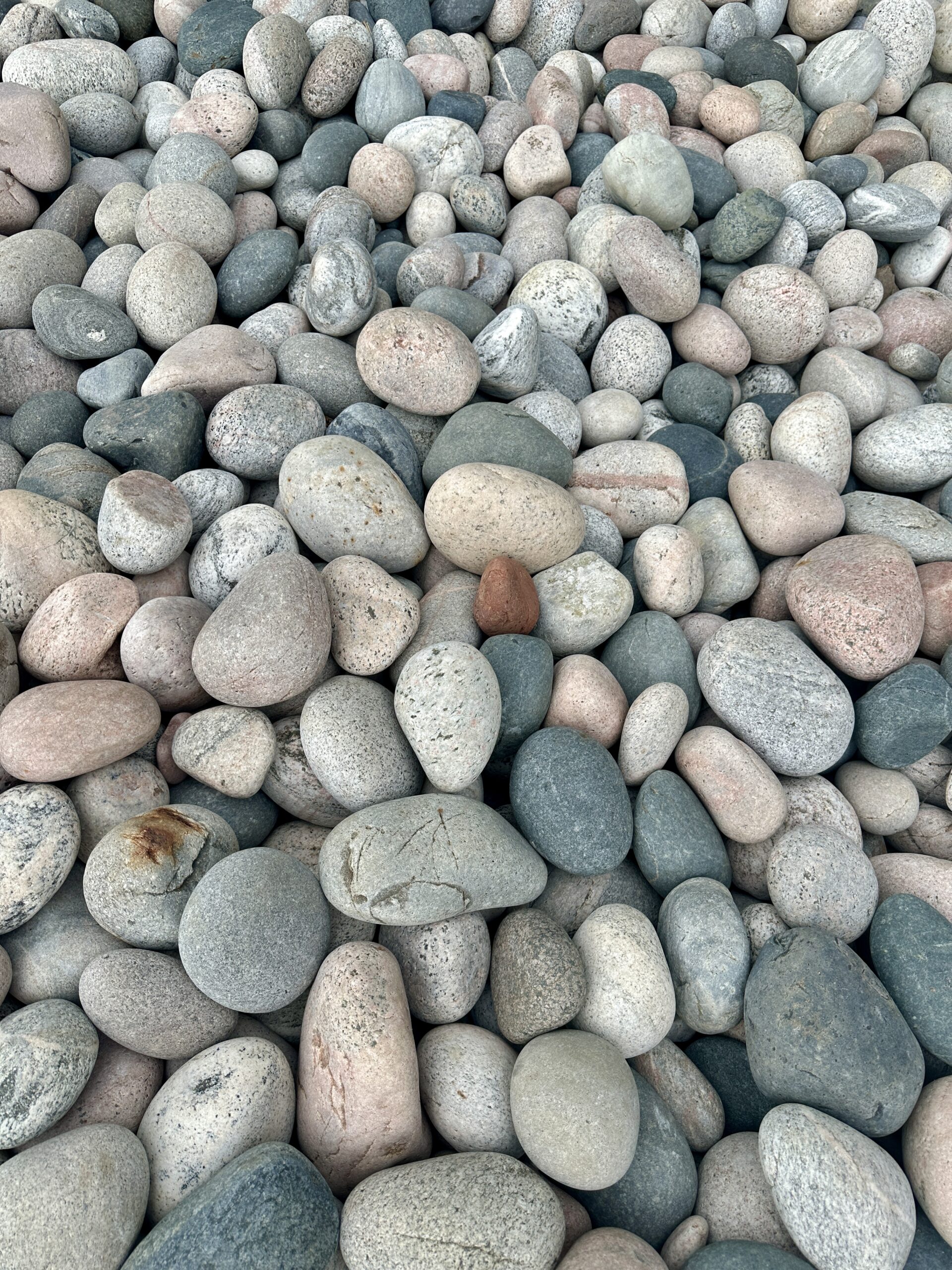
After seeing the goose we went to Pebble Beach
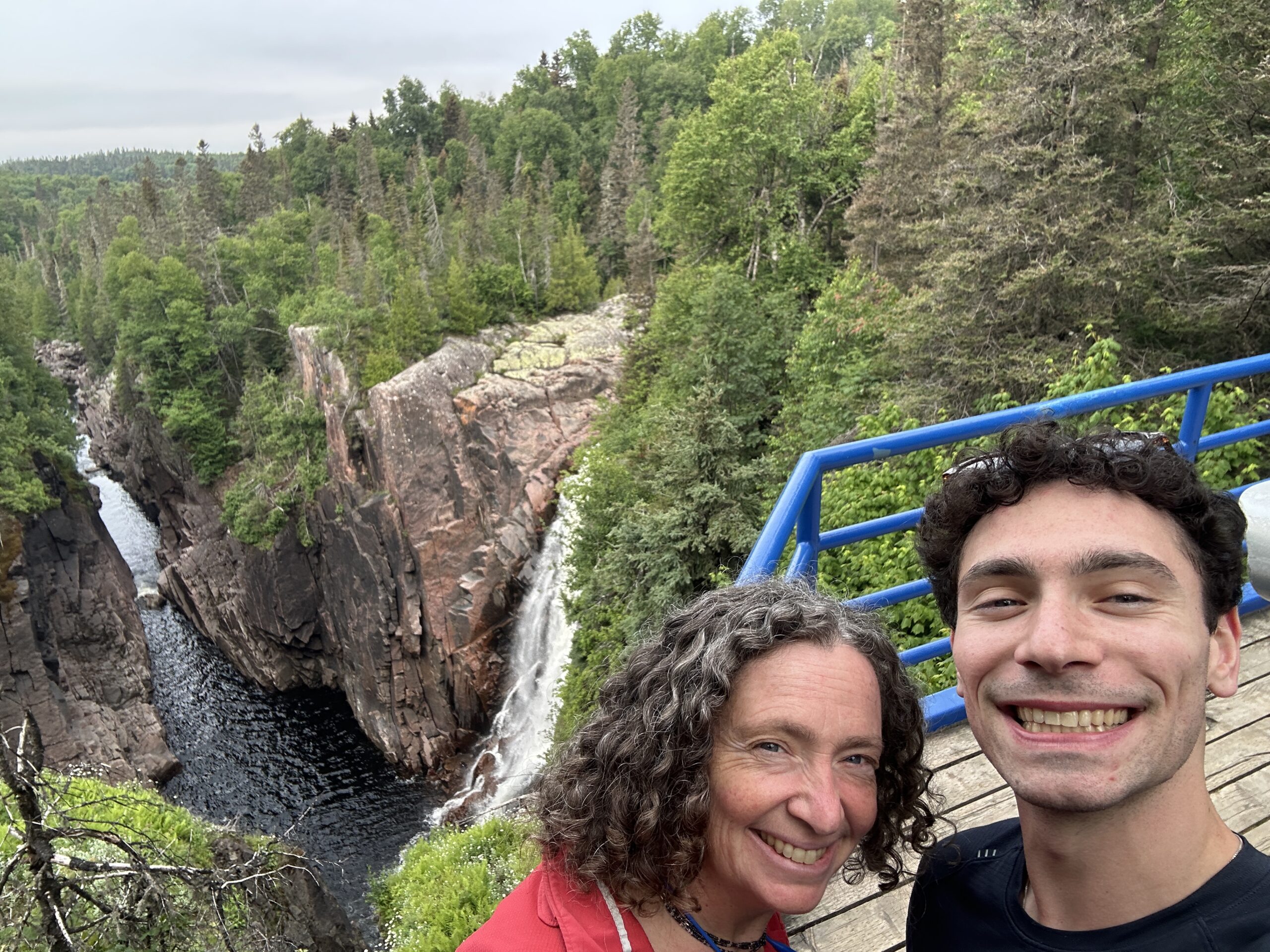
Then onto Terrace Bay to see the Aguasabon Falls
A short video of the falls and gorge:
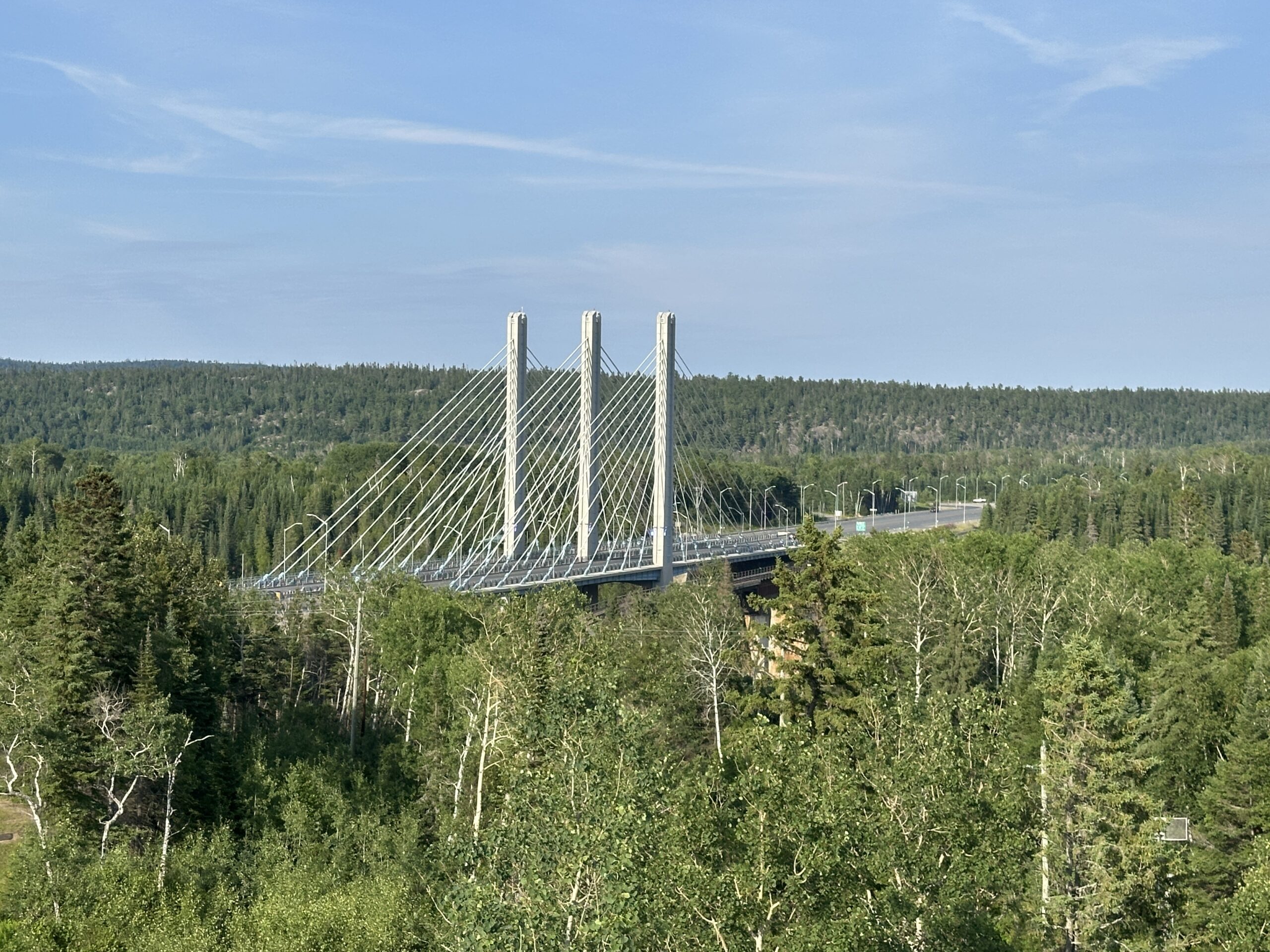
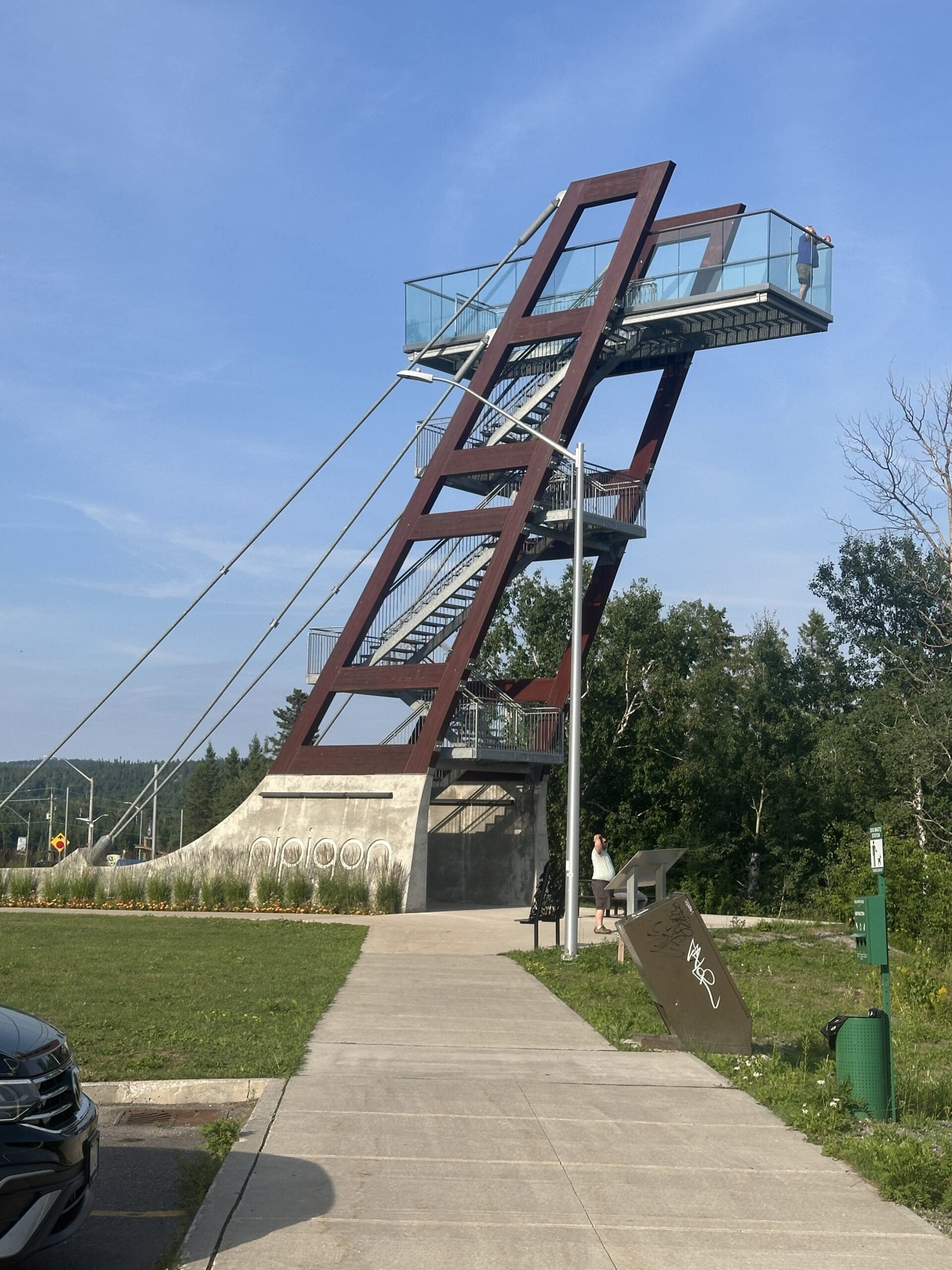
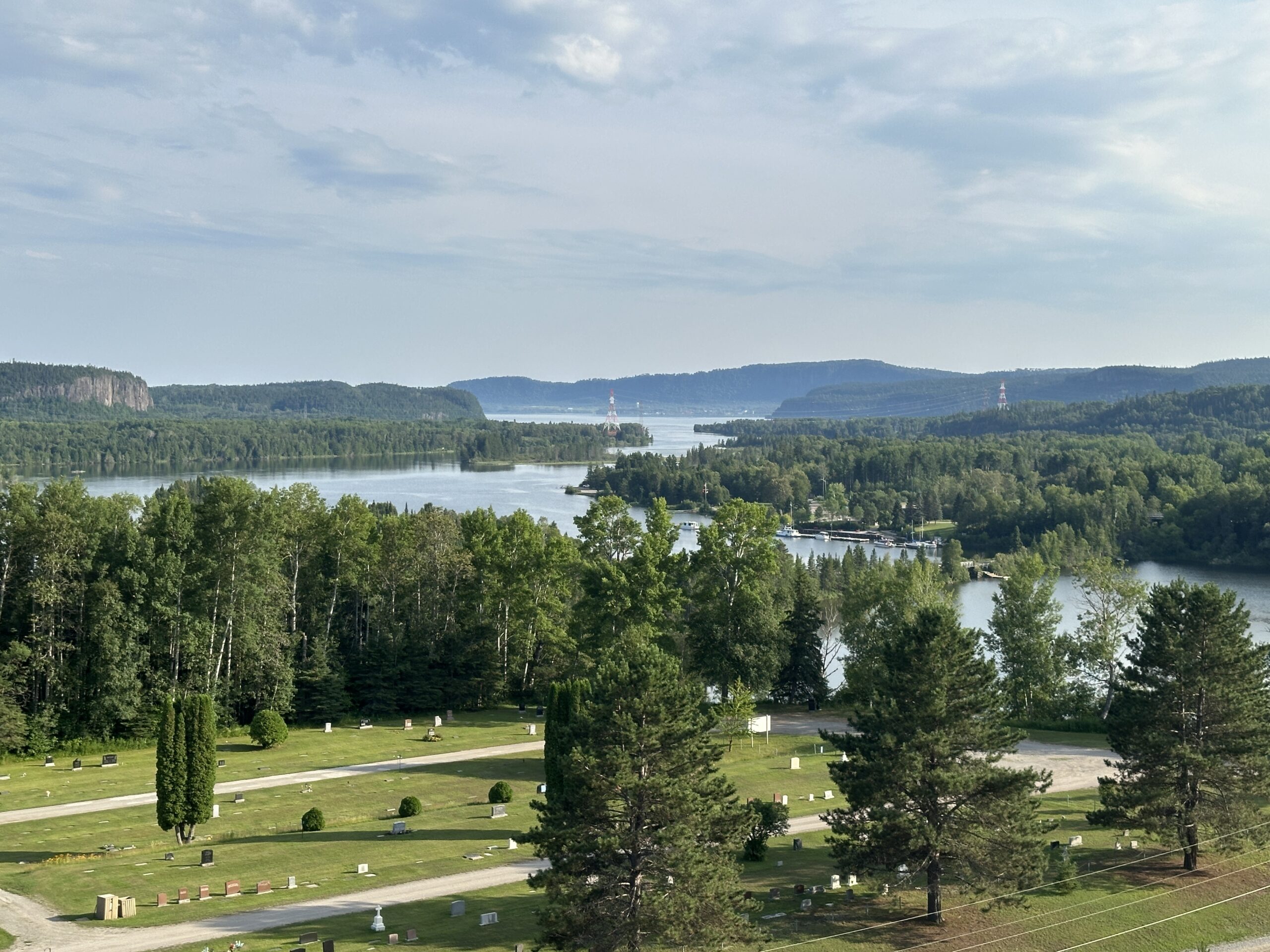
Then onto Nipigon
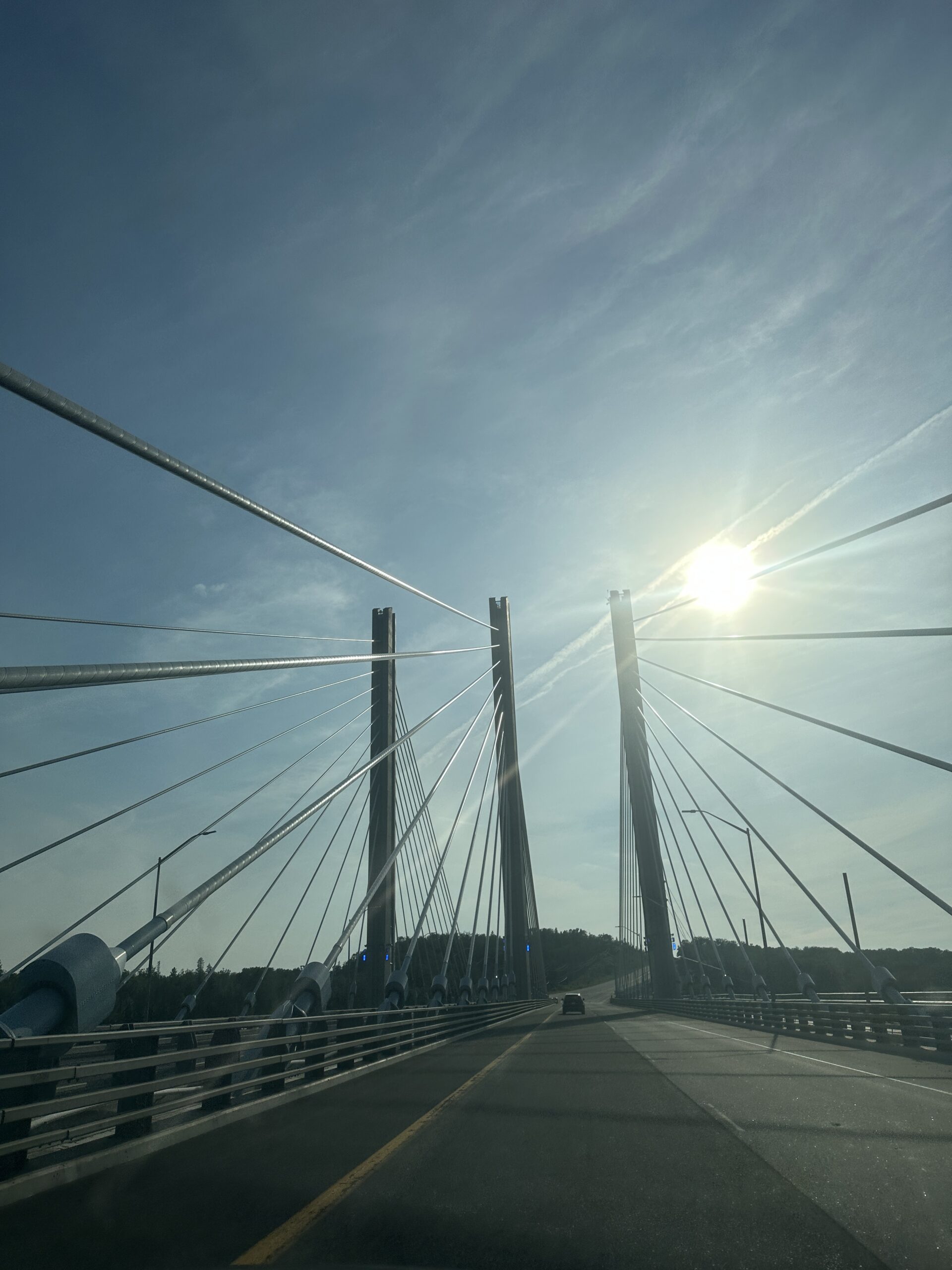
Nipigon River BridgeNipigon LookoutView from the lookout
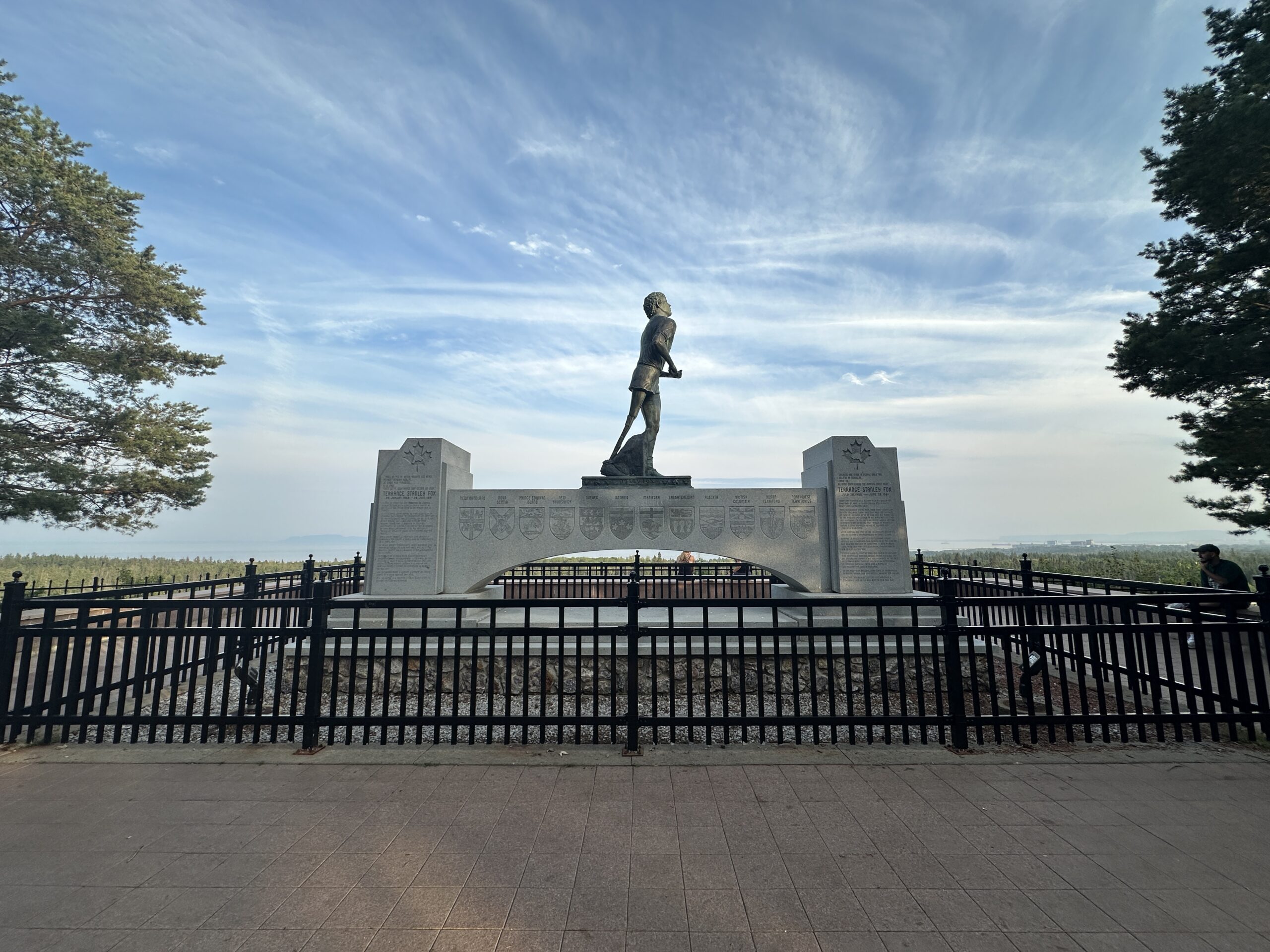
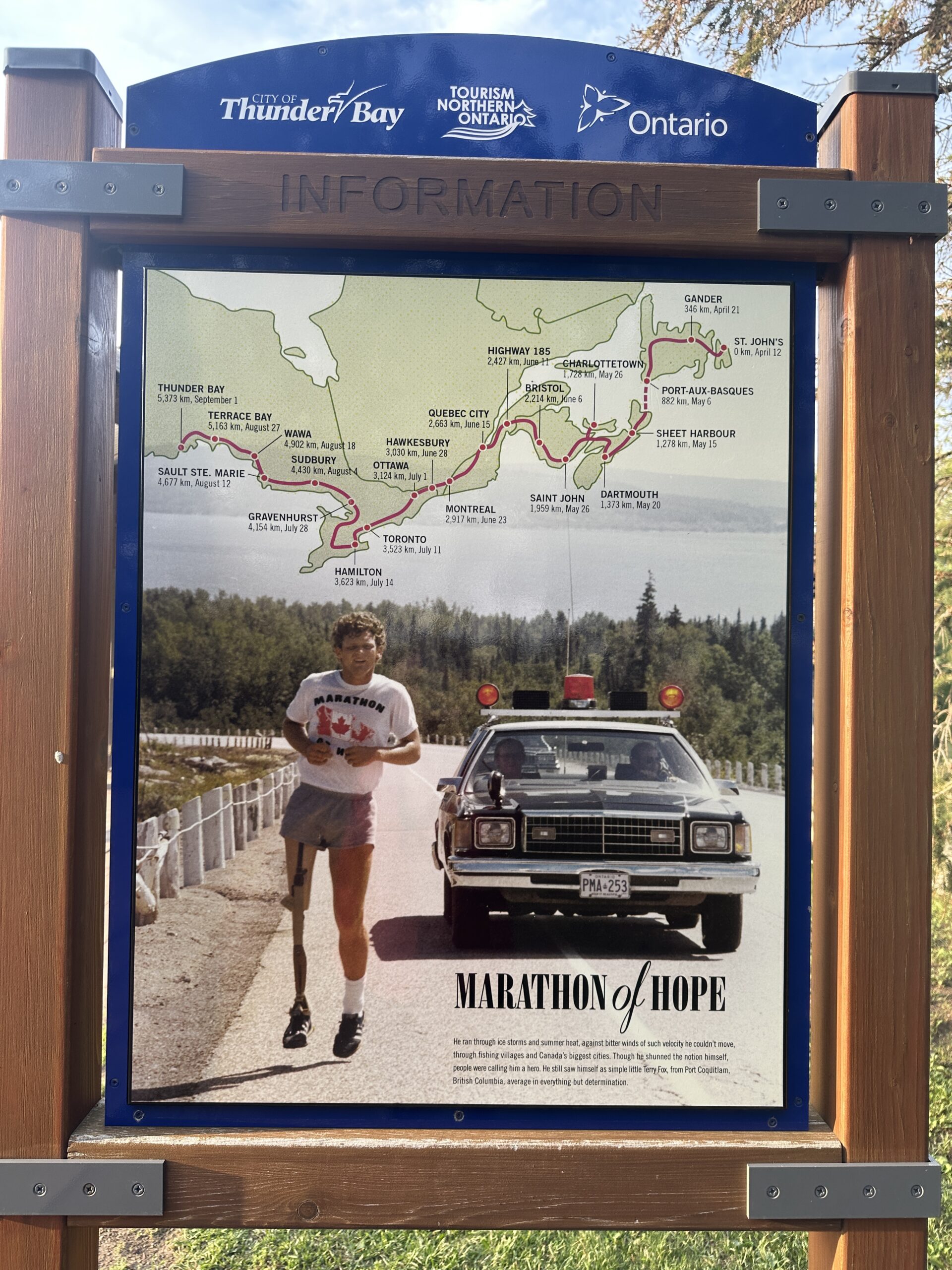
The most impactful stop had to be the Terry Fox Monument. Revisting his story, even though I have heard it so many times really hit me quite hard. I felt way more emotional than I expected. Seeing the small sign at the sign of the road outside of Thunder Bay commemorating where he had to abandon his quest at the 5373 km mark, was sobering.
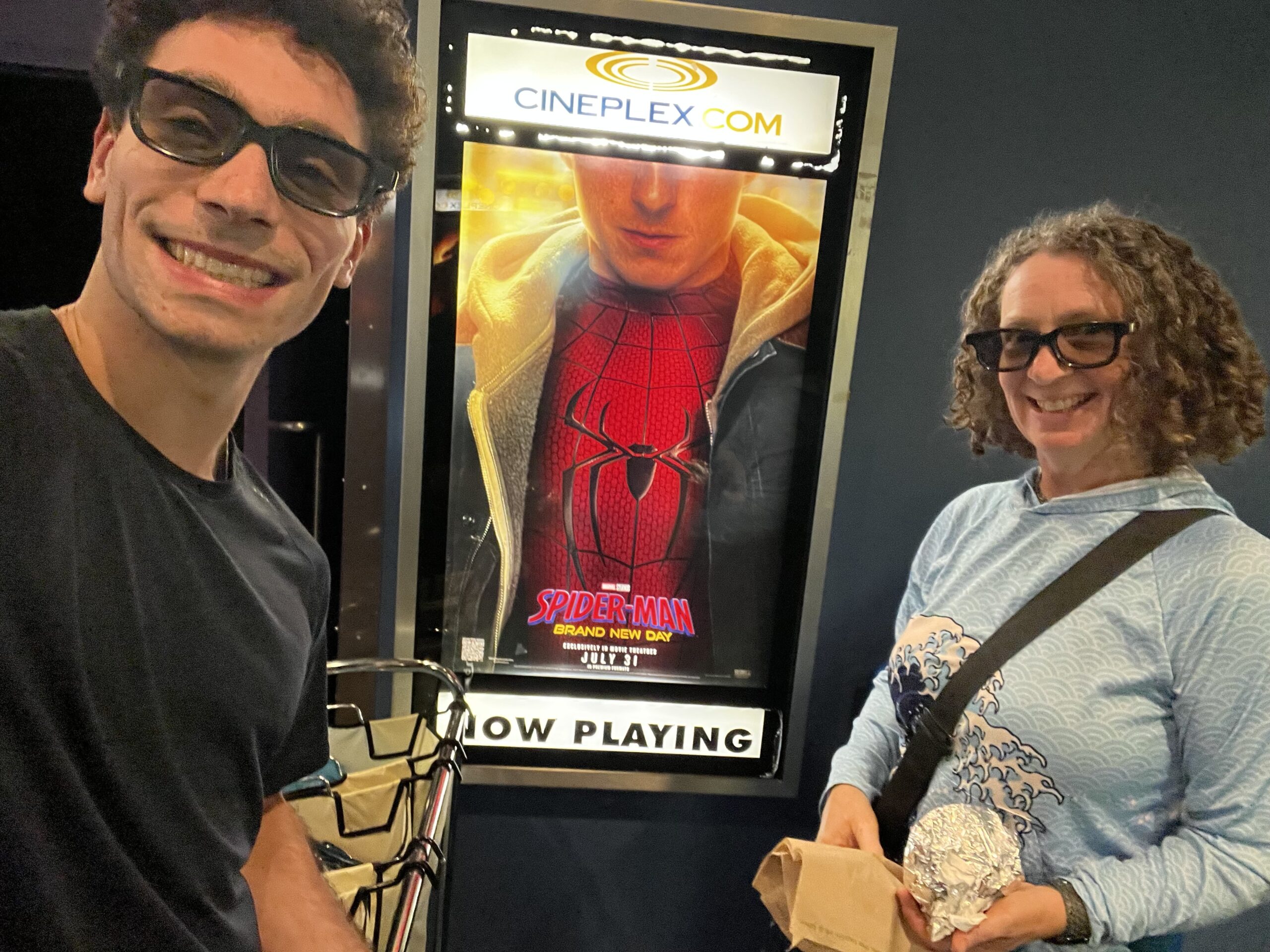
We made it to Thunder Bay quite late, but managed to squeeze in a movie.
When the opportunity came up to help Erez drive his new-to-him car (generously given to him by his Bubbie as a graduation present) I was thrilled. I have always wanted to drive across Canada, and having the chance to spend 7 full days with my Erez, who has lived so far away for 6 years, was a gift. My original plan was to have a spreadsheet with a meticulous plan of all stops, curated playlists, etc, but the time leading up to our trip was predictably chaotic and so I barely managed to book accomodation, and that was about it.
Every evening Erez and I would research the next day’s itinerary and we let Spotify take care of the curated playlist, and much of the time when were were out of cell service reach, we had to rely on the music that was already downloaded on our phones. This was when I realized that I had heaps of music saved on my phone that I was unaware of. In fact I have never even heard a third of the music that I had saved…so cleaning up that list is now definitely on my to-do list…
Day 1 – Bowmanville to Sault Ste. Marie. approx 700 km
We were aiming to leave between 9 and 10, because I couldn’t find Erez’s second car key, we left closer to noon, Spoiler alert- I had never lost the key – it was in a safe pocket of my purse that I didn’t realize it was in.
Highlights of Day 1 included…
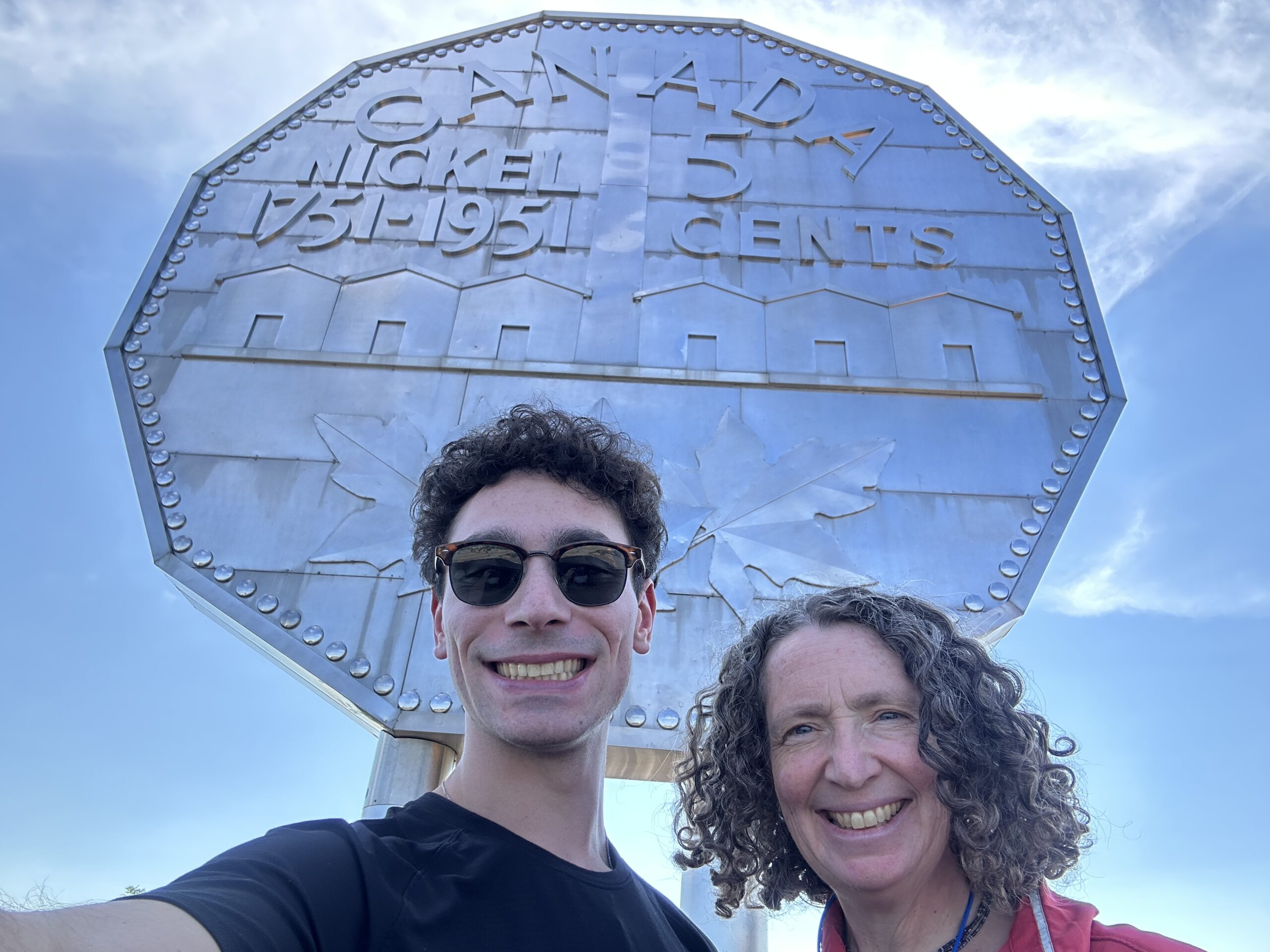
The Sudbury Nickel
Erez left his running shoes at our house, so we headed to the Sportchek in Sudbury to get him a new pair so he could do his running training before he competes at Nats in the next 10 days.
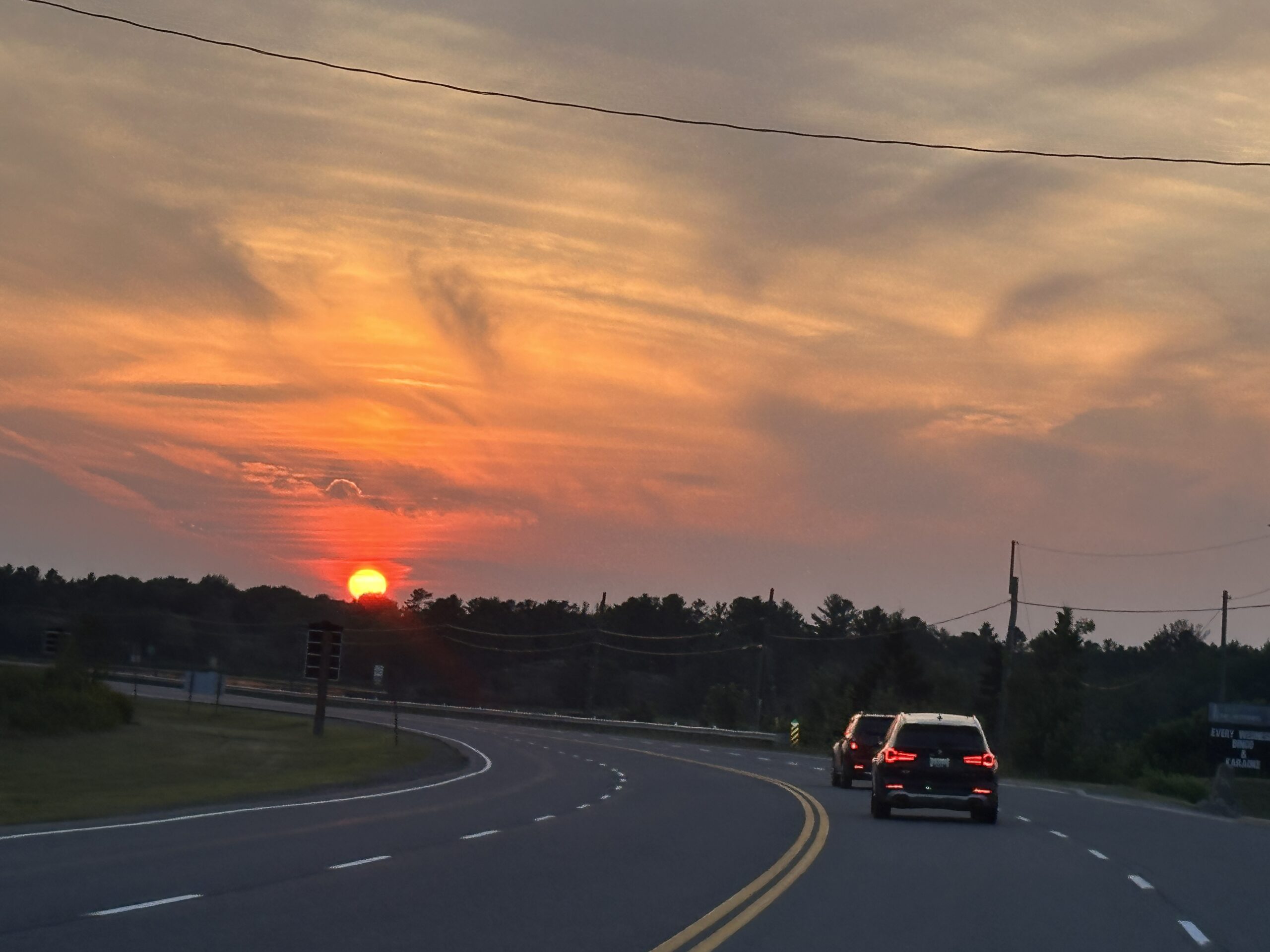
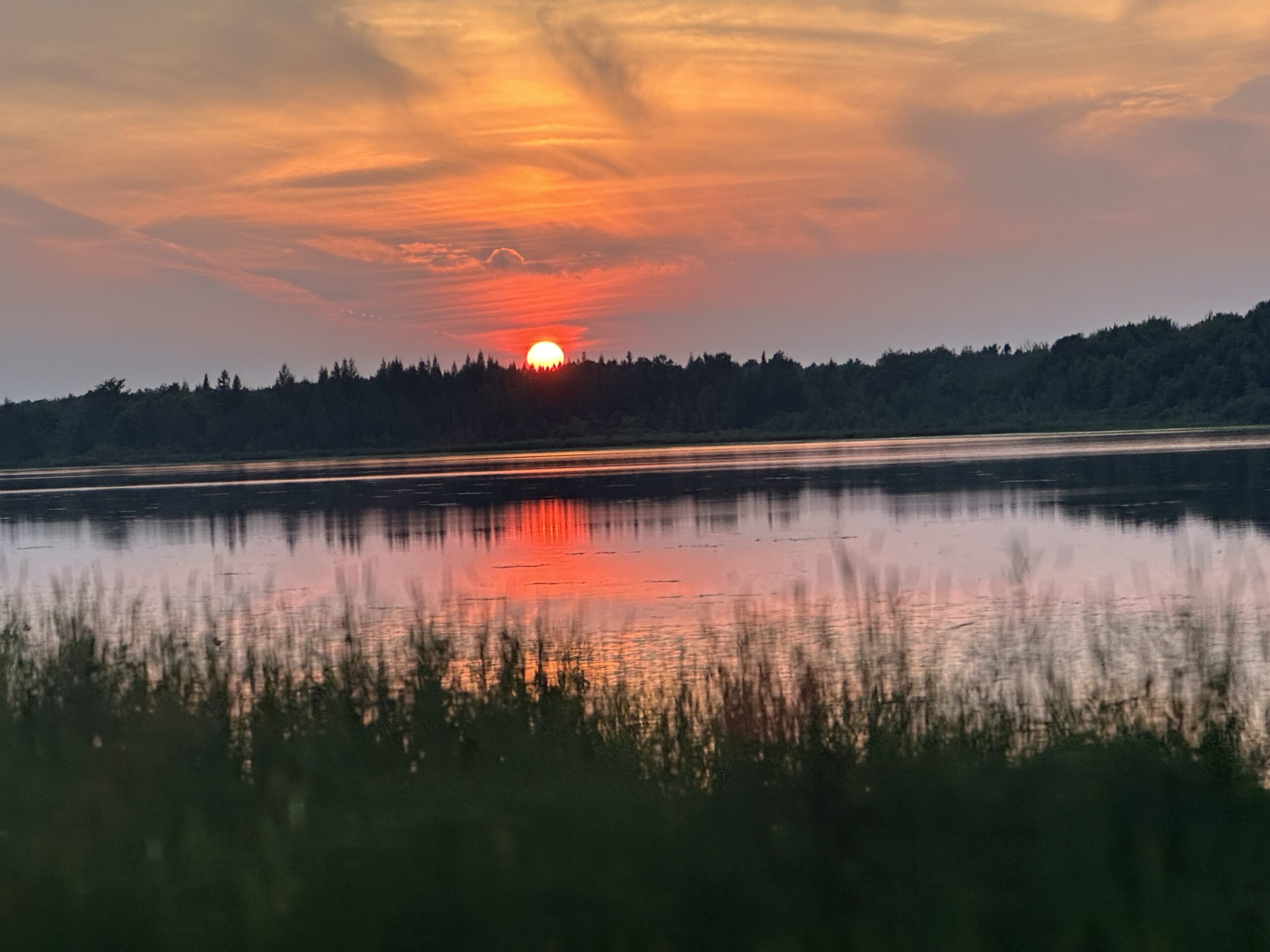
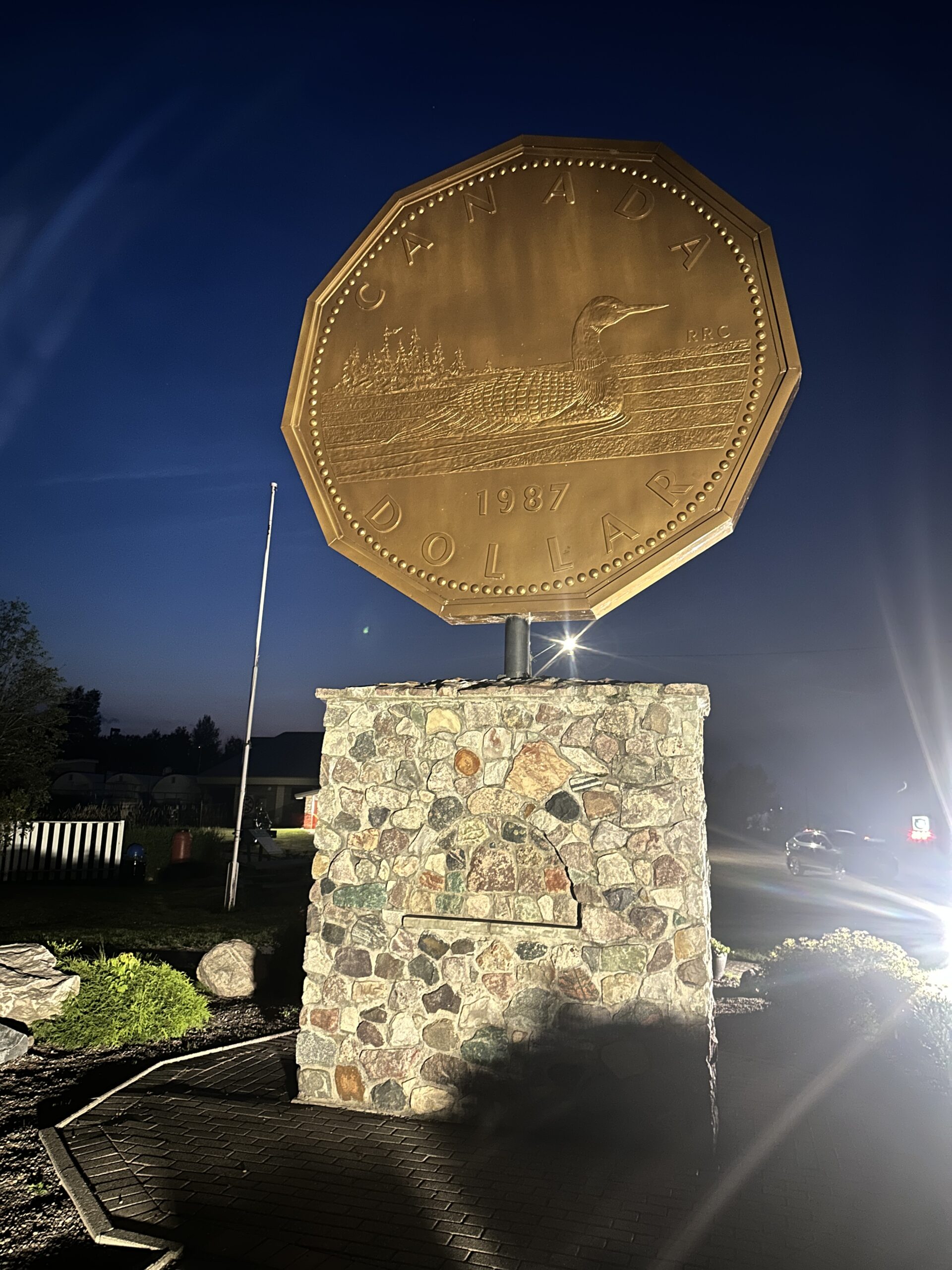
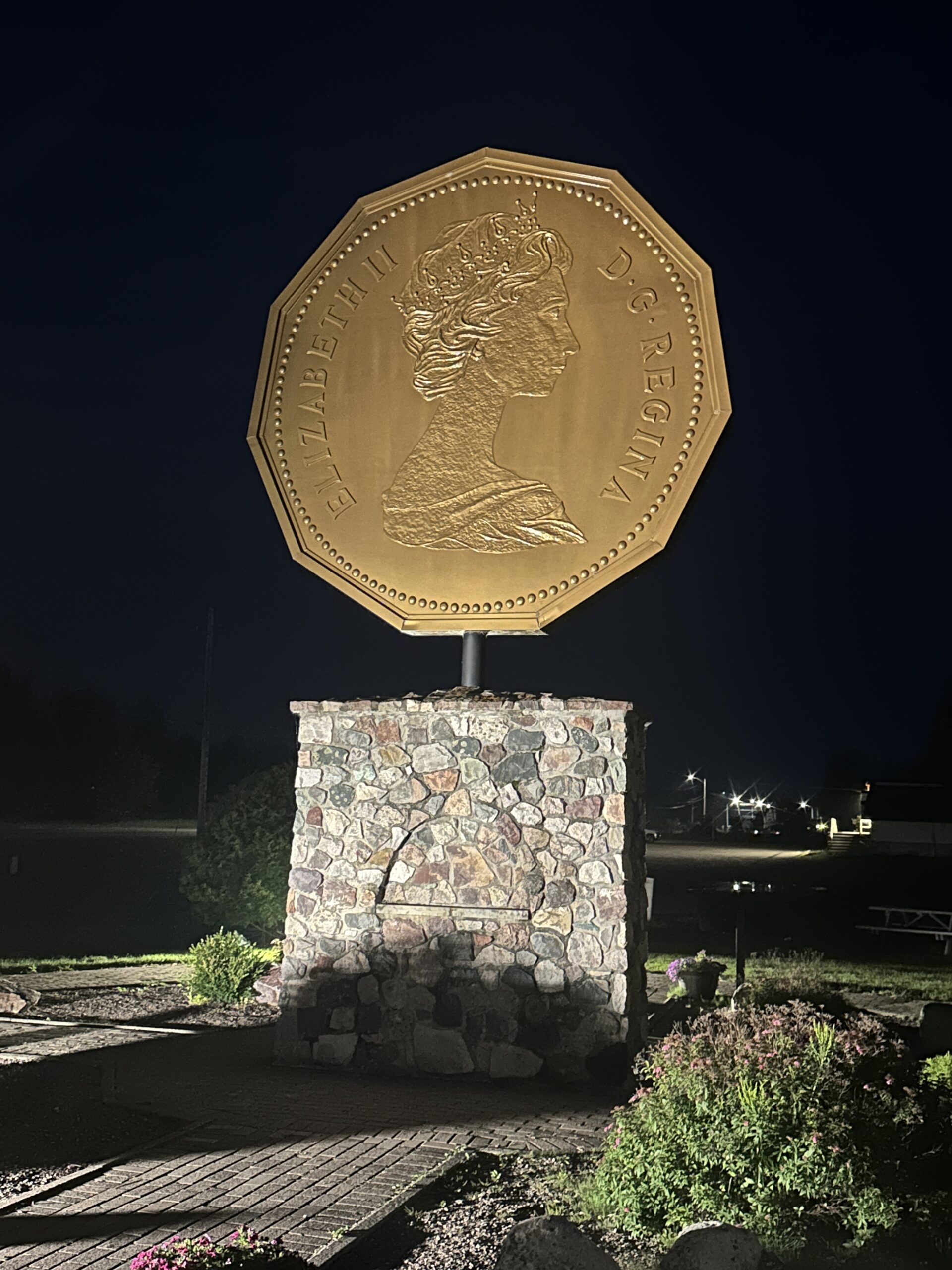
A spectacular sunset – the photos do not come close to doing it justiceThe Giant Loonie in Echo Bay
We got in quite late, Erez went for a run and I immediately crashed.
At 1am we were rudely awakened by an alert from the government that there was about to be an earthquake and we had about 60 seconds to get outside. Of course in our case, we could not do that. We are on the top floor of an apartment building so our best bet was to get under a table. All 3 of us were dead asleep and not quite functioning within 60 seconds. Luckily for us, it was only around 4.3 on the Richter scale and we didn’t feel anything. We just had to wait for the adrenaline rush to subside and then we could go back to sleep. Needless to say we were all moving slower than usual this morning.
I had to finish my homework this morning so I was running a bit late. The location for class had changed and we were having a bit of trouble finding the two cafes we were supposed to meet our teachers at. In the end I abandoned the bus idea and took an uber so I would not be late. It was a tiny cafe in an obscure place.
My fancy chai latte
Overall, I love the concept of meeting in a different part of the city everyday to experience cafés and parks in different neighbourhoods. It also gave us the challenge of navigating the city on foot, transit and sometimes uber in a pinch.
Interesting windowDoor to our cafe
The park we met at today had an exquisite Pavillion – an example of moorish architecture.
The eagle with a snake in its mouth is a national symbol for Mexico. The symbol is rooted in the Aztec legend that their god told the wandering Mexica people that they should build their city where they found an eagle devouring a serpent. The prophesy came true and that was the site chosen for their capital – now Mexico City.Quinceañera photo shoot
After our class, we said goodbye to our classmates and teachers and headed to a Fonda recommended by Michelle and Lola’s teacher. A Fonda is usually a small, family-run traditional homestyle cooked meal restaurant. It is extreme informal, strangers will sit at any table where there is space, and there is a full menu set for a very affordable price. My meal included a drink, soup, bread, rice, a fish fillet with beans and salad and then a small bowl of jello for dessert – all for 95 pesos! (approx $7.45 CDN)
Soup and hibiscus juiceMain entreeTiny bowl of jello ( I know it doesn’t look tiny here, but it was about three bites )
Next stop was the Biblioteca Vasconcelos. This was where our class was supposed to be held today but there was a strike going on. I found out later that Michelle and Lola’s class went anyway and it was open. Lucky for me, they were nice enough to take me back there after class so I could enjoy it too. This interesting building was completed in 2006, but then was closed down for about 22 months to fix some major mistakes in the build.
Whale sculpture by Gabriel OrozcoSide view of sculpture View from the top floor
Pieces from a youth illustrators exhibit in the library:
Beautiful mural displayView from the top floor veranda of the library
After the library we walked for about 40 minutes through many diverse neighbourhoods to get to the Secretariat of Public Education headquarters that doubles as the Live Museum of Muralism. Here are some photos I took along the way. We passed several huge markets, as well as hundreds of people selling their wares on either sides of the street, not in any organized way.
The Diego Rivera murals at the Secretariat of Public Education Headquarters deserve their own post, so I will leave you with one last photo of which highlights the discrepancy between neighbourhoods in Mexico City. This was taken within walking distance of the last photos I posted.
In 2013 I went to the Frida and Diego exhibit at the Art Gallery of Ontario and was blown away by how great it was. I loved it so much that I took my kids out of school for the day so they could see it with me. Unfortunately almost as soon as we got there, Erez, who was around 11 at the time, doubled over with stomach pains. Long story short, they didn’t get to see much of the exhibit but I bought the book in the gift shop and then walked them through the catalog at home.
Recently Aubrey and I watched the 2002 biopic Frida starring Salma Hajek and also revisited that book I bought at the AGO, so I was ready!
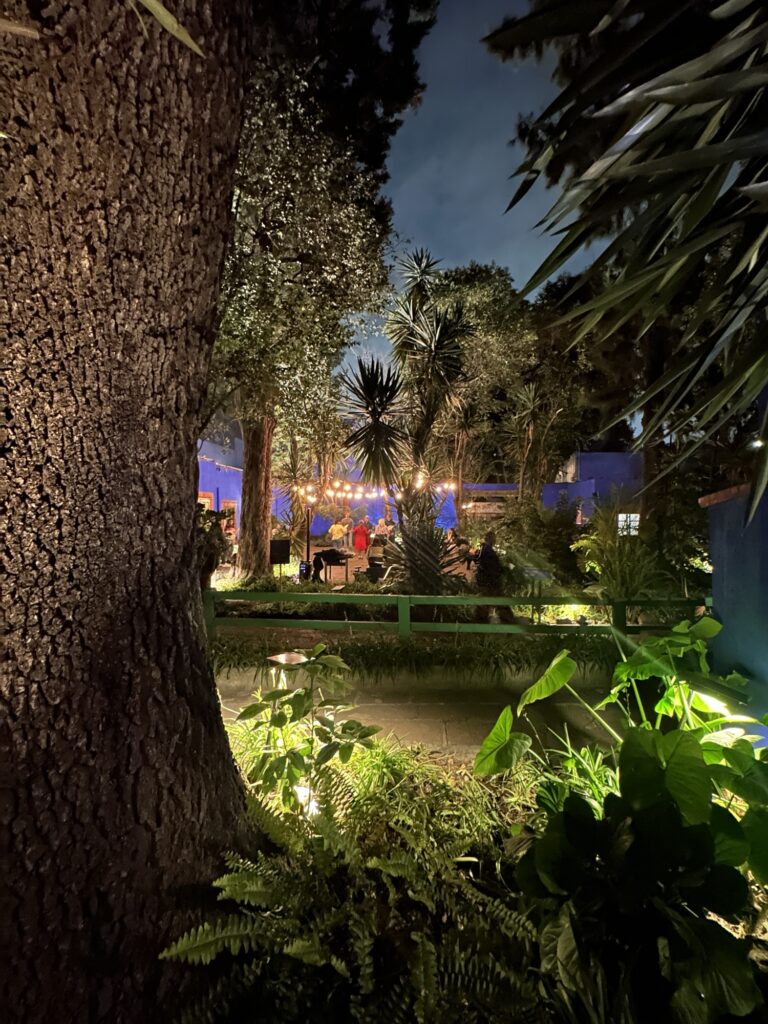
Although I would have loved to have seen the gardens during the day, it was magical at night. I took way too many photos…
The museum is called La Casa Azul ( The Blue House) due to its cobalt blue walls. It was originally constructed in 1904. Frida was born in this house in 1907, grew up there with her parents Wilhelm (Guillermo) Kahlo and Native Mexican Mathilde Calderon y Gonzalez and her three siblings. She also lived there for several years with her husband Diego Rivera. It remained her family home until she died in her bedroom in 1954 at the age of 47. Rivera donated the home and its contents to establish a museum to honour Frida’s legacy.
This house was at the centre of intellectual and artistic life in the Colonia del Carmen area of Coyoacan, hosting many famous artists, poets, philosophers and revolutionaries over the years.
Frida spent a lot of time convalescing in this home. She contracted polio when she was six, which caused one of her legs to be shorter than the other. At age 18 she was in a devastating bus accident which left her body badly mangled with many fractures in her spine, pelvis, and other parts of her body. She was confined to her bed for about two years and this is when she began to paint to pass the time. Over her lifetime she had approximately 35 different surgeries. I will not go into her whole life story, but I recommend you look her up, as she lived a fascinating life and was extremely talented in so many ways. Her life was a life of pain and resilience, living life to the fullest she possibly could.
Five fast facts:
She had a tumultuous marriage to an unfaithful Diego Rivera who was around 20 years older than her. She also had multiple affairs with both men and women, including Leon Trotsky when he and his wife stayed in their home. When Diego slept with Frida’s sister, she divorced him. They did remarry before her death.
She was the first Mexican artist to have work shown in The Louvre
She had three large important exhibitions while she was alive- In New York, Paris and México. Unfortunately, like many artists, her popularity exploded long after her death.
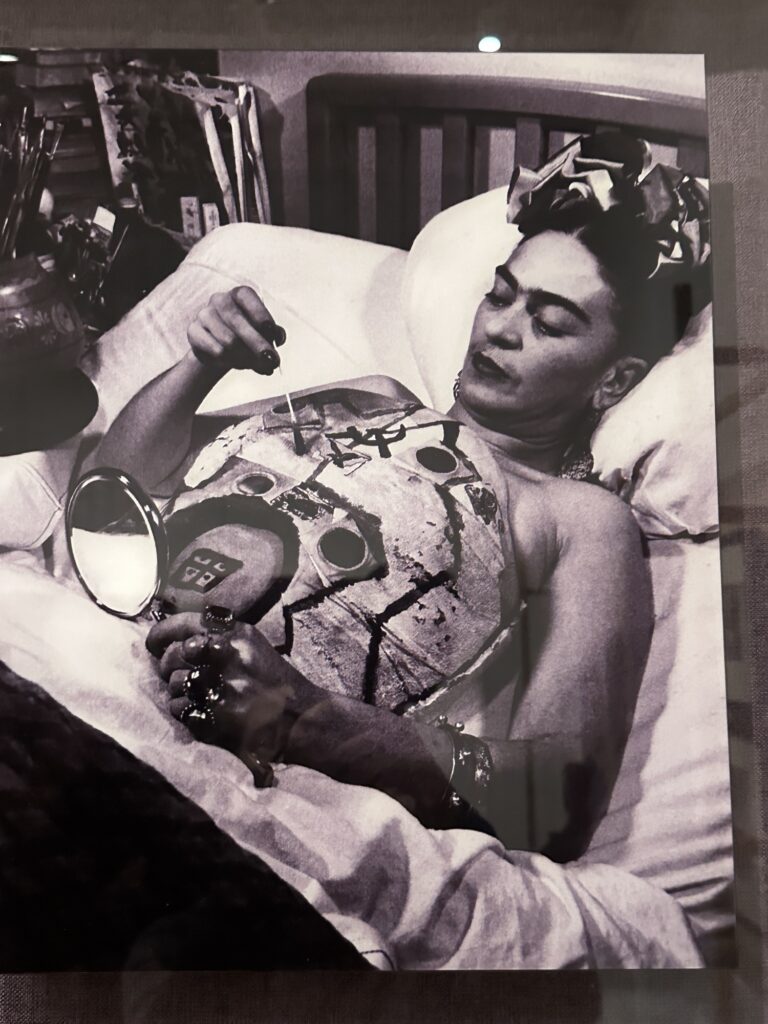
When she finally had a show in Mexico, her doctor forbade her to leave her bed because she was in such rough shape, so she had them bring her whole bed to the exhibit.
Although it was a bit of an obscure museum when it first opened, it now has 25,000 visitors a month, and is one of the most popular museums in Mexico City.
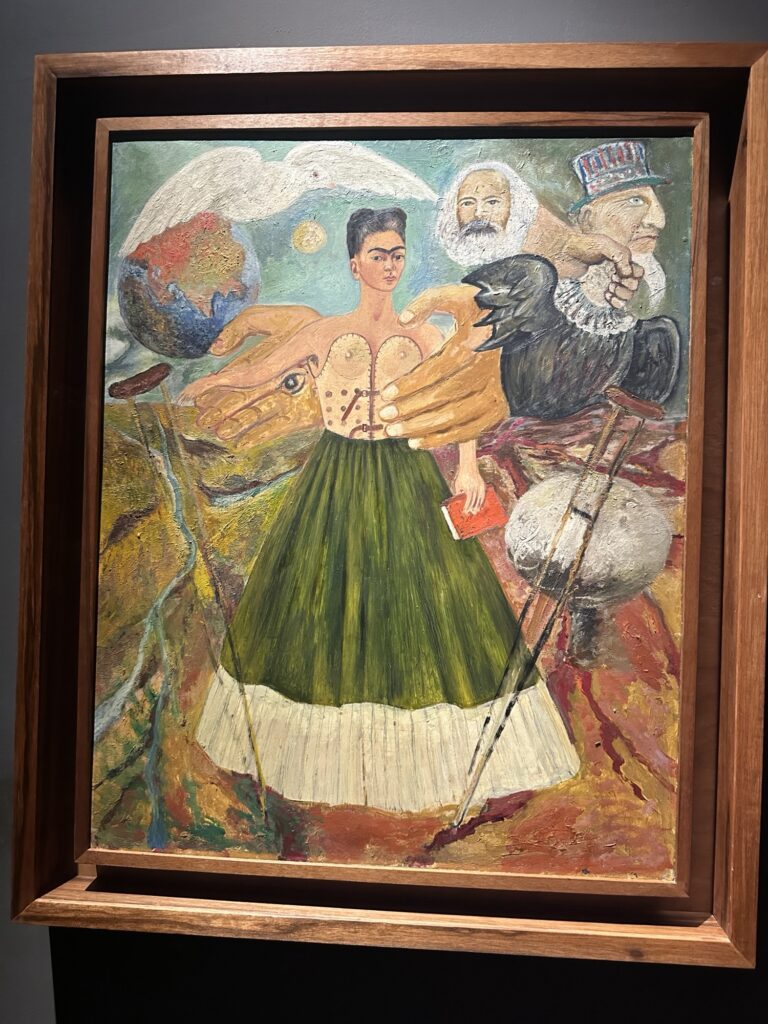
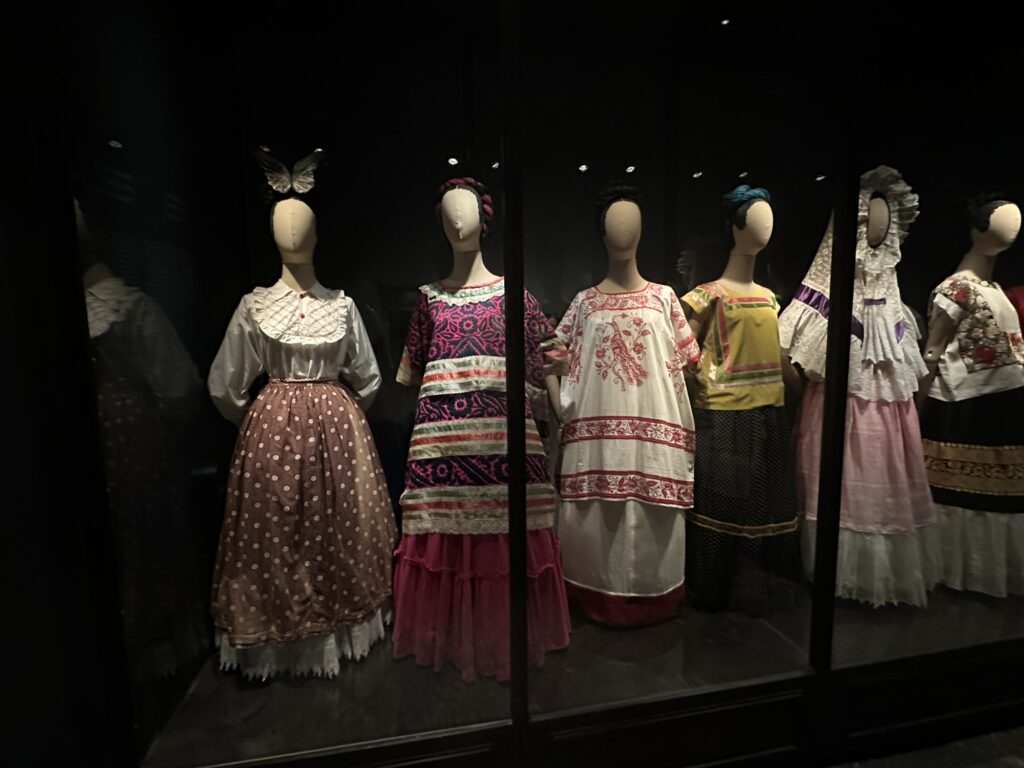
The museum was beautiful and absolutely fascinating, containing her artwork, artifacts, photographs and her own personal art collections, including original pieces by prominent artists. There is also an exhibit featuring some of her iconic clothing and jewellery.
Here are some highlights from the hundreds of photos I took:
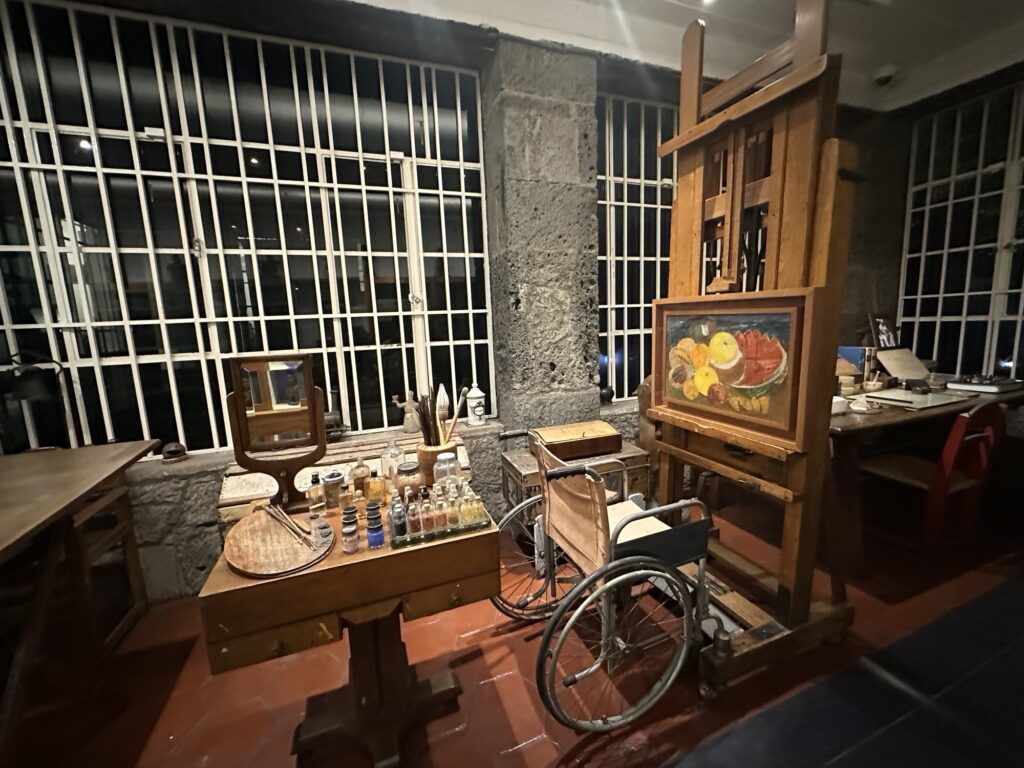
Entryway to the museum showcasing some of the Judas figures that Frida and Diego collected.Frida self portraitPhoto of Frida painting her body castHer bed which had a mirror on the top which she would use to do self- portraits Her easel and wheelchair she used later in life.The dining room – those doves on the wall are made up of tiny little pots!View of part of the garden
There are far too many photos to post, but there was one more thing that happened while we were there – one Wednesday a month there is a Danzón class offered and tonight was the night!
Danzón is a graceful Cuban partner dance which influenced later dance styles like salsa, mambo and cha-cha. It is a slow, synchopated dance. We were given fans to use while dancing and I got to dance with the male instructor. It was really cool.
The two instructors were fabulous!
A group of women learning the steps.
It is late now and I still have to do my homework for my last day of class…
This museum was all I could have wished for and more. I am now even more of a fan than ever!
We took the red metro bus again this morning and then got confused on the transfer (Google maps was very unclear) so we ended up walking the rest of the way. Now we were running a bit late and my cafe was farther away than Michelle and Leslie-Anne’s. I speed walked it, arriving quite sweaty as I was wearing multiple layers because I knew I would be out all day until the nighttime. Since I was so hot (even though it was chilly out and chilly in the cafe) I ordered what I thought was iced Chai Latte but I actually ordered an Chai Frappe which is basically a Chai Latte slushy – which was delicious.
Class went smoothly today – we were covering a grammar point I actually had a handle on and got perfect on my exercises! Yay! In the second half of the class we went to a small park next to a school – it was quite nice. We covered some interesting cultural information while talking about the origins of some words and phrases. At one point a man with two dogs walked by and one of the dogs was drawn to one of my classmates. When he heard that my classmate was from California, he went into a 10 minute anti-Trump rant in Spanish. Good comprehension exercise. All in all a good penultimate class.
After class Michelle and Leslie-Anne and my classmate Allan went out for lunch at a great Argentinian restaurant in the neighbourhood called Escadon Corazon. It was beautiful inside ( well it was still kind of outside) and the food was great!
My fish filletLeslie-Anne’s canelloni
After lunch, Michelle headed back to our apartment as she had a course to do online. Leslie-Anne and Allan and I shared a Uber to go to Coyoacan. I enjoyed it so much the other day, I was happy to go back.
Me with Frida and Diego
Some other photos from our hours wandering around the area…
Leslie-Anne ( also known as Lola) needed a break 🙂I bought a super cool jean jacket I am certainly not cool enough to wear. The back of the jacket says Alma Viajera or “traveller’s soul”The writing on the wall behind me in the fitting room translates to: “Life is too short to wear boring clothes”More street artMore market stalls I bought a ring that I have been looking for since my old one brokeChristmas decorations stay up until February. This is in front of an old church in the centre of the area.
Leslie-Anne and I had fun wandering and then we met up with Michelle at La Casa Azul also know as the Frida Kahlo museum at 7:15. That deserves its own post!